Lord’s Supper Meditation – Fish and Bread with Jesus

Communion Meditation – Bread of Earth & Bread of Heaven(7).png

A Twilight Musing

It is noteworthy that the last days of Jesus on earth, from just before his death to his ascension into heaven, are punctuated by eating. There is first of all, of course, our Lord's last Passover meal with his disciples, only the day before his crucifixion, and it was the source of the communion that we are observing now. On the evening of his resurrection, he appeared to two men on the road to Emmaus and was persuaded by them to go into their house and eat with them. As Jesus broke the bread and began to give it to them, they realized who he was. During a subsequent appearance to his disciples, he asked to be given something to eat, for they thought he was a ghost (Lk. 24:36-42). And in an amazing episode on the shore of Lake Galilee (Jn. 21:1-1 4), his disciples, who had been fishing on the lake unsuccessfully all night, saw and heard in the morning someone on the shore telling them to cast their nets on the other side of the boat if they wanted to catch some fish. As their nets filled to overflowing, they knew it must be the Master on shore, and as they pulled in the catch, they heard him say, "Come and have breakfast."

Can we take instruction from all of these examples of Jesus sharing food with his disciples, even after he had been transformed by the resurrection? In the first place, the focus on eating as a symbol of spiritual fellowship at the Last Supper was not an isolated incident. Jesus seemed to be saying in the three recorded instances of his eating with his disciples after his resurrection that he wanted to make himself available to them in the most common circumstances of human life, and though he had no need to sustain himself with physical food, he nevertheless shared with them in their ongoing need. He reaches back to us now in our frailty, even from the Throne of his Glory, for he has been where we are and wishes to commune regularly with us in the most intimately common way.

Secondly, just as he included the fish caught by the disciples in the breakfast menu of his Lake Galilee cook-out, along with the bread and fish that he had already prepared, so he combines the divine manna of heaven with the bread we earn by the sweat of our brow, keeping us mindful that even the food we bring has been provided by him. And if we will give them to him again, he will make them food for both body and spirit.

This morning we bring to the table before us not only the elements of bread and wine, but ourselves to be consecrated and transformed by him into nourishment for Life indeed, so that even in this flesh we experience something of his resurrected body. For the bread of this simple feast is not only the body that died on the cross, but the Body in which death was conquered; and the wine is not just the life-blood he poured out, but the undying blood of the New Covenant, which both sustains us now and assures us of life everlasting with our Savior.  May we eat and drink with Him now in the mixture of awe, thankfulness, and comradeship which the disciples felt in that breakfast by the Sea of Galilee with their risen Lord.


Elton_Higgs+(1).jpg

Dr. Elton Higgs was a faculty member in the English department of the University of Michigan-Dearborn from 1965-2001. Having retired from UM-D as Prof. of English in 2001, he now lives with his wife in Jackson, MI. He has published scholarly articles on Chaucer, Langland, the Pearl Poet, Shakespeare, and Milton. Recently, Dr. Higgs has self-published a collection of his poetry called Probing Eyes: Poems of a Lifetime, 1959-2019, as well as a book inspired by The Screwtape Letters, called The Ichabod Letters, available as an e-book from Moral Apologetics. (Ed.: Dr. Higgs was the most important mentor during undergrad for the creator of this website, and his influence was inestimable.


Elton Higgs

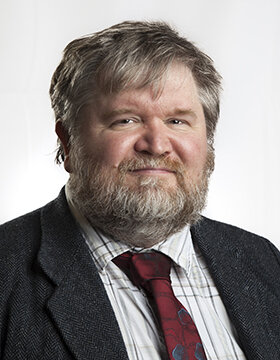
Dr. Elton Higgs was a faculty member in the English department of the University of Michigan-Dearborn from 1965-2001. Having retired from UM-D as Prof. of English in 2001, he now lives with his wife and adult daughter in Jackson, MI.. He has published scholarly articles on Chaucer, Langland, the Pearl Poet, Shakespeare, and Milton. His self-published Collected Poems is online at Lulu.com. He also published a couple dozen short articles in religious journals. (Ed.: Dr. Higgs was the most important mentor during undergrad for the creator of this website, and his influence was inestimable; it's thrilling to welcome this dear friend onboard.)

Healing from Institutional Abuse

Healing from Institutional Abuse.png

A cabin was nestled near the top of a mountaintop in the Great Smoky Mountains of Tennessee. This cabin served as a vacation home for my family and me. The evening was humid and muggy. Thus, we decided to take in a show in Pigeon Forge rather than exploring the beautiful hills of eastern Tennessee. On this evening, I would suffer an emotional and spiritual panic attack. The catalyst of the event was various reports of institutional abuse. One report discussed alleged cases of rape that went unreported. Other reports mentioned accusations of abuse from a person who would be the last person one would suspect of such behaviors.

Admittedly, I have suffered from bouts of anxiety in the past. Normally, I can sense when a bout of anxiety is about to commence. But in this case, it was as if I felt an overwhelming case of sorrow and distress. After requesting prayer on social media, I was blessed by the numerous supporters offering their prayers and encouragement. Many friends contacted me directly, whereas many others offered support online. It was heartwarming to see how many people truly cared. But this event left me curious as to why I would suffer such distress while on vacation of all places.

It was not until a few days afterward that I realized that the pain I had previously suffered in the pastorate was still unresolved. I still didn’t understand why I felt the way I did. Drs. David and Marybeth Baggett reached out to me. I spoke to them about my feelings and what I believed to be the culprit. Marybeth suggested two books for me to consider reading. The first was entitled Something’s Not Right: Decoding the Hidden Tactics of Abuse and Freeing Yourself from its Power by Wade Mullen. The other was Redeeming Power: Understanding Authority and Abuse in the Church by Diane Langberg.

Mullen’s book truly spoke to me. He mentioned a field of sociological research known as impression management. Canadian sociologist Erving Goffman described impression management as the “process of creating, influencing, or manipulating an image held by an audience.”[1] Impression management especially becomes abusive and unethical when people are put on display to hide underlying problems that should not be hidden.[2] Mullen further notes that “the chief desire of abusive individuals is to attain or retain power—most often the kind of power gained and held through deception.”[3] Because of this, churches can become a breeding ground for abusers to thrive.

But why do religious institutions allow such abuse to transpire? Mullen offers a reason for this as well. He says that many institutions unknowingly permit systems that are conducive for abuse because of image. If people were to know the problems that a place faced, then others may not want to come and take part of what the institution offered.[4] As I read Mullen’s opening chapter, I began to realize two things. First, I came to the realization that I had suffered a form of abuse. Speaking with numerous individuals who were concerned with my well-being, I met many who admitted that they were victims of various forms of abuse. They faced similar emotional and spiritual bouts, some of which were full-blown cases of PTSD. Their professed experiences were eerily reminiscent of my own. Second, I came to realize that institutional abuse, identified as impression management, was far more widespread than I ever considered.

The first step in healing is to first diagnose the source of pain. I cannot say that I am fully healed from the abuse that I encountered. But I do believe that I have taken the first step. Perhaps God permitted me to have this emotional episode to bring me to the place of genuine recovery. Whatever the case, I also believe that many others are facing the same issues but do not understand where their emotional and spiritual hurts derive.

So, where do we go from here? I will occasionally update you on my progress from time to time. But there are two suggestions I would make for the here and now. First, become grounded in theology and apologetics. As my good friend Jerry Bogacz said, apologetics becomes an anchor keeping one stable during times of emotional distress. While it is not understood why I endured some of the things that I have in ministry, all the while understanding my own faults[5]—the goodness of God is a constant wellspring of hope and a constant source of comfort.

Second, cases of institutional abuse must be exposed and corrected. We can no longer stand idly by while innocent people are harmed by abusers hiding behind crosses and policies. The prophet Isaiah writes, “Learn to do what is good. Pursue justice. Correct the oppressor. Defend the rights of the fatherless. Plead the widow’s cause” (Isaiah 1:17).[6] Also, consider that Jesus told the Church of Ephesus that they must “Remember how far you have fallen; repent, and do the works you did at first. Otherwise, I will come to you and remove your lampstand from its place, unless you repent” (Rev. 2:5). While I have had an enigmatic relationship with the church throughout my life, I still love Christ’s Bride. If the problems of abuse in the American Church are not corrected, we should not be surprised if Jesus may eventually remove the lampstand from the Church of America. Be on the lookout for future posts as I discover more truths on my pathway to recovery. Continue to deepen your love for God and be kind to one another.


Brian G. Chilton is the founder of BellatorChristi.com, the host of The Bellator Christi Podcast, the author of the Layman’s Manual on Christian Apologetics, and a Ph.D. Candidate of the Theology and Apologetics program at Liberty University. He received his Master of Divinity in Theology from Liberty University (with high distinction); his Bachelor of Science in Religious Studies and Philosophy from Gardner-Webb University (with honors); and received certification in Christian Apologetics from Biola University. Brian is a member of the Evangelical Theological Society and the Evangelical Philosophical Society. Brian has served in pastoral ministry for nearly 20 years and currently serves as a clinical chaplain and a Senior Contributor for MoralApologetics.com.

https://www.amazon.com/Laymans-Manual-Christian-Apologetics-Essentials/dp/1532697104

© 2021. BellatorChristi.com.


[1] Erving Goffman, The Presentation of Self in Everyday Life (New York, NY: Anchor, 2008); Wade Mullen, Something’s Not Right: Decoding the Hidden Tactics of Abuse and Freeing Yourself from its Power (Carol Stream, IL: Tyndale Momentum, 2020), 9.

[2] Mullen, 12.

[3] Ibid., 15.

[4] Mullen calls this “dark secrets…facts a person or an organization knows and conceals because if they were revealed, they could damage the image of that person or organization.” Ibid, 17.

[5] By no means am I claiming that I was sinless in all my previous encounters.

[6] Unless otherwise noted, all quoted Scripture comes from the Christian Standard Bible (Nashville, TN: Holman, 2020).

Making Sense of Morality: Alasdair MacIntyre’s Ethics

Making Sense of Morality(5).png

Editor’s note: R. Scott Smith has graciously allowed us to republish his series, “Making Sense of Morality.” You can find the original post here.

MacIntyre’s Diagnosis

MacIntyre (b. 1929) observes people seem to speak from different moral standpoints, or languages. Some talk as though they are emotivists, while others are Kantians, utilitarians, relativists, Aristotelians, etc. But, it seems we no longer have a way to dialogue morally and come to agreements. These different ways of morally talking seem to presuppose objective standards to evaluate them. However, he claims that fails because they presuppose different evaluative concepts and frameworks.

This situation leads to shouting matches. This happened, he thinks, because the Enlightenment “project” dropped the idea of a moral telos (goal, end) from Aristotle and Aquinas. Without it, we seem left with just human nature as it is, and ethics as the tools to become moral. But, what should we be like?

With the different moral theories so far, MacIntyre thinks we lack how rationally to decide between them. He claims this is because no independent, rational standards exist to decide between them.

Without a cogent answer, Nietzsche wins – ethics is just about power after all. Or, perhaps we discarded an earlier moral tradition too quickly. MacIntyre thinks we should recover the Aristotelian moral tradition (and later, Thomism) to solve this dilemma.

MacIntyre’s Proposal

To recover Aristotle’s ethics, MacIntyre recommends several changes. First, while Aristotle depended upon the soul to ground a person’s identity through change (including growth in virtue), MacIntyre says we must reject the soul. In its place, he argues for the narrative unity to a person. One’s narrative is drawn from the narrative context of that person’s form of life (community), with its formative story and language.

While Aristotle’s virtues were universal properties present in one’s soul, MacIntyre needs a new basis for them. He appeals to practices, such as medicine, which are socially established, systematic, cooperative activities with goods internal and external to them. For a doctor, the internal goods include helping sick people get well, while an external good could be material prosperity. Practices have standards of excellence (virtue, or arête), and practitioners’ abilities to achieve those goals, and their understanding thereof, grow.

Instead of Aristotle’s context (the Greek polis), MacIntyre appeals to traditions, which are extended historically. They are socially embodied by particular peoples in their communities. A tradition is an argument “about the goods which constitute that tradition” (MacIntyre, After Virtue, 229). For example, Christianity could be a tradition, formed by many particular Christian communities down through time.

The telos of one’s life come from the intersection of that life with the master story of the tradition. Moral virtues enable the pursuit of a telos for the good of that person, to sustain the tradition, and help achieve the goods internal to practices.

MacIntyre and Language

MacIntyre draws heavily upon the later Wittgenstein’s (d. 1951) views of language. Each language is nominal and tied to a given form of life. Language does not have universal meaning. Instead, meaning is a matter of language use (verbal and nonverbal behavior) in that context, according to its grammatical rules and formative story.

Rationality is not some universal phenomenon; it is tied to a tradition with its master story (e.g., for Christians, the gospel story) and language. Though we always access reality through the interpretive lens of our tradition, MacIntyre still maintains there is a real world apart from our interpretations.

Yet, MacIntyre argues that we can rationally adjudicate which tradition is rationally better than another. How? It cannot be done as an outsider to a tradition; it has to be done from the inside. One learns the language of one’s own tradition, and learns to interpret and reason from under that “aspect.” But, that person also can immerse him or herself in another tradition and learn its language as a second first language. That way, by being able to reason and interpret in both ways, that person can “see” if a tradition can solve its own problems and that of another. If so, that tradition is rationally superior and deserves one’s allegiance. So, we can avoid relativism, even though rational standards are internal to each tradition.

For Further Reading

Alasdair MacIntyre, After Virtue, 3rd ed., and Whose Justice? Which Rationality?

R. Scott Smith, In Search of Moral Knowledge, ch. 9


Lord’s Supper Meditation – Exchange of Natures

Communion Meditation – Bread of Earth & Bread of Heaven(6).png

A Twilight Musing


           In the bread and wine of the Lord’s Supper are figures of the exchange of natures between Christ and ourselves:  In the bread is seen His assumption of our flawed humanity; in the wine is seen our divinely enabled appropriation of His perfect life.  However, in order to appropriate His action on our behalf we must experience something of the sublime tension created by the merger of Holy Spirit with mortal body.

           Satan’s greatest weapon against mankind has always been the dichotomy between body and spirit brought about through sin.  Moreover, fallen man has developed spiritual antibodies that resist the reintroduction of that divine Presence to which originally Adam and Eve were perfectly adapted.  Consequently, Satan’s first temptation of the Second Adam, Jesus, was the suggestion that He turn the stones into bread, an action which would have fed the body at the expense of the soul and would have reinforced their isolation from each other.  Jesus refused, not because the body of was of no worth, but because, for the time being, it had to be radically denied in order that the Spirit of God might once more flourish there and restore it to its former glory.  In that refusal, Jesus paved the way for us to reject obsession with the body, the too-narrow view of ourselves which keeps us from the life-giving Word of the Father.   But at the same time, if we are to drink the burning cordial of Jesus’ blood, which God desires to pour into us, we must first borrow strength from the body of Jesus’ incarnation, which He sanctified to be a fit vessel for the life from above.

           Thus, partaking of the Lord’s Supper should be a somewhat wrenching experience; for in eating the bread we acknowledge the right and ability of Christ to invade and transform the physical world, and in drinking the wine, we voluntarily accept the elixir by which the composition of our corrupted being is changed.  Our partaking of Christ may—indeed, should—entail the pain of sacrifice, but it is also the pain of fulfillment, conducting us from the futility of the Old Adam to the restored life of the New Adam.


Elton_Higgs+(1).jpg

 Dr. Elton Higgs was a faculty member in the English department of the University of Michigan-Dearborn from 1965-2001. Having retired from UM-D as Prof. of English in 2001, he now lives with his wife in Jackson, MI. He has published scholarly articles on Chaucer, Langland, the Pearl Poet, Shakespeare, and Milton. Recently, Dr. Higgs has self-published a collection of his poetry called Probing Eyes: Poems of a Lifetime, 1959-2019, as well as a book inspired by The Screwtape Letters, called The Ichabod Letters, available as an e-book from Moral Apologetics. (Ed.: Dr. Higgs was the most important mentor during undergrad for the creator of this website, and his influence was inestimable.


Elton Higgs

Dr. Elton Higgs was a faculty member in the English department of the University of Michigan-Dearborn from 1965-2001. Having retired from UM-D as Prof. of English in 2001, he now lives with his wife and adult daughter in Jackson, MI.. He has published scholarly articles on Chaucer, Langland, the Pearl Poet, Shakespeare, and Milton. His self-published Collected Poems is online at Lulu.com. He also published a couple dozen short articles in religious journals. (Ed.: Dr. Higgs was the most important mentor during undergrad for the creator of this website, and his influence was inestimable; it's thrilling to welcome this dear friend onboard.)

The Moral Argument as a Scientifically-Minded Approach to Understanding God

The Moral Argument as a Scientifically-Minded Approach to Understanding God.png

Last week, an experienced and prominent physician told me that faith was utter nonsense, and that only empirical study has value. He expressed irritation at people of faith, any faith, who “obstinately cling to things they say are true and happened thousands of years ago because they say they are true and are unwilling to consider proof.” I asked him what he would think of a group that agrees with him about the value of explaining faith, that craves intellectually rigorous and defensible answers and seeks them out, but that comes to different conclusions from his because we value many types of evidence. He is a researcher, after all – could he with any intellectual honesty brush aside the conclusions of people as intelligent as he and better studied in a particular area? What did he think of this new thing I described; what did he think of apologetics?

“I think,” he replied after a pause, “apologists sound like scientists. I would tell you that if they, if you, seek intellectually defensible answers, then you are in the realm of science. You have moved beyond faith at that point, which means that you make more sense to me, but that you cannot come to any conclusion that does not have facts.”

I do not agree with this doctor’s extremely exalted view of science. I noticed his consistent and mistaken notion of faith, and his narrow view of what constitutes evidence. I thought of how very modern is the notion that science and theism are at odds, and of everything I know about the historical validity of the Resurrection. Data flooded my brain and arguments poured into my mind, but not onto my lips. The Spirit formed more simple words.

“You know from whence scientific study arose, don’t you?” I asked. “This entire way of studying the world, the observation and thinking that you value so much, began as a quest for knowledge of God. Your statement that we are in the realm of science by professing faith is a foregone conclusion. Science arose and has been sustained in the realm of faith.”

“Quite right,” he said, a twinkle in his eye, “but…” A knock from the next patient sounded on the door.

Time will tell whether this conversation continues, but in the meantime, it is worth replying that I believe the researcher is correct in his assessment of apologetics as being like science in some real respects. If we think specifically of moral apologetics as a study of human behavior and a quest to best explain that behavior, we see how both fields look for trends and seek to explain them. Clinical researchers often criticize me for the assertion that apologists could possibly think like scientists – apologetics is too soft, they say, there’s too much philosophy and not enough numbers - but they’ll stay for a conversation of trends.

These critics hold a deficient notion of philosophy, in my opinion, but both sides tend to agree that there is proof in actualized human behavior, outside of what we read in books or theorize about in laboratories or classrooms, whether we have gone to the trouble to assign numbers to the behavior or not. The intellectual curiosity shared by apologists and scientists creates great potential for fruitful interaction. Is it a surprise, then, that scientist Francis Collins, former lead of the Human Genome Project and current Director of the National Institutes of Health, credits the moral argument with his conversion from atheism to Christianity?[1]

Collins adopts the position in Language of God that science cannot fully reveal God or answer our questions about God, because claims concerning God go beyond what modern scientists consider empirical evidence. The discussion mirrors a debate that has long raged in history over whether historians are justified in exploring claims of miracles, including those surrounding Jesus Christ and the Resurrection, and the theme here is the same – what are the limits of empirical study and where do they fall? Are there limits?

Though apologetics often starts with reason apart from special revelation, when it comes to things beyond human understanding in the given moment, we can look to the Bible for ways of knowing. In the Scriptures, we find these truths:

1.      God made man in his image (Gen 1:26-28).

2.      Creation as an image, then, constitutes a relationship between God and man.

3.      God crafted man from the dust of a world created by God (Gen 2:7), rather than “poof!”ing man into existence.

4.      Therefore, the dust is important to man's nature.[2]

5.      Man, then, has a relationship both with God and with the dust.

6.      Conversely, the study of this dust must be at root a study of God and of humanity.

7.      Therefore, the things that we learn in the study of this dust are things we learn about God and about humanity.

8.      Finally, our reactions to the study of this dust, and the things we learn about God through study of the dust, are indicative and reflective of our relationship with God.

That last bit? That is the moral argument manifest in scientific study. What a fitting conclusion for the subjects of a God who created and then “saw” that creation was good (Gen 1:4). The NET Bible tells us in translation notes that the verb “saw” in this passage carries the meaning “reflected on,” “surveyed,” “concluded.” God created, God observed, and God drew a conclusion. Sounds a lot like science, to me. We are justified, then, in immersing ourselves in science for the sake of drawing closer to God, and we are justified in upholding the moral argument as, in certain respects, an empirical and even scientifically-minded approach to understanding God. Much work remains to be done, but given these conclusions I believe that yes, expansively empirical apologetics can be developed and effectively deployed in the world of modern science. The moral argument is a powerfully salient example.


[1] Francis Collins, The Language of God: A Scientist Presents Evidence for Belief (New York: Free Press, 2006), 22.

[2] There are many perspectives on imago Dei, and the specifics of any given interpretation of what it means to be made in God's image influence how we might explain this relationship between man and the dust from which he was formed. Look for more discussion in blogs to come.


Jan Shultis is a Naval Academy graduate, author of two books, and Associate Editor at moralapologetics.com who plans to pursue her DMin at Houston Baptist University. After 14 years in uniform serving around the U.S. and in Afghanistan, she founded a faith-based non-profit focused on veterans, law enforcement, first responders, and families that supports warriors in need throughout Texas, with a special focus on ministry in local courts and jails. Jan brings to the Moral Apologetics team additional professional experience in biotechnology, public relations, and ethics curriculum development. Jan shares that she is extremely excited to spearhead the Center’s innovative exploration of the organic connections between moral apologetics and moral injury, including but not limited to military veterans. She is local to Houston and looks forward to contributing to the Center’s robust on-campus presence at HBU

Meditation on the Lord’s Supper – Drinking the Blood

Communion Meditation – Bread of Earth & Bread of Heaven(5).png

A Twilight Musing

One is made to wonder why the major activity of group worship for Christians involves the symbolic drinking of blood, since the eating of blood with meat was forbidden under the Mosaic Law (Lev. 7:26) and was offensive to many early Christians (Acts 15:20).  Under the Old Covenant, to have eaten the blood of animals, even as a part of the ritual of sacrifice, would have desecrated the sacrifice because there was no power in that blood; it was efficacious only in foreshadowing the shedding of Christ’s blood.  But with the sacrifice of Jesus, the perfect and final Sacrificial Lamb, and His subsequent resurrection, the blood of sacrifice was sanctified and its power made available to us.  Though Christians are still to abstain from the blood of animals, to drink symbolically of the blood of Christ is not sacrilege but a source of life in Him.  His shed blood did not represent merely the giving up of life, as it did in the animals, but also the restoration of life, both in Jesus and in the lives of those who have come to believe in Him.  

And so when we drink the fruit of the vine as if it were the blood of our Lord, we are identified with the shedding of His blood; we are crucified with Christ so that we may be raised in His likeness.


Elton_Higgs+(1).jpg

Dr. Elton Higgs was a faculty member in the English department of the University of Michigan-Dearborn from 1965-2001. Having retired from UM-D as Prof. of English in 2001, he now lives with his wife in Jackson, MI. He has published scholarly articles on Chaucer, Langland, the Pearl Poet, Shakespeare, and Milton. Recently, Dr. Higgs has self-published a collection of his poetry called Probing Eyes: Poems of a Lifetime, 1959-2019, as well as a book inspired by The Screwtape Letters, called The Ichabod Letters, available as an e-book from Moral Apologetics. (Ed.: Dr. Higgs was the most important mentor during undergrad for the creator of this website, and his influence was inestimable.


Elton Higgs

Dr. Elton Higgs was a faculty member in the English department of the University of Michigan-Dearborn from 1965-2001. Having retired from UM-D as Prof. of English in 2001, he now lives with his wife and adult daughter in Jackson, MI.. He has published scholarly articles on Chaucer, Langland, the Pearl Poet, Shakespeare, and Milton. His self-published Collected Poems is online at Lulu.com. He also published a couple dozen short articles in religious journals. (Ed.: Dr. Higgs was the most important mentor during undergrad for the creator of this website, and his influence was inestimable; it's thrilling to welcome this dear friend onboard.)

A Critical Review of Is Goodness without God Good Enough?

A Critical Review of Is Goodness without God Good Enough.png


Chapter Three: Louise Antony, “Atheism as Perfect Piety”

 Louise Antony, professor of philosophy at the University of Massachusetts (Amherst), begins her essay with the admirably lucid statement that William Lane Craig is wrong to say that God’s existence is sufficient to ground morality and that there would be no morality without God.  To explain why she thinks this is the case, she enters into a discussion of the reasons that compelled her to abandon her religious beliefs during college. 

In addition to citing the problem of suffering as a reason that motivated her to give up theistic belief, she recounts how she developed (while in college) another argument that helped to separate (in her mind) morality from religion and God.  Given this separation, the truths of morality are derived neither from theism nor from religious belief (p. 68).  The argument turns on a distinction between two kinds of piety: imperfect contrition (which is contrition due to fear of punishment) and perfect contrition (which is contrition motivated by a desire for what is morally right).  The argument, formally stated, runs as follows:

(1)  Perfect contrition (even without belief in God) is more pleasing to God than imperfect contrition (even with belief in God). 

(2)  The only psychologically possible way for human beings to achieve perfect contrition is to cease believing in God. 

(3)  Human beings ought to do that which is most pleasing to God.

Therefore: 

(4)  Human beings ought to cease believing in God.  (From 1-3)

The assumption behind premise (2) is that humans are contrite (at least in part) due to fear of punishment by God or for the desire for reward from God.  However, this assumption is questionable.  On what grounds does Antony claim that perfect contrition is psychologically impossible for a theist?  It is not at all clear that theistic conviction makes perfect contrition psychologically impossible.  However, we can set that problem aside for there is a much more serious issue facing this argument.  Antony herself recognized that the argument contains a contradiction insofar as it implies both that God does not exist and that God will refrain from punishing someone for believing that God does not exist.  Obviously, a non-existent God cannot do (or refrain from doing) anything.  While Antony eventually abandoned this admittedly incoherent argument, she explains that it was this argument that first helped her to see the independence of morality and theism.  Specifically, the argument caused her to ask this question: Why would God prefer perfect contrition to imperfect contrition?  On one hand, if there were no reason, then God’s preference would be arbitrary.  This result seems unacceptable.  On the other hand, if there is a reason that God should prefer one to the other, then that reason is something independent of God – and, so, the moral rightness of preferring perfect contrition to imperfect contrition is a moral standard independent of God.  Of course, the line of reasoning that Antony stumbled into here is similar to that found in Plato’s classic argument known as the Euthyphro Dilemma. 

Antony explains that the relevant question posed by Socrates in his dilemma is this: Do the gods love pious actions because they are pious – or are actions pious simply as the result of being loved by the gods?  She says that translating the question into modern terms yields the following question:  Are some actions moral simply in virtue of God’s choice to favor them – or does God favor those actions because they are morally good independently of what God favors?  Either answer to this question is supposed to constitute a problem for theists who want to say that ethics depends on God.  According to the first option (which she calls Divine Command Theory), if God commands us to torture children, then it would be right and morally obligatory for us to do so.  However, this cuts strongly against the moral intuitions of most people (p. 71).  According to the second option (which she calls Divine Independence Theory), that which is morally right or wrong does not depend on God.  In fact, she says that if Craig claims it is impossible or inconceivable for God to command something like torturing children, then even Craig should be considered a Divine Independence Theorist.  She adds that only “the theorist who believes that right and wrong are independent of God’s commands could have any basis for thinking that she or he knows in advance what God would or would not command” (pp. 72-73).  She then points out that if Divine Command Theory were correct, then it would reduce morality to a set of rules that is no less arbitrary than the rules of etiquette (pp. 72-73).  She illustrates the arbitrary nature of morality on Divine Command Theory with an extended discussion of the Biblical account of Abraham being commanded by God to sacrifice Isaac – and she suggests that the attempts of theists to resolve the problem presented in this text actually suggest the truth of Divine Independence Theory (pp. 77-79).  She then suggests that Divine Independence Theory appears to be at odds with saying that God (at least as described in the Old Testament) is a moral agent. 

Now all of this is very interesting, but it turns out that she has missed Craig’s fundamental point – namely, that God’s nature is the Good itself.  Further, according to Craig, given that God and the Good are identical, God cannot simply give any arbitrary command (but can only issue commands consistent with the divine nature).  Craig explicitly states in the debate that, “on the theistic view, objective moral values are rooted in God” (p. 30).  Craig adds, “He is the locus and source of moral value. … He is by nature loving, generous, just, faithful, kind, and so forth” (p. 30).  On this approach, Craig is free to say that God cannot command anything in an arbitrary fashion (despite Antony’s insistence otherwise).  Moreover, on Craig’s approach, he can still maintain that morality is dependent on God insofar as the paradigm of moral goodness is located in God’s nature (so that, had there been no God, there would be no moral truths).  If Craig’s view is right, then morality is nothing like arbitrary rules of etiquette.  Further, on this approach, there is no reason for Antony to maintain that we could not predict what God would command (at least in some cases) – especially if God makes some of those commands known to us by way of conscience or various other mechanisms.  This is a much more plausible reading of Craig’s position than what Antony provides.  Beyond this failure to engage Craig’s position, there are three particular claims made by Antony towards the end of her essay that need to be addressed.

First, Antony claims that a glaring problem with Craig’s view is that “he offers no argument for the particular claims that there is no morality without God.  What he does instead is cite authorities” (p. 81).  Somehow, she crucially misses the point that the ideas supporting Craig’s claim are found in the cited materials – even if they are not spelled out as formal arguments.  So, one may ask why Craig thinks that naturalistic forms of atheism entail that there is no morality.  Craig specifically answers this question.  He says, “After all, on the atheistic view, there’s nothing special about human beings.  They’re just accidental by-products of nature that have evolved relatively recently on an infinitesimal speck of dust called the planet Earth” (p. 31).  Craig adds, “On an atheistic view, moral values are just by-products of sociobiological evolution” and that such values might be “advantageous in the struggle for survival,” but that “on the atheistic view” there is nothing that would lead one to think that such values are “objectively true” (pp. 31-32).  To state Craig’s argument with greater precision, we get the following:

(5)  If atheistic naturalism is true, then human values are only subjective judgments brought about as by-products of our sociobiological evolution.  

(6)  If human values are only subjective judgements brought about as the by-products of our sociobiological evolution, then there is no objective morality. 

Therefore:

(7)  If atheistic naturalism is true, then there is no objective morality.  (From 5 & 6 by Hypothetical Syllogism)

 Now, this argument might be unconvincing to Antony.  This argument might even be entirely dubious.  However, whether or not it is a good or bad argument, it is mystifying why Antony would say that Craig offers no supporting reasons for his claim that there is no morality without God – and this was not the only supporting reason he offered for his position.  The fact that Craig drew the content of these premises from the citation of other authors is manifestly irrelevant.  

Second, toward the end of the essay, Antony says that Craig does not “acknowledge, much less endeavor to answer, the main objection to his own position, the objection found in the Euthyphro” (p. 81).  Given that Craig has formulated a position that avoids the typical problems associated with the Euthyphro Dilemma, it seems odd that Antony would make this claim.  It appears as if she is committing the straw man fallacy against Craig’s position.  In other words, Antony is criticizing a view similar to Craig’s but which is not, in fact, Craig’s position.  To see why this is the case, we need to review Antony’s presentation of the Euthyphro Dilemma.   Specifically, we need to focus on that horn of the dilemma that says that morality being dependent on God would make it arbitrary.  Antony suggests that if Divine Command Theory is true, then God could command heinous acts (like torturing animals and killing children for pleasure) and then those acts would be morally required – or God could just as easily command the opposite (so that heinous acts would be morally prohibited).  However, she thinks that such actions are so obviously wrong that not even God commanding those actions could make them morally right or obligatory.  In other words, she appears to hold that the truth of Divine Command Theory would make the truths of morality contingent rather than necessarily true.  She thinks that this result counts as evidence against the truth of Divine Command Theory.  However, there are some significant problems with this line of thought.  

To begin, there is not just one version of Divine Command Theory.  There are versions of Divine Command Theory that are vulnerable to this line of thought – namely, those versions of Divine Command Theory that explicitly stipulate that if God were to command heinous acts, then we would be morally obligated to do those actions.  We can refer to that sort of Divine Command Theory as Radically Voluntarist Divine Command Theory.  So, applying Antony’s objection, we get the following argument: 

(8)  If Radically Voluntarist Divine Command Theory is true, then heinous actions could be morally obligatory. 

(9)  Morally heinous actions could never be morally obligatory.  

Therefore: 

(10)  Radically Voluntarist Divine Command Theory is not true.  (From 8 & 9 by Modus Tollens)

In this argument, the conclusion follows from the premises, but are its premises true?  Some defenders of Radically Voluntarist Divine Command Theory think that this argument can be overcome.  In particular, one may consult Paul Rooney’s book, Divine Command Morality (Avebury, 1996; especially Chapter 6).  However, as we have already mentioned, this is not the only version of Divine Command Theory, and in fact it is quite rare.  Since it is Craig’s view of Divine Command Theory that is being discussed here, the only relevant question is whether Craig endorses Radically Voluntarist Divine Command Theory.  The answer to that is “no.”  One could hardly fault Craig if he were to look at the conclusions expressed in (10) and ask, “What does that have to do with me?”  Further, Craig could point out that the divine nature is loving and merciful and add that the divine nature just is the standard of the Good from which God issues divine commands.  In short, Antony seems to be misrepresenting Craig’s view.  Louise Antony needs to demonstrate that Craig’s version of Divine Command Theory is (despite appearances) radically voluntarist.  It clearly is not; in answer to the Euthyphro Dilemma, Craig splits the horns and distinguishes between the good and the right, embracing a divine nature theory of goodness and a Divine Command Theory of the right.  Until Antony can show why Craig’s view is vulnerable to her arbitrariness objection, Craig would be justified in dismissing this criticism as an irrelevant misrepresentation (because it is aimed at a different version of Divine Command Theory).

However, Antony could try to change the argument above to include Craig’s position.  She might be thinking that all versions of Divine Command Theory entail the moral permissibility of heinous acts.  If so, then her argument amounts to the claim that any version of Divine Command Theory somehow dissolves or cancels out the necessary status of moral truths.  If this is her argument, then she is committing a different fallacy – namely, the fallacy of begging the question (that is, assuming what needs to be proved).  David Baggett and Jerry Walls explain the problem Antony faces in their book, Good God: The Theistic Foundations of Morality (Oxford, 2011): 

What seems to be going on in the argument is that Antony and Sinnott-Armstrong are attempting to drive a subtle wedge between God and necessary [moral] truth.  …  One suspects, then, that she’s implicitly assuming without argument that the necessary truth of morality, if such there be, is independent of God.  But this is question begging and, though not an uncommon assumption, is open to dispute.  (p. 211; Appendix A)

In other words, Antony needs to provide some sort of compelling reason to dispute the idea that the necessity of moral truth resides in (or depends on, or is identical to) the divine nature.  Until she (or someone else) does so, Craig is justified in dismissing her assumption against his view as ineffectual.  In concert with such contemporary thinkers as Thomas Morris, Chris Menzel, Robert Adams, and many others (not to mention several luminaries from the history of philosophy), Craig affirms that necessary moral truths can plausibly be thought to depend essentially on God.

Third, at the end of the essay, Antony begins to engage in character assassination (or the ad hominem fallacy).  She writes, “I have the dark suspicion that Dr. Craig is not really interested in engaging with atheists in rational discussion, but rather is speaking exclusively to his theistic contingency, with the aim of reinforcing for them the vile stereotype of atheists so prevalent in American society” (p. 81).  So, rather than engaging Craig on the substance of his arguments, Antony (without the slightest evidence) chooses to waste time by raising dubious and unfounded questions about Craig’s alleged motives.  Further, she says nothing that would reconcile her dark suspicions that Craig wants to reinforce vile stereotypes about atheists with Craig’s clear and explicit assertion, “Let me just say at the outset, as clearly as I can, that I agree that a person can be moral without having belief in God” (p. 29).  Craig states this as the very first sentence of his opening statement in the debate.  This fact does not boost one’s confidence that Antony read carefully (or even understood) the case that Craig makes.  So, how does Craig’s claim (that atheists can be moral without believing in God) reinforce stereotypes about the immorality of atheists?  Antony does not say.  If Craig is trying to reinforce vile stereotypes about how evil atheists are, then he is rather bad at it.  Antony’s choice to end her essay by focusing on Craig’s alleged motives (rather than his arguments) is more than a little disappointing, and likely predicated on her uncharitable failure to distinguish between what Craig said of atheists themselves (on one hand) and of the position of atheism itself (on the other hand).

Editor's Recommendation: Human Freedom, Divine Knowledge, and Mere Molinism by Tim Stratton

Among the moral phenomena in need of rich explanation is moral freedom, without which it would seem we cannot rightly be held deeply responsible for our actions—either accolades for doing well or blameworthiness for shirking our duties. Speaking as an advocate of the moral argument(s) for God, I applaud my friend Tim Stratton’s clear-headed and rigorous defense of the sort of robust libertarian freedom without which morality and many of its salient categories lose much of their distinctive import, prescriptive clout, and binding authority. Resonances between Stratton’s principled and clearly explicated views and my own considered convictions are legion, and I recommend with enthusiasm his work—not least his operative theology rife with the implications of God’s essential and perfect goodness, unspeakable love for everyone, and genuine gracious offer of salvation to all.
— David Baggett, Professor of Philosophy and Director of the Center for Moral Apologetics, Houston Baptist University

Making Sense of Morality: An Introduction to Postmodernism

Making Sense of Morality(4).png

Editor’s note: R. Scott Smith has graciously allowed us to republish his series, “Making Sense of Morality.” You can find the original post here.

Introduction to Postmodernism

Postmodernism is the last major kind of ethical views I will survey. Since it is post-modern, we will need to survey the modern era’s traits to which postmoderns are responding. In this essay, I will explore some of the historical and sociological factors leading to postmodernity, along with some key philosophical positions, too.

Historical, Sociological Influences

People date modernity’s beginning differently, but we can point to the rise of the Scientific Revolution with Gassendi’s and Hobbes’s influences in the 16th century, and the related scientific shifts then and in the 17th century. As a first trait, modernity was marked by a tendency to believe in the inevitability of progress from scientific discoveries, particularly from the theory of evolution. Due to this progress, humankind could get better and better.

In sharp contrast, in postmodernity, people are far less trusting of science’s inherent goodness. They have witnessed the 20th century, with two world wars, concentration camps, genocides, and mass murders. (Indeed, some mark the end of modernity with World War II.) Nazis used medical science to perpetrate gross experiments upon Jewish and other subjects. Science also provided the most destructive weapon yet developed, the nuclear bomb. So, people therefore are far less trusting that science and scientists are working just for peoples’ good.

Second, moderns had confidence in human reason, apart from divine revelation, to know universal truths. For example, witness Descartes’s (d. 1650) view of having certainty as a foundation for our beliefs. But, postmoderns stress the fallibility of human reason and its biases, and how all too often people use it to oppress others. Further, they reject knowledge of universal truths; we know truths from our particular standpoints (such as a community and its formative narrative).

Third, in modernity,people tended to trust their political and religious leaders. Yet, there have been many political scandals and cover-ups which have eroded that trust. Scandals also surfaced amongst religious leaders, such as accusations of molestation by Catholic priests. Many assume televangelists simply want money. In postmodernity,people have grown suspicious from the fallout of these betrayals of trust.

Fourth, moderns tend to think we can find objective, universal truths that apply to everyone. There are normative ways for all cultures to live. However, to postmoderns, that idea seems oppressive and imperialistic. 

Philosophical Influences 

We already have seen major shifts in western history from universals to nominalism; from mind-body dualism to materialism, and with both of these, a turn to empiricism; and from the view that we can know reality directly to historicism. But, postmodernity is not a complete rejection of what developed during modernity. Even though we have seen the above mentioned sociological and historical shifts in mindsets in postmodernity, postmoderns continue the modern focus on nominalism with its rejection of universals with their essences. For instance, they focus on knowledge being tied to particular “forms of life” (or communities, social groups). We are so shaped by our situatedness (the various social, familial, historical, cultural factors that shape how we interpret and understand life) that we cannot gaze directly into reality from a universal standpoint. Moreover, they tend to reject an essential nature to all humans, leading some toward materialism.

A key factor in postmodern thought is the turn to interpretation. This reflects a further turn than just the “turn to language.” We already have seen how Nietzsche placed much stress on how we use our words. Often, in modernity, the focus was on individual sentences that could be understood by anyone due to their universal meaning. However, for postmoderns, the focus is on holism: meaning is found in a whole – a form of life – which cannot be separated from its language and formative story, or narrative. And, we all speak different languages. Meanings then are a matter of how we use language (i.e., verbal and nonverbal behavior) in a given form of life, according to the “grammar” of that community.

Next, I will explore the views of a particular ethicist, Alasdair MacIntyre, who writes in light of the postmodern turn.

For Further Reading

R. Scott Smith, In Search of Moral Knowledge, ch. 8


cropped-Scott-Smith-Biola-1.jpg

R. Scott Smith is a Christian philosopher and apologist, with special interests in ethics, knowledge, and seeing the body of Christ live in the fullness of the Spirit and truth.


Lord's Supper Meditation: The Real Presence of Christ

Communion Meditation – Bread of Earth & Bread of Heaven(4).png

 A Twilight Musing

           The Catholic doctrine of the Lord's Supper holds that it re-enacts the sacrifice of Christ on the cross each time it is observed, even to the point of the substance of the bread and wine being turned into the actual body and blood of Christ.  Protestants have correctly rejected that doctrine in its most literal form, but the idea has relevance to what happens to each of us in the observance of this symbolic feast.  If we give ourselves over to the action of God's presence in our lives as we partake of the Lord's Supper, He will enable us repeatedly to sacrifice our bodies so that they are put to death and renewed in service to Him. 

           Perhaps this idea could be used to focus our thoughts more effectively on what it means to die with Christ and to be raised to "newness of life."  I think the most memorable scripture to encapsulate this concept is Gal. 2:20: "I have been crucified with Christ and I no longer live, but Christ lives in me."  When we take the bread, we are renewing our acceptance of the death of our bodies through identifying with what Jesus did on the cross.  Though we continue to exist in these fleshly shells in order to serve Him on this earth as long as He chooses, they are not the real "us."  Paul goes on to say, "The life I live in the body, I live by faith in the Son of God."  Imprisoned as we are by "this body of death" (Rom. 7:24), the only way that we can describe our existence on this earth as life is by faith that God has instilled His life in us through what Christ did on the cross.  Thus, as we partake of the wine, we affirm anew that though we are dead, yet we live through the life-giving blood of Christ.  He empowers us to transcend these sinful and frail bodies and to complete joyfully and purposefully whatever He has set for us to do while we are yet in this world.


Elton_Higgs+(1).jpg

Dr. Elton Higgs was a faculty member in the English department of the University of Michigan-Dearborn from 1965-2001. Having retired from UM-D as Prof. of English in 2001, he now lives with his wife in Jackson, MI. He has published scholarly articles on Chaucer, Langland, the Pearl Poet, Shakespeare, and Milton. Recently, Dr. Higgs has self-published a collection of his poetry called Probing Eyes: Poems of a Lifetime, 1959-2019, as well as a book inspired by The Screwtape Letters, called The Ichabod Letters, available as an e-book from Moral Apologetics. (Ed.: Dr. Higgs was the most important mentor during undergrad for the creator of this website, and his influence was inestimable.


Elton Higgs

Dr. Elton Higgs was a faculty member in the English department of the University of Michigan-Dearborn from 1965-2001. Having retired from UM-D as Prof. of English in 2001, he now lives with his wife and adult daughter in Jackson, MI.. He has published scholarly articles on Chaucer, Langland, the Pearl Poet, Shakespeare, and Milton. His self-published Collected Poems is online at Lulu.com. He also published a couple dozen short articles in religious journals. (Ed.: Dr. Higgs was the most important mentor during undergrad for the creator of this website, and his influence was inestimable; it's thrilling to welcome this dear friend onboard.)

Divine Command Theory and the Euthyphro Dilemma: Part IV

Your paragraph text(1).png

Editor’s note: This article was originally posted at MandM. It has been posted here with permission of author.


part 1
part 2
part 3

This is a talk I gave to the Philosophy Club at Glendale Community College in Phoenix, Arizona, this weekend. The talk was followed by a long discussion with some faculty, students at the college, and others who zoomed in.

In this talk, I introduced and defended a divine command theory of ethics. I divided the talk into three parts. In section I, I set out what modern divine command theories of ethics typically contend. I distinguished this from some common misunderstandings in section II. In Section III, I discussed the Euthyphro dilemma. I argued this objection is not the conclusive rebuttal it is often assumed to be. In my first post, I reproduced sections I and II. My second post began my discussion of the Euthyphro objection in section III. Focusing on the Anything Goes Objection. My third post examined the claim that a divine command theory would, if true, entail that morality is arbitrary. This post concludes this discussion. 


In my last post, I argued that divine command theories do not entail that morality is arbitrary. If anything, the opposite is the case. A divine command theory entails that actions will be wrong in virtue of those actions’ non-moral properties, properties that would provide an informed, loving and just person with reasons for prohibiting those actions.

The Vacuity Objection

Finally, critics press what is known as the vacuity objection. A divine command theory entails that “the doctrine of the goodness of God is rendered meaningless”[1]  Oppy puts the objection forcefully: “It cannot be…that God’s commands or decisions determine what is morally good because God is morally good prior to the giving of those commands or the making of those decisions.”[2]  If God is essentially good, he must be good prior to the issue any commands. However, this means that goodness cannot depend upon the existence of these commands. If it did, goodness would exist prior to itself. 

Like the previous objection, I think this one is based on an equivalent. In the first section of this talk, I pointed out that the word “good” is ambiguous”. I stated that a divine command theory is an account of moral requirements, not an account of goodness in general. This observation is essential here. When divine command theorists say God’s commands determine what is good, they mean only that the existence of moral obligations or moral requirements depends upon God. By contrast, when a divine command theorist says God is good, he means by this that God has certain character traits: God is loving, just, impartial, faithful, in all possible worlds.  

But the question of whether someone has certain character traits is distinct from whether they have moral requirements to behave in a certain way. 

Consider a nihilist who denies the existence of objective moral requirements. This nihilist could, if he wanted, choose to live in accord with the norms of justice and could decide to be a faithful, loving and impartial person. What he could not do is claim that there exists any moral obligation to live this way.[3] 

This distinction removes the sting from Oppy’s objection. God’s commands determine the existence and content of moral requirements. This does not mean his commands determine whether people can have certain character traits. Consequently, God can have these character traits prior to giving any commands.

Even if, antecedent to commanding, God has no moral duties, it does not follow that he can’t have certain character traits. Traits such as being truthful, benevolent, loving, gracious, merciful. Nor does it mean he is not opposed to actions such as murder, rape, torturing people for fun, and so on. If God has no duties, he is not under any obligation to love others or tell the truth, but that does not mean he cannot love others or be truthful. God does not have to have a duty to do something to do it.

 Conclusion

The “anything goes,” “arbitrariness,” and “vacuity” objections, therefore, all fail. This is significant because these are the three reasons commonly given for rejecting Divine command theories. Almost everyone who dismisses the claim that morality is dependent upon God cites these three objections as decisive. Seeing that these objections all fail, in the absence of further argument, one cannot proclaim with any confidence that a divine command theory is a flawed theory.


[1] James Rachels, Elements of Moral Philosophy (New York: Mcgraw-hill Education, 2003), 50.

[2]Graham Oppy, “Morality Does Not Depend Upon God,” in Problems in Philosophy: An Introduction to the Major Debates on Knowledge, Reality, Values, and Government, ed. Steve Cowan (Bloomsbury Publishing House, Forthcoming 2018).

[3] For this point, see John L. Mackie, Ethics: Inventing Right and Wrong (Harmondsworth: Penguin Books, 1981), 26-27.  

Matthew Flannagan

Dr. Matthew Flannagan is a theologian with proficiency in contemporary analytic philosophy. He holds a PhD in Theology from the University of Otago, a Master's (with First Class Honours), and a Bachelor's in Philosophy from the University of Waikato; he also holds a post-graduate diploma in secondary teaching from Bethlehem Tertiary Institute. He currently works as an independent researcher and as teaching pastor at Takanini Community Church in Auckland, New Zealand.

Communion Meditation: Drinking the Cup Anew

Communion Meditation – Bread of Earth & Bread of Heaven(3).png

A Twilight Musing

“I tell you I shall not drink again of this fruit of the vine until that day when I drink it new with you in my Father’s kingdom” (Matt. 26:29).  With these strange words Jesus ended His last Passover with His disciples, and He concluded the institution of a new ceremony by which they were to remember Him and look forward to being finally united with Him for eternity.  Jesus’ statement is open to several interpretations, and perhaps the richness of the passage does not limit it to just one viewpoint; certainly its usefulness in helping us appreciate the Lord’s Supper is varied. 

In the sense that the feast was not to be fully significant until it became a regular observance after the death and resurrection of Christ and after the powerful manifestation of the Kingdom of God on Pentecost, Jesus did indeed “drink it new” with His disciples as they realized that He was yet with them in a new and even more powerful way.

But Jesus was no doubt also looking forward to the perfection of God’s Kingdom when He will have gathered all His own unto Himself in the everlasting communion of the New Heavens and the New Earth.  At that time, John assures us, “We shall be like Him, for we shall see Him as He is” (I John 3:2). 

Perhaps, however, we should also consider that this drinking anew really applies every time we partake of the Lord’s Supper, for in doing so we renew our faith in Him, and He renews His power in us.   Thus each temporal “new” is a foreshadowing of the perfect, eternal “new” in the Presence of the Father.


Elton_Higgs+(1).jpg

Dr. Elton Higgs was a faculty member in the English department of the University of Michigan-Dearborn from 1965-2001. Having retired from UM-D as Prof. of English in 2001, he now lives with his wife in Jackson, MI. He has published scholarly articles on Chaucer, Langland, the Pearl Poet, Shakespeare, and Milton. Recently, Dr. Higgs has self-published a collection of his poetry called Probing Eyes: Poems of a Lifetime, 1959-2019, as well as a book inspired by The Screwtape Letters, called The Ichabod Letters, available as an e-book from Moral Apologetics. (Ed.: Dr. Higgs was the most important mentor during undergrad for the creator of this website, and his influence was inestimable.


Elton Higgs

Dr. Elton Higgs was a faculty member in the English department of the University of Michigan-Dearborn from 1965-2001. Having retired from UM-D as Prof. of English in 2001, he now lives with his wife and adult daughter in Jackson, MI.. He has published scholarly articles on Chaucer, Langland, the Pearl Poet, Shakespeare, and Milton. His self-published Collected Poems is online at Lulu.com. He also published a couple dozen short articles in religious journals. (Ed.: Dr. Higgs was the most important mentor during undergrad for the creator of this website, and his influence was inestimable; it's thrilling to welcome this dear friend onboard.)

Divine Command Theory and the Euthyphro Dilemma: Part 3

Your paragraph text(1).png

Editor’s note: This article was originally posted at MandM. It has been posted here with permission of author.


Part 1
Part 2

This is a talk I gave to the Philosophy Club at Glendale Community College in Phoenix, Arizona, this weekend. The talk was followed by a long discussion with some faculty, students at the college, and others who zoomed in.

In this talk, I introduced and defended a divine command theory of ethics. I divided the talk into three parts. In section I, I set out what modern divine command theories of ethics typically contend. I distinguished this from some common misunderstandings in section II. In Section III, I discussed the Euthyphro dilemma. I will suggest this objection is not the conclusive rebuttal it is often assumed to be. In my first post, I reproduced sections I and II. My second post began my discussion of the Euthyphro objection in section III. This post continues that discussion. 

In my last post, I argued that a divine command theory does not entail the content of morality is arbitrary, in the sense that anything at all could be right or wrong. It entails that an action can only be permissible, only in situations where it is possible for a fully informed, rational, loving and just person to command it knowingly. Far from being absurd, this implication is entirely plausible. 

Some have objected that divine command theory makes morality arbitrary in a different sense. It means there is no reason why one action is right or wrong rather than another. Russ Shafer-Landau presses the following dilemma: “Either there are, or there are not, excellent reasons that support God’s prohibitions. If there are no such reasons, then God’s choice is arbitrary, i.e. insufficiently well supported by reason and argument.” [1] Alternatively:

If God is, in fact, issuing commands based on excellent reasons, then it is those excellent reasons and not the fact of God’s having commanded various actions, that make those actions right. The excellent reasons that support the requirements of charity and kindness are what make it right to be charitable and kind.[2]

We can summarise this argument as follows, take a paradigmatically immoral action such as rape.

(P1) Either (a) God has a reason for prohibiting rape, or (b) God has no reason for prohibiting rape. 

(P2) If God has no reason for prohibiting rape, then God’s commands are arbitrary. 

(P3) If God has a reason for prohibiting rape, then that reason is what makes rape morally wrong. 

(P4) If something distinct from God’s commands is what makes rape morally wrong, then the divine command theory is false.  

(C1) Either morality is arbitrary, or the divine command theory is false 

This argument is based on a subtle equivocation. (P3) and (P4) refer to what “makes” something morally right. But the word “makes” is ambiguous. 

In this context, Stephen Sullivan has argued that the word “make” can be used in two different senses.[3] The first sense refers to what Sullivan calls a constitutive explanation: On a hot February day, I pour a glass of water to drink it and quench my thirst. There is a legitimate sense in which I can say that what makes me pour a glass of water is the fact that I am pouring a glass of H20. When I speak like this, I use the word “makes” to refer to a relationship of identity. I am explaining one thing (the pouring of the water) but citing the existence of another thing that I take to be identical with it.

The second sense involves what Sullivan calls a motivational explanation, such as when I state that what makes me pour a glass of water is the fact that I am thirsty. Motivational explanations do not explain an action by referring to something taken to be identical with it. Instead, they attempt to tell us why an agent acted the way they did by giving us the reasons and motivations the agent acted upon. 

Let’s assume that Landau is using the word “makes” in the “motivational” sense. The inference is:

(P1) Either (a) God has reasons for prohibiting rape, or (b) God doesn’t have reasons for prohibiting rape. 

(P2) If God doesn’t have reasons for prohibiting rape, then God’s commands are arbitrary. 

(P3)’ If God has reasons for prohibiting rape, then those reasons motivationally explain why rape is morally wrong.  

(P4)’ If something distinct from God’s commands motivationally explain why rape is morally wrong, then a divine command theory is false.  

(C1) Either morality is arbitrary, or the divine command theory is false. 

On this interpretation of the argument (P3)’ is plausible. Suppose God has reasons for issuing the commands he does, and the property of being wrong is identical with the property of being contrary to God’s commands. In that case, these reasons do provide a motivational explanation as to why rape is wrong. However, (P4′) is false. The fact that God’s prohibition does not motivationally explain the wrongness of rape is wrong does not entail that the prohibition is not identical to the moral wrongness of rape. Divine command theories contend that wrongness is identical with the property of being contrary to God’s commands. So it only in the constitutive sense of the word “makes” that they deny anything other than God’s commands “make” actions wrong. 

Consequently, For Shafer-Landau’s argument to have a bite, he must use the word “makes” to refer to a constitutional explanation. So interpreted, the argument is:

(P1) Either: (a) God has reasons for prohibiting rape, or (b) God doesn’t have reasons for prohibiting rape. 

(P2) If God doesn’t have reasons for prohibiting rape, then God’s commands are arbitrary. 

(P3)” If God has reasons for prohibiting rape, then those reasons are identical with the property of moral wrongness.   

(P4)” If something distinct from God’s commands is identical with the property of moral wrongness, then a divine command theory is false.  

(C1) Either morality is arbitrary, or the divine command theory is false. 

On this interpretation (P4)” is plausible, if something distinct from God’s prohibition is identical with wrongness. God’s prohibition cannot be identical with wrongness.

However, now (P3)” turns out to be implausible. Why should the fact that God has reasons for issuing a command mean that those reasons are identical with the property of being morally wrong? The Landau seems to assume the following inference: If A is identical to B, and someone has reasons r for bringing about B, then A is identical with r.  However, this inference is invalid. An analogy will show this; A Batchelor is identical to an unmarried man, John has reasons for being unmarried, he dislikes women. Does it follow that the property of being a Bachelor is identical with the property of disliking women?[4]

Landau’s argument, therefore, is unsound. Graham Oppy proposes a more direct argument for the conclusion that a divine command theory makes morality arbitrary:

Could it have been, for example, that murder, rape, lying, stealing and cheating were good because God proclaimed them so? Surely not! But what could explain God’s inability to bring it about, that murder, rape, lying, stealing and cheating are good by proclaiming them so, other than its being the case that murder, rape, lying, stealing and cheating are wrong quite apart from any proclamations that God might make?[5]

However, this is implausible. Suppose God has character traits such as being essentially loving and just. In that case, God can and would have reasons for prohibiting actions like rape, murder, or cheating, quite apart from whether these actions are antecedently wrong. Antecedent to any command on God’s part, these actions won’t have the property of being morally prohibited. But they could still have other properties such as being cruel or harmful or unjust or detrimental to human happiness— or being expressions of hatred, for example. And a loving and just God could prohibit these actions because these actions have these non-moral properties.

Consequently, divine command theories do not entail that morality is arbitrary. If anything, the opposite is the case. A divine command theory entails that actions will be wrong in virtue of certain non-moral properties those actions have. Non-moral properties that would provide an informed, loving and just person with reasons for prohibiting those actions.

[1] Russ Shafer-Landau, “Introduction to Part IV,” in Ethical Theory: An Anthology, ed. Russ Shafer-Landau (Malden MA: Blackwell Publishing, 2007), 237.

[2]Ibid., 238.

[3] Stephen Sullivan, “Arbitrariness, Divine Commands, and Morality,” International Journal of Philosophy of Religion 33:1 (1993): 33-45.

[4] These points are made cogently by Stephen Sullivan, “Arbitrariness, Divine Commands, and Morality,” 37-39. See also Matthew Flannagan’s, “Is Ethical Naturalism More Plausible than Supernaturalism: A Reply to Walter Sinnott-Armstrong,” Philo 15:1 (2012): 19-37.

[5]  Graham. Oppy, Best Argument against God (Hampshire: Palgrave Pivot, 2014), 44.

Why God May Place More on Us Than We Can Endure

Why God May Place More on Us Than We Can Endure.png

Have you ever heard the phrase, “God will not place more on you than you can endure.” Another way of phrasing the statement is by saying “God will not place more on you than you can bear.” Christians are known for such platitudes. These cliches are well-intentioned as they do not come from malice. Rather, they come from an attempt to condense Christian truths into short, memorable memes or Twitter-worthy statements. But is it true that God will not place more on us than we can bear/endure?

A careful reading of Scripture shows this not to be the case. For instance, Paul writes to the Church of Corinth, “We don’t want you to be unaware, brothers and sisters, of our affliction that took place in Asia. We were completely overwhelmed—beyond our strength—so that we even despaired of life itself. Indeed, we felt that we had received the sentence of death, so that we would not trust in ourselves but in God who raises the dead. 10 He has delivered us from such a terrible death, and he will deliver us. We have put our hope in him that he will deliver us again 11 while you join in helping us by your prayers. Then many will give thanks on our behalf for the gift that came to us through the prayers of many” (2 Cor. 1:8-11).[1] Did you catch the phrase in verse 8, “We were completely overwhelmed—beyond our strength.” From the passage of Scripture, it can be adduced that Paul and his companions were allowed to be tested in a manner that was beyond their ability to handle. This counters the thought behind the aforementioned platitude. It appears that the benevolent God of creation does allow his children to endure hardships that exceed their ability to stand for three reasons.

Affliction Provides the Ability to Comfort (1:3-4, 6-7)

Back in verses 3-4, Paul writes, “Blessed be the God and Father of our Lord Jesus Christ, the Father of mercies and the God of all comfort. He comforts us in all our affliction, so that we may be able to comfort those who are in any kind of affliction, through the comfort we ourselves receive from God” (2 Cor. 1:3-4). He continues by saying, “If we are afflicted, it is for your comfort and salvation. If we are comforted, it is for your comfort, which produces in you patient endurance of the same sufferings that we suffer. And our hope for you is firm, because we know that as you share in the sufferings, so you will also share in the comfort” (2 Cor. 1:6-7). Paul says that their afflictions serve as an example to others. By their suffering and affliction, they are better able to minister to the suffering and afflicted.

Paul denotes a truth that was foreign to the Greco-Roman world in that suffering is not always a bad thing. David Garland writes, “Suffering comes for anyone who preaches the gospel in a world twisted by sin and roused by hostility to God. If God’s apostle experienced so much distress in carrying out his commission, then we can see that God does not promise prosperity or instant gratification even to the most devoted of Christ’s followers.”[2] Roman philosophy presented a different view of their gods. Roman philosopher Cicero believed that the gods produced health, wealth, and security, certainly not affliction.[3] Oddly, many modern Christian circles resemble Roman philosophy more than Christian theology.

Since God is the epitome of the Good, he holds good reasons for permitting afflictions, even those that overwhelm us. Later, the faithful child of God will realize that they were only able to minister to those in need because of, not despite, the afflictions they were allowed to endure. The late Dr. Randy Kilby used to say at Fruitland Baptist Bible Institute, “You have to get under the spout where the glory comes out.” By that, he noted that the child of God can only spiritually give what they have been given. Thus, the comfort they receive from God can be used to minister to others in need.

Affliction Portrays God’s Strength (1:5)

Furthermore, Paul holds that overwhelming affliction demonstrates God’s strength working through the believer. Paul writes, “For just as the sufferings of Christ overflow to us, so also through Christ our comfort overflows” (1:5). God may allow a person to experience overwhelming problems so that God’s strength is shown through that person. Paul held out hope that as the sufferings of Christ overflow to us, so also the blessings of God will overflow. Paul noted to the Roman Church that “I consider that the sufferings of this present time are not worth comparing with the glory that is going to be revealed in us” (Rom. 8:18). That is to say, faithfully enduring hardships while remaining faithful to Christ produces a wealth of rewards that will be fully demonstrated in heaven.

It is often thought that the most important Christians in heaven are those who have the fattest wallets, the fanciest suits, and the biggest homes. However, God’s kingdom is an upside-down kingdom as fully illustrated in Jesus’s Parable of the Rich Man and Lazarus (Luke 16:19-31). On the one hand, the story holds that the man faithful man named Lazarus—though he was poor, downtrodden, and abused by the world—would be greatly rewarded in eternity. On the other hand, a rich man who had everything that money could buy but who neither had any love and compassion for his fellow man nor God landed in the most precarious of eternal circumstances.

But why did a good God design the world in this manner? Paul later answers the question in 2 Corinthians. In chapter 12, he describes an instance where he pleaded with the Lord to remove a thorn in his flesh. He begged the Lord three times to remove his affliction. However, the Lord responded by saying, “My grace is sufficient for you, for my power is perfected in weakness” (2 Cor. 12:9). Consider why God chose Israel. The Hebrew people were not mighty like the Egyptians or Philistines. However, through Israel, God’s power was exhibited to the world (Gen. 12:1-3). Bethlehem Ephrathah was chosen as the birthplace of the Messiah even though it was a small and minute town on the edge of nowhere (Micah 5:2). As the prophet Zechariah noted, “‘Not by strength or by might, but by my Spirit,’ says the Lord of Armies” (Zech. 4:6). Overwhelming affliction may be used by God to demonstrate his power through his vessel to others as an evangelistic tool.


Affliction Promotes Divine Trust (1:8-11)

Finally, affliction promotes divine faith and trust in the Sovereign God. Verse 9 is critical in understanding the passage. Paul denotes that “we felt that we had received the sentence of death, so that we would not trust in ourselves but in God who raises the dead” (1:9). If a person relied only on one’s strength, where is the need for faith in God? For example, with great practice, a person can become a pool shark. They can run the table on their adversaries. The person trusts in one’s skill set to help the person succeed in the game. However, overwhelming affliction creates a dire need to trust One higher. Since enduring hardships with trust in God produces the fruit of endurance, proven character, and divine hope (Rom. 5:30); it is actually a good thing that God allows us to face overwhelming situations where one’s trust must be placed in the God of creation. Certainly, it will not seem like a good thing while enduring the circumstance. But when God comes through as only God can, then trust is developed. Trust is crucial in healthy relationships. It must be remembered that through the process God is still working out everything for the good of those who love and trust him (Rom. 8:28). The endgame is the most important. Just as parents teach their children hard lessons to help them grow, so God must teach and train us to be the people he desires us to be by permitting hardships in our lives.

Conclusion

I must admit, I have used the phrase “God will not place more on us than we can bear” in my early days as a pastor. While at the time it was thought that the statement was positive and encouraging, it does not necessarily mesh with the teachings of Scripture. In some circles, it is believed that God only provides riches, health, and blessings for his children. Ironically, such belief systems find a home more in the camp of Roman philosophy rather than Christian philosophy. The goodness of the Anselmian God—that which nothing greater can be conceived—may require him to place his children in circumstances that are far beyond what they may endure to produce future blessings that would have only come through their trials of fire. Through the trials of Joseph, God led him to success in Egypt which would eventually be used to save his family and nation from certain doom as a famine ravaged through their land. Through the heartaches and despair of Job, he encountered God in a personal fashion and was eventually blessed double from what he previously owned. Through the horrific execution of Jesus, salvation was offered to the world, and death was defeated. With this in mind, the words of one of my mentors ring true. When facing overwhelming trials, rather than asking, “What are you doing to me, God?” we should rather ask, “What are you doing for me, God?” Therefore, rather than saying, "God will not place more on us than we can endure," perhaps we would be better served in saying, "God will not place more on us than he can endure."


About the Author

Brian G. Chilton is the founder of BellatorChristi.com, the host of The Bellator Christi Podcast, and the author of the Layman’s Manual on Christian Apologetics. Brian is a Ph.D. Candidate of the Theology and Apologetics program at Liberty University. He received his Master of Divinity in Theology from Liberty University (with high distinction); his Bachelor of Science in Religious Studies and Philosophy from Gardner-Webb University (with honors); and received certification in Christian Apologetics from Biola University. Brian is enrolled in the Ph.D. program in Theology and Apologetics at Liberty University and is a member of the Evangelical Theological Society and the Evangelical Philosophical Society. Brian has served in pastoral ministry for nearly 20 years. He currently serves as a clinical chaplain.


https://www.amazon.com/Laymans-Manual-Christian-Apologetics-Essentials/dp/1532697104


© 2021. BellatorChristi.com.


[1] Unless otherwise noted, all quoted Scripture comes from the Christian Standard Bible (Nashville, TN: Holman, 2007, 2020).

[2] David E. Garland, 2 Corinthians, New American Commentary, vol. 29 (Nashville: B&H, 1999), 62.

[3] See Cicero, De Natura Deorum 3.36, 87.

Lord’s Supper Meditation: Divine Food

Communion Meditation – Bread of Earth & Bread of Heaven(2).png

A Twilight Musing 

           When we commune with God through His Son in the Lord’s Supper, we do well to ask ourselves whether we are really hungry for the food offered there.  While our physical bodies need earthly food, for those who have been re-created in Christ another dimension of life has been added.  Jesus’ promise of satisfaction to those who hunger and thirst after righteousness (Matt. 5) is surely partly applicable to the Lord’s Supper, where the communicants partake of heavenly food that sustains their souls. 

We acknowledge our inability to feed ourselves spiritually every time we partake of the Lord’s Supper together, and we admit that we are all needy creatures, not worthy even to have the crumbs from God’s table.  But that attitude puts us in the right frame of mind to realize how privileged we are to be invited to sup together with Jesus. 

           The fare God offers here goes beyond even the miraculous manna in the wilderness and water pouring out of a rock. The new person in Christ must be fed by the Holy Spirit, who will produce in him or her the proper characteristics of the healthy new life: “love, joy, peace, patience, kindness, goodness, faithfulness, gentleness, self-control” (Gal. 5:22-23).  If these qualities are manifested in our lives, we know that we have truly communed together at the Lord’s table.


Elton_Higgs+(1).jpg

Dr. Elton Higgs was a faculty member in the English department of the University of Michigan-Dearborn from 1965-2001. Having retired from UM-D as Prof. of English in 2001, he now lives with his wife in Jackson, MI. He has published scholarly articles on Chaucer, Langland, the Pearl Poet, Shakespeare, and Milton. Recently, Dr. Higgs has self-published a collection of his poetry called Probing Eyes: Poems of a Lifetime, 1959-2019, as well as a book inspired by The Screwtape Letters, called The Ichabod Letters, available as an e-book from Moral Apologetics. (Ed.: Dr. Higgs was the most important mentor during undergrad for the creator of this website, and his influence was inestimable.


Elton Higgs

Dr. Elton Higgs was a faculty member in the English department of the University of Michigan-Dearborn from 1965-2001. Having retired from UM-D as Prof. of English in 2001, he now lives with his wife and adult daughter in Jackson, MI.. He has published scholarly articles on Chaucer, Langland, the Pearl Poet, Shakespeare, and Milton. His self-published Collected Poems is online at Lulu.com. He also published a couple dozen short articles in religious journals. (Ed.: Dr. Higgs was the most important mentor during undergrad for the creator of this website, and his influence was inestimable; it's thrilling to welcome this dear friend onboard.)

Divine Command Theory and the Euthyphro Dilemma: Part 2

Your paragraph text(1).png

Editor’s note: This article was originally posted at MandM. It has been posted here with permission of author.


Part 1

This is a talk I gave to the Philosophy Club at Glendale Community College in Phoenix, Arizona, this weekend. The talk was followed by a long discussion with some faculty, students at the college, and others who zoomed in.

 In this talk, I introduced and defended a divine command theory of ethics. The talk was divided into three parts. In section I, I set out what modern divine command theories of ethics typically contend. I distinguished this from some common misunderstandings in section II. In Section III, I discussed the Euthyphro dilemma. I will suggest this objection is not the conclusive rebuttal it is often assumed to be. In my first post, I reproduced sections I and II. This post will begin my discussion of the Euthyphro objection in section III. 


In my last post, I argued that semantic and epistemic objections to a divine command theory fail. However, the most famous and important objection to divine command theories is an argument known as “The Euthyphro Objection”. After a dialogue written by the ancient Greek philosopher Plato in the 4th century BC. Plato’s original argument is somewhat obscure and applied only to polytheistic religions (those religions that believe in many gods). However, the version used by philosophers today is an adaptation of Plato’s argument for use against monotheistic faiths. Critics of divine command theories appeal to three arguments that are loosely associated with Plato’s dialogue. These are (1) the anything goes objection, (2) the arbitrariness objection, and (3) the vacuity objection. I will take each in turn.

The Anything Goes Objection

One objection is that a divine command theory makes morality arbitrary in the sense that anything at all could be right or wrong. King and Garcia explain the alleged problem in this way:

[Divine command theory] implies that it is possible for any kind of action, such as rape, not to be wrong. But it seems intuitively impossible for rape not to be wrong. So [Divine command theory] is at odds with our common-sense intuitions about rape.[1]

We can formalise the objection as follows:

(P1) If the divine command theory is true, then whatever God commands is morally required.

(P2) God could command rape.

(C1) So, if the divine command theory is true, rape could be morally obligatory.

(P3) But rape could not be morally obligatory.

(C2) Therefore, the divine command theory is false.

In response, divine command theorists have contested (P2) Divine command theorists do not contend that moral requirements are dependent upon the commands of just anyone. They base moral obligations on the commands of God conceived in a particular way. God is an all-powerful, all-knowing, essentially loving, just, immaterial person who created the universe on their conception. Once we realize this, the horrendous deeds objection appears to be unsound.

We can put this in terms of a dilemma: consider (P2): (P2) only holds if it is possible for a fully informed, rational, loving and just person to knowingly command rape. However, this is unlikely. Critics cite examples of rape because they view it as an action that no virtuous person could ever knowingly entertain. So (P2) appears to be false. However, suppose; I am mistaken about this. It is possible for an essentially loving and just person to command rape. Rape, then, would only be commanded in situations where a just and loving person aware of all the relevant facts could endorse it. Under these circumstances, it is hard to see how (P3) could be maintained.

Once we realize that God, as conceived by the divine command theorist, is essentially loving and just, it is difficult, if not impossible, to see how both (P2) and (P3) can be true. Whatever reasons we have for thinking (P2) is true seem to undermine (P3). By contrast, whatever reasons we have for accepting (P3) undermine (P2).


[1]Nathan L King, “Introduction”, in Is Goodness without God Good Enough: A Debate on Faith, Secularism and Ethics, eds. Robert K Garcia and Nathan L King (Lanham: Rowan & Littlefield Publishers, 2008), 11.

Matthew Flannagan

Dr. Matthew Flannagan is a theologian with proficiency in contemporary analytic philosophy. He holds a PhD in Theology from the University of Otago, a Master's (with First Class Honours), and a Bachelor's in Philosophy from the University of Waikato; he also holds a post-graduate diploma in secondary teaching from Bethlehem Tertiary Institute. He currently works as an independent researcher and as teaching pastor at Takanini Community Church in Auckland, New Zealand.

Mailbag: How to Decide Which Moral Principles to Use in the Moral Argument

MAILBAG.png

Dear Dr. Baggett,  


What underlying principle determines which moral principles should be accepted by the “gods”? Every religion is different and wouldn’t one have to assume that all religions share a moral common ground? It seems to me that one has to first specify their metaphysics (perhaps even their epistemology) before arguing from morality.  


Thank you for taking the time out of your day to read this email. God bless!  


In Christ,  

Matthew  


Hi Matthew, 


Thanks for the note. 


This sounds like a question of first principles. Here I tend think morality has a sort of primacy. A German philosopher named Hermann Lotze affirmed a principle that our metaphysics is rooted in morality. This is rather different from what often gets affirmed today—start with metaphysics and epistemology, and then fit everything else in and around those disciplines. Lotze thought it okay to start with morality, sensing that it is somehow fundamental. I'm inclined to agree.  Following Mark Linville, I call this "Lotze's Dictum." I see something like such a principle at the heart of the moral apologetics enterprise.  

Then, following Robert Adams, I tend to think, based on basic credulity principles and such, that we are entitled to think that our moral convictions of the deepest ingression can be taken as generally reliable. Without some such assumption, there's not much hope of constructing anything like a moral argument. But again, if morality is considered for principled reasons a real indicator of reality, and evidentially significant in enabling us to figure out aspects of the world, these starting points seem eminently reasonable to me. If someone demurs, they're perfectly entitled to, of course, but I don't find there to be compelling reasons for me to overly concerned with their skepticism on the matter. I simply don't think I'm surer of just about anything than I am that, say, torturing kids for fun is wrong. So to me this can function axiomatically. I don't have apodictic certainty, but such an aim is unrealistically high. As I said in class, putting it this way makes it seem like affirming moral objectivism is nothing more than an intuitive matter, but I think there's a lot more to it than that. That's more appearance than reality. But for a starting point, it's not bad. 

Up until now religion and God haven't played any part in the conversation, you will note. We're just talking about a basic axiomatic moral principle or two. Once one becomes convinced of something like moral realism, the question then becomes, what worldview best accounts for the existence of objective moral facts (again, if such there be)? Now, there are two matters here: the modality of these truths, and the content of these truths. Some might simply wish to run a moral argument based on moral realism--the modality of these truths--their necessary truth or existence, for example. Others might wish to delve into the content.  

As for me, I stay away from the content except a few general claims. I like the example of torturing kids for fun. It's not particularly controversial. It's something I suspect most every religion would agree on. And most every atheist. It's a likely contender for a synthetic necessary moral truth if there is one, something we're more sure of than most anything that could challenge it, perhaps even something that's properly basic (though it needn't be for the moral argument to get off the ground). In other words, its epistemic credentials are pretty impeccable, as far as I'm concerned. 

At this point if one insists we must first lay out the metaphysics of such a truth before arguing from morality, I think I'd say I don't think so. The self-evidence of the proposition in question makes it such that it's more likely to be argued from than to. The moral argument is an effort to get at the metaphysics behind such a moral truth. Getting to the metaphysics is what the moral argument tries to do. If something like an Anselmian God provides the best explanation of such a moral truth, then I consider myself altogether justified and warranted to infer, at least tentatively, to God as the likely true explanation, which is to say, the metaphysical foundation, the ontological grounding, of such a truth. 

Part of what's going on here, I think, is this: our epistemic faculties are such that we can hold our belief about child torture for fun with a high degree of assurance. This is good, since it's basically a premise in the moral argument, and the premises of an argument, if the argument is a good one, need to be strong. If you're convinced of the truth of realism, with at least this minimal content held in common across a broad array of worldviews and religious persuasions, the rest of the work the argument needs to do falls on how well theism generally (or perhaps Christianity particularly) provides the most robust explanation on offer.  

When it comes to basic moral principles, I say I lean toward focusing on noncontroversial content (the vexed questions can be taken up later; this is a matter of ethical foundations)—but it's true that I also extend my four-fold approach to include matters of performance, knowledge, and rationality. But I at least start with minimal content and matters of metaphysics and epistemology—but with a high view of what morality has to say to us and a basic confidence in pre-theoretical moral convictions of a certain stripe. It has always seemed to me that we can know with great confidence the nonnegotiable truth of at least certain basic ethical principles, which is why I'm convinced they're as good a place as any to start doing natural theology. I figure if I'm wrong, well, I'm wrong, but it's where I feel good throwing my lot. People should not be sawn in two; dignity should be upheld; etc. (I'm not saying the rest of the moral argument is this obvious, but the starting point, at least, seems to be.) 

This is all too brief, but in a nutshell, it gives you an idea of what I think. I encourage you to keep thinking about this stuff! I appreciate your note very much. 


Blessings, 

Dave B. 


LBTS_david_baggett.jpg

David Baggett is professor of philosophy and Director of the Center for Moral Apologetics at Houston Baptist University.

Communion Meditation: Discerning the Body and Blood of Christ

Communion Meditation – Bread of Earth & Bread of Heaven(4).png

A Twilight Musing

            “For every time you eat this bread and drink the cup, you proclaim the death of the Lord, until he comes.  It follows that anyone who eats the bread or drinks the cup of the Lord unworthily will be guilty of desecrating the body and blood of the Lord.  A man must test himself before eating his share of the bread and drinking from the cup.  For he who eats and drinks eats and drinks judgment on himself if he does not discern the body.”  (I Cor. 12:26-29, NEB)

            People sometimes fearfully abstain from partaking of the Lord’s Supper because they feel themselves unworthy.  But it is not these people who are most likely to desecrate the body and blood of the Lord; rather, it is those who partake of the elements with hardly a second thought as to what it means who stand in danger of eating and drinking judgment on themselves.  When Paul warns of the consequences of partaking unworthily (“That is why many of you are feeble and sick”), he may be speaking of physical illness, but he is certainly speaking of spiritual infirmity.  The experience of the Lord’s Supper is so vital and so full of power that one cannot encounter it—any more than he can encounter Christ—in a spirit of mere neutrality.  If he fails to see the body and blood of Christ in the bread and wine in a way that strengthens faith, hope, and love within him, he is hardened to the Blessed Presence of his Savior in a corresponding degree to the benefit he might have received. 

Being confronted with Christ demands a decision, and one cannot ignore Him without endangering his spiritual health.  To fail repeatedly to “discern the Body” in Christ’s memorial feast is progressively to commit spiritual suicide.


Elton_Higgs+(1).jpg

Dr. Elton Higgs was a faculty member in the English department of the University of Michigan-Dearborn from 1965-2001. Having retired from UM-D as Prof. of English in 2001, he now lives with his wife in Jackson, MI. He has published scholarly articles on Chaucer, Langland, the Pearl Poet, Shakespeare, and Milton. Recently, Dr. Higgs has self-published a collection of his poetry called Probing Eyes: Poems of a Lifetime, 1959-2019, as well as a book inspired by The Screwtape Letters, called The Ichabod Letters, available as an e-book from Moral Apologetics. (Ed.: Dr. Higgs was the most important mentor during undergrad for the creator of this website, and his influence was inestimable.


Elton Higgs

Dr. Elton Higgs was a faculty member in the English department of the University of Michigan-Dearborn from 1965-2001. Having retired from UM-D as Prof. of English in 2001, he now lives with his wife and adult daughter in Jackson, MI.. He has published scholarly articles on Chaucer, Langland, the Pearl Poet, Shakespeare, and Milton. His self-published Collected Poems is online at Lulu.com. He also published a couple dozen short articles in religious journals. (Ed.: Dr. Higgs was the most important mentor during undergrad for the creator of this website, and his influence was inestimable; it's thrilling to welcome this dear friend onboard.)

Divine Command Theory and the Euthyphro Dilemma: Part I

Your paragraph text(1).png

Editor’s note: This article was originally posted at MandM. It has been posted here with permission of author.


Part 2

This is a talk I gave to the Philosophy Club at Glendale Community College in Phoenix, Arizona, this weekend. The talk was followed by a long discussion with some faculty, students at the college, and others who zoomed in.


In this talk, I introduced and defended a divine command theory of ethics. The talk was divided into three parts. In section I, I set out what modern divine command theories of ethics typically contend. I distinguished this from some common misunderstandings in section II. In Section III, I discussed the Euthyphro dilemma. I will suggest this objection is not the conclusive rebuttal it is often assumed to be. This first post will contain sections I and II. 

I. What is a Divine Command Theory 

For purposes of this talk, the term “divine command theory” will refer to the divine command meta-ethics defended by Robert Adam’s, William Lane Craig, William Alston, and C Stephen Evan’s. This theory contends that the property of being morally required is identical to the property of being commanded by God[1] Where God is understood, in orthodox fashion, as a necessarily existent, all-powerful, all-knowing, essentially loving and just, immaterial person who created and providentially ordered the universe.

Note three things about this thesis:

First, it is a thesis about the nature of moral requirements, not about the nature of goodness in general. The concept of “good, is ambiguous, as is seen by the following statements “I had a really good dip in the spa pool last night”. Or “going on a low carb diet is good for you”. Or, “Carlos the Jakal was a good hitman”. The concept of the morally obligatory, or morally required, is not identical to the concept of what it is good to do. It might be good, even saintly, for me to give a kidney to benefit a stranger, but it is not an act I am obliged to do.[2] To be obligatory, an action must be more than just good or praiseworthy in some sense. Obligatory actions are actions we are required to do; another person can legitimately demand we do them. Omitting to do them without an adequate excuse renders one guilty and blameworthy. Others can justifiably blame you, censure you, and sanction you in various ways. 

Nor is this is an idiosyncratic limitation of theory. While some critics of divine command theories characterize it as an account of “goodness” or of all “all evaluative properties.”  Almost all contemporary defenders of divine command theories; Quinn, Adams, Alston, Craig, Wierenga, Hare, and  Plantinga present a divine command theory of obligation, not goodness per se. Nor is this unique to modern divine command theorists; older divine command theorists such as William Paley, John Locke, George Berkeley, and Francisco Suarez limited divine command theories to accounts of moral obligations or requirements, not to goodness in general. 

Second, the postulated relationship between moral requirements and God’s commands is one of identity. Mark Murphy refers to this sort of explanation as “informative identification”. Such as when “we explain the nature of water by identifying it with H2O or explain the nature of heat by identifying it with molecular motion”. We are aware of something we refer to as “water” and want to understand its nature. We answer this question by postulating that what we refer to as water is identical with H20; by doing this, we answer the question, “what is the nature of water?”. In this instance, divine command theorists attempt to explain the nature of a particular kind of moral property, the property of being morally required. The theory is that the property we refer to when we say “X morally required” is the property of being commanded by God.

Third, this is a thesis about the relationship between God and morality. It is not a claim about the relationship between the bible and morality. To claim that moral requirements are identical with God’s commands is not to claim our moral requirements are identical with the commandments laid down in a particular sacred text. The thesis I laid out makes no mention of any sacred text such as the Bible, Quran, Hadith, Torah or Talmud. While many divine command theorists accept that God has revealed his commands in an infallible sacred text, some do not.

Moreover, the claim that God’s commands are contained in some particular sacred text is not part of or entailed by a divine command theory itself. It is the result of other theological commitments they have. One could consistently be a divine command theorist without holding this. Divine command theories are ecumenical; they have had advocates within the Christian, Islamic, Jewish and even deist traditions.

Of course, what role sacred texts should play in our moral thinking and decision-making is important. Whether God has infallibly revealed himself in such text is a question of great interest. However, it is not the question that the divine command theorist is addressing when he says moral requirements are identical with Gods commands.

II What the Divine Command Theory is Not: Avoiding Strawman

These clarifications as to what a divine command theory enable us to address two common objections to the theory: semantic and epistemic objections.

 1. Semantic Objections

Harry Gensler expresses one common objection to a divine command theory. Gensler writes:

 “Imagine an atheist who says the following: “kindness is good, but there is no God”. If “x is good” meant “God desires x”, then this claim would be self-contradictory (since it would mean “God desires kindness, but there is no God”). But it isn’t self contradictory. So “x is good” doesn’t mean “God desires x”.[3]
Gensler concludes that the phrases “X is good” and “desired by God” are not synonymous phrases. This is a conclusion about the meaning of moral terms and words. However, a divine command theory isn’t a theory about the meaning of moral terms. It is a thesis about the nature of moral properties. It contends that the property of being morally required is identical with the property of being commanded by God.

Consequently, Gensler’s argument has an implicit assumption. If two phrases such as “x is wrong” and “X is contrary to Gods commands” are not synonymous in meaning, they cannot refer to the same property. 

 This assumption is questionable. Consider the example of water and H20; the phrase “x is a cup of water” is not synonymous with the words “x is a cup of H20”. The ancient Greek philosopher Aristotle could, without self-contradiction, claim “this cup is full of water and atoms don’t exist”. Yet that doesn’t entail that water is not identical to H20. “water” and “H20” are distinct non-synonymous ways of referring to what turns out to be the same property. The fact two phrases are not synonymous does not entail they are not referring to the same property. 

Gensler’s argument appears to conflate two separate questions. The question of whether the words “x is morally required” has the same meaning as the phrase “God commands x” and the question of whether those words pick out the same or distinct properties. He mistakenly takes a divine command theory as answering the first of these questions, when it is proposed as an answer to the second.

 2. Epistemic Objections

Many critics of divine command theories object that we know the truth of moral claims independently and prior to any beliefs they have about divine commands. This idea figures prominently in criticisms posed by Nowell Smith.[4], Lehrer and Corman[5], Louise Anthony[6]. Walter Sinnott-Armstrong[7]. Paul Kurtz provides an example:  

 If God is essential, then how can it be that millions of people who do not believe in God, nevertheless behave morally. On [the divine command] view they should not and so God is not essential to the moral life[8]

Like the semantic objection I just discussed, this one is based on a confusion. This objection takes a divine command theory to entail that people cannot know what is right and wrong unless they first know what God has commanded. 

 However, this is incorrect. Divine command theorists contend the property of being morally required is identical with the property of being contrary to God’s commands. If two descriptions refer to the same property, that doesn’t entail we cannot know something answers one description unless we believe something answers the other. 

 It is a fact that water is identical to H20. This does not mean that we cannot know about the existence of water unless we first know about hydrogen and oxygen. The Polynesians who first settled New Zealand around 1300 AD were very good at navigating water: they knew what water was, what rain was, and how to discern currents and tides. They had lots of justified belief about water. However, they knew nothing about atomic or molecular theory. 


[1]Robert M. Adams, “Divine Command Meta-Ethics Modified Again,” Journal of Religious Ethics 7:1 (1979): 76.

[2] Example from C. Stephen Evans, Kierkegaard’s Ethic of Love: Divine Commands and Moral Obligations (Oxford: Oxford University Press, 2004), 16.

[3]Harry Gensler Ethics: A Contemporary Introduction (London: Routledge Publishing, 1988) 39.

[4]Patrick H. Nowell-Smith, “Morality: Religious and Secular,” in Christian Ethics and Contemporary Philosophy, ed. Ian T. Ramsey (London: SCM Press, 1966) 97.

 [5]James W. Cornman & Keith Lehrer, Philosophical Problems and Arguments (New York: MacMillan, 1979), 429.

 [6]Louise Anthony “Atheism as Perfect Piety” in Is Goodness without God Good Enough: A Debate on Faith, Secularism and Ethics, Eds. Robert K Garcia and Nathan L King (Lanham: Rowan & Littlefield Publishers, 2008),67-84

 [7]  Armstrong writes, “The divine command theory makes morality unknowable [because such theories entail] we cannot know what is morally wrong, if we cannot know what God commanded … we have no sound way to determine what God commanded.” For critique, See my “Is Ethical Naturalism more Plausible than Supernaturalism: A Reply to Walter Sinnott Armstrong” Philo 15:1 (2012):19-37

 [8]Ibid 33-33, note the slippage in Kurtz statement; he goes from the claim that belief in God is unnecessary to live a moral life to the claim that God is unessential to morality. This is like arguing that; because people can fly successfully in planes without believing in the laws of aerodynamics, it follows, the laws of aerodynamics are not essential for flight.

Matthew Flannagan

Dr. Matthew Flannagan is a theologian with proficiency in contemporary analytic philosophy. He holds a PhD in Theology from the University of Otago, a Master's (with First Class Honours), and a Bachelor's in Philosophy from the University of Waikato; he also holds a post-graduate diploma in secondary teaching from Bethlehem Tertiary Institute. He currently works as an independent researcher and as teaching pastor at Takanini Community Church in Auckland, New Zealand.

Making Sense of Morality: A Brief Assessment of Critical Theory

Making Sense of Morality(3).png

Editor’s note: R. Scott Smith has graciously allowed us to republish his series, “Making Sense of Morality.” You can find the original post here.

What then should we think of critical theory (CT) and its shaping influences in these other views? I’ll consider some strengths and weaknesses.

Strengths

First, proponents rightly point out many injustices that should be addressed. They are right that too often, people in power abuse it to oppress people, which is wrong. Second, they rightly note that (for example) racial injustices can be embedded in systems, even if there are no individuals’ racist intentions. Third, reasoning morally in abstract ways can blind us to oppression and harms. We need to attend to peoples’ particular, embodied, social-historical factors in our policies, for they have to live with their good and bad effects. Fourth, people should be treated with justice, dignity, and equality.

Reality

CT proponents tend to adopt materialism and nominalism. Now, we saw with Daniel Dennett how without essences, everything becomes interpretation, yet without a way to get started and know anything. Also, with nominalism, while focuses our attention on particulars, it also undermines reality. But this end undermines all for which CT advocates have labored, for there is no real oppression or liberation, no rights or wrongs, or anything else. What they rely on to give their views strength (i.e., nominalism) actually destroys them.

Yet, if we don’t come to grips with the end result of nominalism, we can seduce ourselves to think everything is what it is in name only – due to how we have conceived of it. So, both these views lead us to think that what exists is our construct. Yet, to be consistent, that means oppression (as well as liberation) is just some particular group’s construct. Justice, dignity, and equality, all of which are good moral values, end up being just the way a particular group has constructed their morals. But that result is anything but what critical theorists want. They argue for their views as the way things really are, and the way things should be for all people. Yet, based on their own theory’s bases, they cannot be such. Indeed, they are just a particular group’s constructs, and if they try to universalize them, they actually could be imperialistic and oppressive.

Knowledge

Earlier, I explored how Kant’s epistemology led to an inability to know anything, since we cannot traverse the series of appearances that “stand between” us and something as it really is. A similar problem resurfaces with historicism. Here, we cannot access reality directly; we can know it only insofar as we interpret it. Now, there is a very good point to be made here: what we experience we do need to interpret. It is one thing for me to see an animal in my yard; it is another for me to see it as one of our pets and act accordingly.

Similarly, the strength of CT claims depends upon our ability to see real people in real conditions, and see them as unjust. But, can we do this on historicism? I do not think so. Since we can never access something real as it is in itself, apart from our interpretation, it seems we only access our interpretation (call it I1) thereof. But, now a new regress appears. I1 is real, but, per the theory, I cannot access it as it really is, but only as I interpret it (I2). But then that same repetition occurs with I3, I4, and so on, without a way to ever get started. Knowledge becomes impossible on historicism. (Moreover, how can we even form an interpretation if we cannot access something as it really is, even if we do not know it exhaustively?)

Ethics

So, justice, dignity, and equality are nothing but our constructs, and they cannot be preserved due to the reasons above. Plus, since they are just “up to us,” it is possible (conceivable) that their moral goodness could have turned out otherwise.

Further, the fundamental duty on CT (that we are to liberate the oppressed from the oppressors) seems to lead to never-ending violence. Since there are only two groups, once the oppressed have been liberated, now they are the oppressors, and they and the former oppressors have switched places. But, now the cycle must repeat endlessly, with wanton violence.

Though CT identifies real injustices and oppression, it cannot hope to be an adequate basis to address them.