Moral Apologetics 101: Ethical Theory and Moral Realism

Ethical Theory and Moral Realism.jpg

Editor’s note: In this series, we introduce the basics of building a moral argument. In this first installment, we explore the concept of ethical theory and two main positions on ethical theory: moral realism and anti-realism.

Some people think the earth is flat and they have a theory about that; that is, they have a justification or explanation for why it is rational to think that the earth is flat. This theory might involve nefarious and shadowy figures working in the dark corners of power to fake the moon landings, among other things, but there is a theory that (attempts) to explain why the earth is flat.

The same is true for other claims. Us round-earthers have a theory about why it’s rational to believe the earth is sphere shaped. Maybe the theory is a simple as this: “That the earth is round has been the consistent testimony of people in a position to know for over 2000 years and that sort of testimony is trustworthy.” The sense of theory here is broader and looser than its use in a scientific context, where theory has a narrower meaning.

Our theories extend beyond these, roughly, scientific concerns about the shape of the earth. We have theories about mundane things as well. For example, I might have a theory about why my wife is angry. Likely, she is angry because I forgot to take out the trash, though I promised I would. I have a belief and I have reasons for my belief. We can call those reasons collectively my “theory” about why my wife is angry. Now, that theory could be right or wrong. It could be partly right and partly wrong. But it is my explanation for why my wife is angry.

When we think about “theory” this way, it seems fair to say that any time we assert that something is the case (that is, we take the attitude “What I am saying is true or correct”), then we have reasons for that view. We have a theory about why we are right.

Even though this is a simple idea, there’s an important objection to consider. Sometimes, we have not reflected on why we think something is true or correct. We do not have internal, cognitive (thoughtful/meaningful) reasons for some of our beliefs. Sometimes, we simply inherit a view from our culture or our parents or some other source. If one asks a sixth grader, “Why do you think the earth is sphere shaped?” she might not have a ready explanation for why she thinks that is the case. She simply “absorbed” the view of her culture or her parents. We might say this an “external” cause of belief. It’s not a belief that is held because of investigation or introspection, but because one was caused to believe by something external to one’s self. (Significantly, an externally caused belief can be correct and rational to hold. Our sixth grade would certainly be correct that the earth is a sphere, for example). 

So, one may find herself believing that certain things are true, like the earth is a sphere or that a spouse is angry, and she either has reasons for those views that internal to herself (they are her reasons) or they are external (she was caused to believe something). Or, to put it in other words, whenever we believe that something is so, we have a theory about that something that is either held on the basis of introspection and reflection or it is given to us by our surroundings (culture/parents/friends). We have considered theories and given theories.

This is a general point, true in all aspects of life, but it’s also true when it comes to ethical theory. We all have moral or ethical beliefs that we take to be correct or true. For example, we might consider the following statements:

Stealing is always wrong.

The government should pay for healthcare.

Sometimes, it is ok to tell a lie.

People have a right to defend themselves.

It is always wrong to torture children for fun.

The best sort of life requires good friends.

It is your duty to vote.

Claims about what one ought to do, what one should do or should not do, claims about what sort of life is worthwhile and whether people have essential rights, these are often moral claims.[1] Likely, most would have a certain attitude of affirm or deny to each of these moral claims. For example, someone might take the attitude toward the proposition “stealing is always wrong,” that this moral claim is false; one might disbelieve that it is always wrong to steal.  Perhaps, thinks this person, it is right to steal if it is the only way to feed one’s family.

These reasons for a moral belief, whether they come from within oneself or from their surroundings, are an “ethical theory.”

If one believes that at least some moral claims are true, then she thinks there are “moral facts” and she is a “moral realist.”

A moral fact is a true proposition that makes some morally relevant claim.

A moral realist is a person who thinks that there are at least some moral facts.

A moral anti-realist is a person who denies that there are any moral facts.

Sometimes people are tempted to say that there are no moral facts because of “grey areas.” We’ve all heard the term “moral grey area” before. A moral “grey area” occurs when there is not  an obviously right or wrong answer to a moral question. Some moral claims are more obvious than others and, in some cases, we might not have a specific attitude toward a moral claim. For example, if I ask whether it’s morally right that the government provide healthcare, someone could say that he sees good reasons for both sides and that he’s not sure whether it is a moral obligation or not. However, if one is not sure, that does not imply that there’s no fact of the matter about whether the government should provide healthcare. It could be there is a fact of the matter, but some simply cannot discern what that fact is very easily.

However, it may be that there is no fact of the matter about whether the government should provide healthcare. If that were the case, that would not imply that there are not “deeper” moral facts about the rights of individuals, the obligations for communities to care for those who need assistance, and so on. It is important to see that the moral realist claims only that there are some moral facts and not there is a fact about every moral issue.

When asked to give an example of a moral fact, moral realists want to give what they consider to be the most obvious, least controversial example. One oft used example is this: “It is always wrong to torture children for fun.” If anything is a moral fact, this would have to be a moral fact. If one agrees that it is really, actually true that “It is always wrong to torture children for fun,” then one is a moral realist.

Some moral philosophers deny that there are such things as moral facts. They are “anti-realists” about morality and their view is called “anti-realism.” According to this view, no moral claims are correct. All moral claims may be false or even meaningless. An anti-realist might say that proposition, “it is always wrong to torture children for fun” has nothing that makes it true; no moral proposition does. Perhaps moral claims are simply statements about one’s own feelings. In that case, if one asserts that “It is always wrong to torture children for fun,” she can only really mean that she dislikes child torture or that it makes her feel bad. Asserting it is wrong like saying, “Boo! Child torture Boo!”  Anti-realists may also say that moral claims are merely conventional statements that have only a provisional meaning based on custom, tradition, or habit.

Therefore, with respect to moral judgments, we can see that there are two camps: realist and anti-realist. The realist says that there are at least some moral facts, moral claims are cognitive (they have meaning and they are intelligible) and the anti-realist denies that there any moral facts. There’s nothing to ground moral truths, in this view, or, perhaps, moral claims are non-cognitive expressions of emotion or preference.  

As we can see, in terms of ethical theory, there are deep disagreements and the natural question, at this point, would be why. What motivates these fundamentally different views about ethical truth?

In general, moral realism is considered the “default” position and so, often, moral anti-realists are saddled with the burden of proof. According to an informal survey of philosophers (PhilPapers Survey), most agree that moral realism is the correct view while about 30% argue that anti-realism is correct. Geoff Sayre-McCord, a philosopher teaching at the University of North Carolina, claims that “moral realism can fairly claim to have common sense and initial appearances on its side.”

The reason that Sayre-McCord might say that moral realism has this advantage is that most of us simply find ourselves believing in moral realism and we find ourselves having a high degree of confidence in these beliefs. It seems obvious to most people that there are at least some moral facts. A simple argument for moral realism might go like this: “I am surer that it is wrong to torture children for fun than I could be of any argument against this belief.”

This might not seem like a very good argument for moral realism, and perhaps it is not. Although, this sort of reply is a widely employed reply to other kinds of skepticism.  For example, suppose that Joe looks at a tree outside the window. For Joe, this means he has the experience of looking out the window at a tree. For Joe, it seems there is a tree out there. In walks Jim. Jim just finished watching The Matrix and now Jim thinks that the external world is an illusion created by very sophisticated robots. Jim sees Joe looking at the tree and says, “There’s no tree out there, Joe. Wake up!”

What might Joe’s response be? Joe could develop a number of replies to this distressing assertion, but it also seems warranted for Joe to reply like this: “Jim, I am more sure that there is a tree out there than any harebrained argument you might give! I see the tree; it’s right there!”  For many, the truth of moral facts are impressed on the mind in a way analogous to the way the “tree out there” is impressed on Joe’s mind. It is a basic fact of experience and, therefore, one is rationally warranted in believing there are trees out the window as well as that there are moral facts.

Still, one might have good reasons for thinking there actually is not a tree out there and so that basic belief in “the tree out there” might lose its warrant. What if Joe had evidence that he actually did live in a simulation?

Anti-realists have two main strategies in defense of their view. First, anti-realists often argue that there is dis-confirming evidence of the existence of moral facts. In our analogy, they would offer Joe some evidence that undermines Joe’s belief in the tree out there. It’s important to see that anti-realists don’t need to show that there are no moral facts; he could simply show that we are not justified in believing there are any moral facts.

One of the most popular ways to argue this point flows from what is called “the diversity thesis.” The diversity thesis is the observation that there is widespread moral disagreement in the world. People disagree about what is moral, and they disagree frequently and substantially. That this is so is obvious from human experience (and is admitted readily by moral realists), but it may be that sometimes the depth of moral disagreements is exaggerated. Nevertheless, some anti-realists think this is an important piece of evidence. They might use this piece of evidence like this: If there were moral facts, then we would expect that people would mostly agree on these facts. However, people disagree on virtually any candidate for a moral fact. Therefore, the level of moral agreement is inconsistent with there being moral facts. Likely, then, there are no moral facts (or, at least, moral facts are indiscernible).

The diversity thesis is the observation that there is widespread moral disagreement in the world.

Anti-realists might also build a more positive case. They might begin by assuming a materialist perspective, or a sufficiently similar view. Materialism is the view that only material things exist, things like space, energy, and matter. For there to be moral facts, there must be something to make these facts true; there must be a moral “truth-maker.”  But there is no obvious way that facts about material things can ground moral facts. What sort of truth about atoms and energy could ground something as strange and exotic as morality? Moral facts, if such things exist, would seem to be facts about something qualitatively different than merely material things. Of course, that is not to say that all materialists are anti-realists. A good many are moral realists. Many materialists who are not, though, would argue there just is no real connection between the real (material) world and our moral assertions.

Realists might also develop a positive case. One common assumption among moral realists is that there are moral facts and there is something that makes these moral facts true. There is a reason or ground for moral facts. Earlier, I suggested that people are entitled to belief in some moral facts on the basis of a certain kind of impression on the mind, like someone is entitled to believe “there is a tree out there” when things align in such way that he has a certain kind of impression that “there is a tree out there.” But moral realists can go beyond appealing to moral experience (which many consider sufficient grounds). One might argue first for something that could ground moral facts and then that this thing actually does ground moral facts. Perhaps the most obvious and popular way to do this would be to argue that God exists. God would be the sort of thing that could ground moral facts, since he is the “greatest conceivable being,” or that is how God is thought of in the Western philosophical tradition. So, if God exists, it is natural to think that moral facts also obtain.

There are other ways to argue for a ground of moral facts, though. One might argue that some sort of realm of abstract objects is needed to make sense out of language and to solve the problem of the one and the many. If there is some non-material realm which gives sense and meaning to our concepts, perhaps this realm could also ground the sense and meaning of moral claims. Why think that claims about abstract ideas like triangles and mathematics are fundamentally different sorts of claims than moral ones? Perhaps, like Plato thought, the Good exists and has the power to determine the truth or falsity of moral claims.

What we see from these examples of positive cases is that different views about what is ultimately real or the ultimate nature of the world make a difference in how moral claims are justified (if they are justified) and they may, as we will see later in term, make a difference in what is considered moral in the first place.

To sum up: We have seen that people make moral claims and that when a moral claim is made, it assumes something about the world. If a person thinks that her moral claims are true, then she assumes some form of moral realism. This is how most people think about their moral claims; they think they are true. However, some people doubt that moral claims are true or that they can be known to be true. These are moral anti-realists.

[1]One can distinguish between a moral should/ought and a merely teleological should/ought. If I want to achieve X, then I should do Y which results in X.  If I want to be a better bowler, then I should invest bowling lessons. This is a merely teleological use of should/ought. 
God is Light

GOD IS LIGHT.png

The concept of light and dark, and their contrast, are found throughout the pages of Scripture. From the opening verses of Genesis, one finds God speaking light into the void of darkness (Gen. 1:3). Over time, God manifested himself to humanity often using light and fire to indicate his presence. God is often identified with light. Isaiah writes, “The Lord will be your everlasting light, and our God will be your glory” (Isa. 60:19). The psalmist notes, “The Lord is my light and my salvation, whom shall I fear” (Ps. 27:1). God is robed with light (Ps. 104:2) and light dwells with him (Dan. 2:22). John, more explicitly, notes, “God is light, and there is absolutely no darkness in him” (1 John 1:5). While God is light, his presence is not restricted from knowing dark areas. The psalmist pines, “Even the darkness is not dark to you. The night shines like the day; darkness and light are alike to you” (Ps. 139:12). Thus, God’s light and his insight penetrates and overcomes even the darkest of areas.

Jesus picks up on this theme and teaches two profound truths. First, he holds that he is light, saying, “I am the light of the world. Anyone who follows me will never walk in darkness but will have the light of life” (John 8:12). As such, Jesus shows that he embodies God’s revelation and his goodness. Second, Jesus also instructs his followers, noting, “You are the light of the world. A city situated on a hill cannot be hidden” (Matt. 5:14). The disciples were to be evangelists sharing the gospel and spreading the love of God to the world. I used to think that believers are mere reflections of the light of God, much as the moon reflects the light of the sun. While I still think there is some merit to the claim, an understanding of the Spirit’s work in our lives illustrates the idea that the light shines from the inworking of the Spirit in our lives. As such, we are like torches that flame the light of God in the areas where God places us. More on that to come.

What does it mean to say that “God is light?” Obviously, with the emphasis of divine light that has already been noted in Scripture, God’s light must hold some weighty meaning. Concerning the light of God, three things can be said of God’s light.
God’s Light is Revelatory. First, God’s light reveals the truth. God exposes things as they truly are. On the one hand, God’s light reveals the truth about reality. The psalmist notes that God’s truthful direction is a “lamp for my feet and a light on my path” (Ps. 119:105). As such, God provides wise instruction on how to handle life’s most difficult circumstances. In addition, the Spirit of God, or the “Spirit of truth” (John 14:17), sheds his light on the believer by guiding them into the truth (John 16:12-14).

On the other hand, the light of God reveals wrong behaviors by exposing sin. The Spirit also is known to shedding divine light onto individuals by convicting the world about sin, righteousness, and judgment (John 16:8-11). Jesus said that it was for this reason that those who loved evil abhorred the light of God, for they feared that their deeds would be exposed (John 3:20). Ironically, the light of God will eventually expose every deed anyhow, regardless of whether one tries to hide their misdeeds or not.

God’s Light is Relational. God’s light often refers to divine holiness. Worded another way, God’s light reveals that he is the absolute good. As previously noted, this was part of John’s teaching concerning the light of God in his first letter. God’s holiness is viewed by Paul to be an “unapproachable light, whom no one has seen or can see” (1 Tim. 6:16). The unapproachability of God was overcome by the work of Christ on the cross by making people righteous so that they can boldly approach the throne of grace (Heb. 4:16). Because of the work of Christ, people can now shine the light of God in a world of darkness.
God’s Light is Rousing. By rousing, I do not infer the idea of a crowd enamored by a well-performed theatrical play. Rather, the term refers here to the giving of life. The symbol of light often referred to life in contrast to sorrow, adversity, or death (Ellis, NBD, 690). To see God’s light was to live (Job 3:16; Ps. 49:19). To walk in God’s light is to walk in the “light of life” (Ps. 56:24; Job 33:30). Light to the eyes is considered the gift of physical life that God grants to all (Prov. 29:13). As such, it is unsurprising that God’s presence is shown to be an effervescent, radiant light (Rev. 1:9-20; 4:1-11).

The concept of God’s light did not stem from Hellenistic thought but was deeply rooted in Judaism. Such is evidenced in the usages of light in the OT and the Qumran texts (e.g., War of the Sons of Light and the Sons of Darkness). Could it be that some sages of philosophy (i.e., Socrates and Plato) and the writers of the inspired Word both caught a glimpse of God’s transcendent light? Even if such is true, the full revelation of God would be found in his Word.

Nonetheless, I come now to the application of the article. I am sure you have heard the song This Little Light of Mine. The lyrics read, “This little light of mine, I’m gonna let it shine. This little light of mine, I’m gonna let it shine. This little light of mine, I’m gonna let it shine. Let it shine, let it shine, let it shine.” God often places us in dark situations and circumstances so that our light will shine brighter. Our world is becoming a dark place to reside. Not only do we have a pandemic, but we also have national uprisings and cities in complete turmoil. Why has God decided to place us in this time and place? While there have certainly been darker times in world history, God has placed us in such a time as this to allow our lights to shine for God’s glory. Things may not be easy for a while. However, the light of God filling us and guiding us will truly be a “lamp unto our feet and a light unto our paths” (Ps. 119:105).

No matter what you may face today, this week, this month, or the remainder of this year; decide today that you will let the light of God shine through your life. Don’t be overcome by the darkness of the world, but rather overcome the darkness with the light of God’s glory. Then, we can all sing together, “Won’t let Satan blow it out, I’m gonna let it shine. Won’t let Satan blow it out, I’m gonna let it shine. Won’t let Satan blow it out, I’m gonna let it shine. Let it shine, let it shine, let it shine!”

Ellis, E. E. “Light,” New Bible Dictionary. Edited by D. R. W. Wood, et. al. Leicester, England; Downers Grove, IL: IVP, 1996.

About the Author

Brian G. Chilton is the founder of BellatorChristi.com, the host of The Bellator Christi Podcast, and the author of the Layman’s Manual on Christian Apologetics. He received his Master of Divinity in Theology from Liberty University (with high distinction); his Bachelor of Science in Religious Studies and Philosophy from Gardner-Webb University (with honors); and received certification in Christian Apologetics from Biola University. Brian is enrolled in the Ph.D. program in Theology and Apologetics at Liberty University and is a member of the Evangelical Theological Society and the Evangelical Philosophical Society. Brian has been in the ministry for nearly 20 years and serves as the Senior Pastor of Westfield Baptist Church in northwestern North Carolina.

https://www.amazon.com/Laymans-Manual-Christian-Apologetics-Essentials/dp/1532697104

© 2020. BellatorChristi.com.

Growing Our Family and Our Cultural Outlook In Dearborn and Detroit (Part 18)

White Border with Photo Greeting Birthday Facebook Post (4).png

As I structured and refined my courses at UM-Dearborn and prepared for campus expansion, Laquita and I were expanding our family and becoming involved with race relations and inner-city ministry as well.  Our acquaintance with Bob and Nancy was cultivated anew with our move to Dearborn.  When we were with them socially, they introduced us to some of their Black friends, whom we then invited to our house for a meal.  I don’t remember their full names, but one was a physician named Tony. It was summertime when he and his wife came to dinner, and his arrival must have attracted the attention of our all-white neighbors.  He had a flashy convertible that was not thoroughly muffled.  No one said anything to us, but some of them probably kept an eye on the activities of that socially liberal professor who lived in the flat on the corner. That was the first time Laquita and I had been socially with Black people, and it was an education for us.   

In addition, we learned of the primarily Black Conant Gardens Church of Christ in Detroit that had a ministry in the inner city.   This work eventually morphed into a child care and community support center called The House of the Carpenter, modeled after a similar program in Boston, MA.  This work in Detroit was overseen by a white minister employed by the Conant Gardens Church, Maurice Haynes and his wife Clare.  We became very good friends with them and they taught us much about the workings of the inner city.  Laquita and I volunteered to help staff the HOC and went downtown once or twice a week to visit and help out as we could.  I became a member of the Board of Directors and became a part of a group of four men who regularly met with a group of boys from the neighborhood, playing games with them and trying to model healthy male behavior to them. 

With all of that going on, as well as my heavy involvement with my faculty job, we still proceeded with our plan to build a family, and we pursued the adoption of another child, this time saying that we would consider one with a handicap, a decision that turned out to radically change our lives.  We were informed by the adoption agency that a child was available who had been difficult to place because her maternal grandmother had Huntington’s Disease (or HD), and therefore the baby was 25% at risk to inherit the disease, since it was genetically transmitted.  Were the mother of the baby later to develop the disease, the child would then be 50% at risk.  We knew nothing about the disease, but what we read about it in our research was scary, because it involved not only physical disablement, but mental impairment as well.  Nevertheless, after praying about it and asking friends to do so as well, we were left with a strong conviction that God wanted us to accept this challenge.  So in late 1967, we took into our home our second little girl, Cynthia Lynette, aged 9 months.

It was not until 13 years later that we learned Cynthia’s biological mother had developed HD; that meant that the odds were significantly increased that Cynthia had the mutated gene that caused the disease to be manifest.  But there were significant problems with Cynthia in those early months that were quite unrelated to her being at risk for HD.  She had already bonded with her foster mother, and therefore Laquita had a very difficult time establishing a maternal relationship with her.  After a few weeks, Cynthia began to respond more to me than to Laquita, and that was deeply hurtful to Laquita, since she was the one spending the most time with her.  Adding to the difficulties was my heavy involvement with and commitments to being a church deacon, a member of the Board at HOC, mentoring the group of boys from that neighborhood, and doing my job at the University.  All of this engendered the worst conflict between me and Laquita that we have ever experienced.  The bottom line was that I needed to spend more time at home.

One episode during this period has become a favorite with our children—funny now, not so funny at the time.  One Wednesday night during the winter I had attended Bible class at church with Rachel, while Laquita stayed at home with Cynthia, who was sick.  This was the first season of the original Star Trek TV program, which aired on Wednesday nights, and I was hooked on it.  This particular night I came in a couple of minutes before 8 p.m., which was the scheduled time for the program.  Eagerly anticipating watching the program, I rushed in and threw my coat, hat and gloves on a chair, dumped Rachel with her winter boots and coat and hat still on, and rushed in to turn on the TV.  I must have at least said hi to Laquita, but she had been all day with two little girls, one of them sick, and was ready for some relief; watching Star Trek was not on her agenda.  A few minutes after I had settled down to watch, a glove came flying into the room.  She asserts that she was not throwing the glove at me, but the fact is, it came into the room with some force behind it.  Startled and puzzled, I switched off the TV and went in to her to examine the situation more closely, which she was more than happy to help me do.  She was finally able to get through to me the impression made by my coming in with hardly a greeting and making a beeline for the TV, evidently expecting her to take care of hanging up both my and Rachel’s winter gear.  I don’t remember any more details of the incident that night, but it resulted in my reassessing my priorities and being at least slightly more available at home.

At the beginning of my second year at UM-D, we were offered the chance to live in one of three cottages which were down the road from Fair Lane, the former mansion of Henry Ford and part of the land donated by the Ford Foundation for the building of the Dearborn Campus.  It was a deal not to be passed up, since the house was right on the campus and the rent was reasonable.  The three cottages were originally built to accommodate three of the Ford family’s major employees, the butler, the gardener, and the chauffeur.  During our stay, the other two cottages were occupied by the Dean of Engineering, Robert Cairns, and the Head Librarian, Edward Wall.  The Cairns family were replaced by a Chinese professor of management and his family, Yumin Chou.  We were good friends with both families, and the Wall and Chou children were close playmates with our two girls.  We stayed there for seven years, including a sabbatical year in which we sublet the house and came back to it for one more year.  It was great to have a 3 or 4 minute walk to my campus office.


Elton_Higgs (1).jpg

Dr. Elton Higgs was a faculty member in the English department of the University of Michigan-Dearborn from 1965-2001. Having retired from UM-D as Prof. of English in 2001, he now lives with his wife in Jackson, MI. He has published scholarly articles on Chaucer, Langland, the Pearl Poet, Shakespeare, and Milton.  Recently, Dr. Higgs has self-published a collection of his poetry called Probing Eyes: Poems of a Lifetime, 1959-2019, as well as a book inspired by The Screwtape Letters, called The Ichabod Letters, available as an e-book from Moral Apologetics. (Ed.: Dr. Higgs was the most important mentor during undergrad for the creator of this website, and his influence was inestimable.)


More from this series…

Elton Higgs

Dr. Elton Higgs was a faculty member in the English department of the University of Michigan-Dearborn from 1965-2001. Having retired from UM-D as Prof. of English in 2001, he now lives with his wife and adult daughter in Jackson, MI.. He has published scholarly articles on Chaucer, Langland, the Pearl Poet, Shakespeare, and Milton. His self-published Collected Poems is online at Lulu.com. He also published a couple dozen short articles in religious journals. (Ed.: Dr. Higgs was the most important mentor during undergrad for the creator of this website, and his influence was inestimable; it's thrilling to welcome this dear friend onboard.)

Editor's Recommendation: Telling a Better Story by Josh Chatraw

An extraordinary exegete of both scripture and society, Chatraw has already become a leading thinker and writer about what a powerful and penetrating apologetic strategy requires in our “late modern” day and age. In his new book, mining insights from the likes of C. S. Lewis, Charles Taylor, St. Augustine, and a whole spectrum of others, he patiently shows readers inspiring and innovative ways to generate substantive conversations about God—starting with more intentional listening. Dialogical and engaging, irenic and relational, his “inside out” approach highlights how the cross of Christ can best meet our most compelling existential needs—for meaning and morality, beauty and hope, love and worship—and satisfy our deepest human hungers and highest aspirations. The wild truth of Christianity makes it eminently worthwhile to learn how best to tear down barriers and build bridges of trust and understanding. This book will help you do just that.  
— David Baggett, Executive Editor

The Pre-Expansion Years at UM-Dearborn, 1965-1971 (Part 17)

White Border with Photo Greeting Birthday Facebook Post (3).png

After a few months of settling into our new home in Dearborn, we turned our attention to what we had determined would be a priority as we began my working career: we applied to receive an adoptive child.  Having gone through fertility tests back in Pittsburgh, and being told that I had a low probability of fathering a child, we agreed that we did not want to remain childless and would adopt as soon as it was practicable.  We decided to proceed with the Childrens’ Aid Society in Detroit.  In those days a lot of babies were still being given up for adoption, and it was fairly easy to become adoptive parents.  Accordingly, in the spring of 1966 we were called to come see a baby girl, only six weeks old.  We saw her and immediately agreed that this was the one for us, and within a short time the necessary approvals were signed and we brought her home with us.  We of course had much to learn, but an empty place in our lives had been filled, and we rejoiced in nurturing a new life and seeing the rapid development from delicate, completely dependent infant into a little girl with her own personality.  Laquita, especially, threw herself into motherhood, and, as one of the elders at our church commented, she blossomed and glowed.  Little Liann Kathleen was walking by nine months old, and it was startling to see this tiny little girl toddling around like an animated doll.

Meanwhile, back at the campus, I was going through another kind of growth phase, as I plunged into a completely new set of literature and language courses, not only in the medieval era which was my specialty, but in linguistics and comprehensive Surveys of British Literature.   The total student population was only about 600 when I first arrived, so classes were small, ranging from fewer than ten to maybe 15-20.  Since there were so few faculty and the administrative structure was still developing, faculty members were called on to perform duties that later became the responsibility of professional administrative staff, such as advising students and keeping academic records.  We were even called on to go out recruiting with the director of admissions and registration at the campus, so it’s not surprising that I became the advisor and academic record keeper for the English Discipline, a job that quickly grew into my being in charge of academic petitions for the whole of Literature, Science, and the Arts.  This job led to my being recruited later by the Chairman of LS&A to coordinate the building of a curriculum to accommodate freshmen and sophomores when the U. of M. Regents decided to expand UM-Dearborn into a four-year campus.  The first freshmen did not come until the fall of 1971, but the decision was made in 1969, and the campus had two years to prepare for implementing the expansion.

When I first came to the campus, a professor of political science named John Dempsey was Chairman of LS&A.  Sometime toward the end of my first year there, he stepped down to run for a state political office, and a chemistry professor named David Emerson became Acting Division Chairman.  Through some political maneuvering that I later became aware of, an ambitious professor of Russian named Dennis Papazian became Division Chair.  Dennis saw in me some promise of usefulness as an assistant administrator, and he asked me to be his chief assistant in constructing the new freshman-sophomore curriculum in liberal arts.  Of course, the specific content of courses in each discipline was determined by the faculty in each area of study, but an overall structure was needed to define the combination of general education and disciplinary courses required for the bachelor’s degrees (bachelor of arts and bachelor of science).  Dennis set me the task of looking through academic catalogues at other institutions to see what their requirements were.  I supplied him with my research results, and we worked together to formulate academic requirement proposals to the governing faculty of the Division and the Executive Committee of the campus.  In addition to preparing the academic program, the campus also had to provide new laboratory facilities and classroom spaces.

To facilitate the keeping of academic records, we relied increasingly on use of the mainframe computer on the Ann Arbor campus, and I was initiated into this technical world by a chemistry professor who had a special interest in computers, Alan Emery.  He taught me how to use punch cards to enter and maintain academic records, and so early in my academic career I was exposed to the practical basics of computer use, though I was not taught the arcane languages of computer programming.  I remember carrying packs of punch cards over to the card reader managed by Al Emery, and he would try to convince me of the potential of computer usage.  He eventually was recruited to work with the center for computer operations in Ann Arbor, and our campus was deprived of the creator of its computer operations.  UM-Dearborn eventually formed an Office of Computer Operations of its own.

Dennis Papazian took me under his wing as a protégé in administrative operations.  He saw me (accurately) as innocent of the subtleties of academic politics, in which he delighted.  One day, only half-jokingly, he told me that his objective was to “corrupt” me, so that I would be disabused of my naïve view of the world and be able to function realistically in a world defined by the exercise of power.  I resisted this relativistic Machiavellian approach, but I was still useful to him in seeing to details of his office that required accuracy and efficiency.  This was the beginning of a relationship with him that was troublesome for many years to come.  I imagine he regretted training me well enough that I was eventually chosen to replace him.  But more of that later.

I made some decisions during this period that turned out to be more significant than I thought at the time.  One arose from receiving an offer from a Dutch press to publish my doctoral dissertation, but with a sizeable subsidy as a part of the deal.   Moreover, the intent was apparently to publish the dissertation as it was, without editorial review.  It therefore looked to me like merely a solicitation from a vanity press that would not be taken seriously by my colleagues as a peer-reviewed publication, so I turned them down.  However, I learned later that about the same time a dissertation that covered some of the same areas treated by mine was published by this press and that the publication contributed to the author’s professional advancement.

Two other decisions sprang from recruitment offers.  Back when I was about to fly to UM-Dearborn for my on-campus interview, I was approached by my alma mater, Abilene Christian College, to come back there, and I turned them down because I thought going back would cut off my opportunities to test my mettle in a broader professional community.  The second offer was a year or two later and was from Pepperdine University in Los Angeles, California, an institution associated with the Church of Christ, the denomination I had grown up in and still adhered to.  At the time Pepperdine was in the process of building a new campus in the suburbs of Los Angeles and moving its home base out of the inner city and into its posh new campus.  I was flattered by their taking the initiative and trying to recruit me, but I was troubled by their move, as it seemed to me, to flee their original neighborhood for a more comfortable setting.  And so, in my idealism, I turned them down.  In the two cases of recruitment, our lives would have been completely different had I accepted either offer.

I spent my first years at UM-Dearborn happily, enjoying my colleagues and the students and the opportunity to get involved in minor administrative duties.  I had come at what turned out to be an ideal time for the exercise of my particular skills.  Since I was not a great research scholar in my academic field, my administrative contributions were my strong suit when I came up for promotion, and though I managed to produce a few published papers in my first five years, that would not have been sufficient to secure my promotion to associate professor with tenure.  At another, more traditional institution, I might not have made the cut.  As it was, I achieved tenure and was able to serve the campus for 36 years, with several kinds of temporary administrative appointments along the way. 

I began my career there when the campus was poised for a crucial development in its history.  During the mid and late 60s, the campus did not fulfill the hopes of its founders, that is, that many students would decide to transfer from area community colleges and that the campus, focused on the internship programs in engineering and business, would capture the attention of industrial metropolitan Detroit and that the campus would enjoy success like that of General Motors Institute.  Unfortunately, the large numbers of students did not come, and UM-Dearborn in 1969 still had an enrollment of only some eight or nine hundred students.  The campus was faced with the alternatives of either folding or expanding.  Happily for me, it expanded, and I was there on the ground floor.

The next installment will deal with the huge effects of the expansion of the campus to four years and my involvement in that process.


Elton_Higgs (1).jpg

Dr. Elton Higgs was a faculty member in the English department of the University of Michigan-Dearborn from 1965-2001. Having retired from UM-D as Prof. of English in 2001, he now lives with his wife in Jackson, MI. He has published scholarly articles on Chaucer, Langland, the Pearl Poet, Shakespeare, and Milton.  Recently, Dr. Higgs has self-published a collection of his poetry called Probing Eyes: Poems of a Lifetime, 1959-2019, as well as a book inspired by The Screwtape Letters, called The Ichabod Letters, available as an e-book from Moral Apologetics. (Ed.: Dr. Higgs was the most important mentor during undergrad for the creator of this website, and his influence was inestimable.)


More from this series:


Elton Higgs

Dr. Elton Higgs was a faculty member in the English department of the University of Michigan-Dearborn from 1965-2001. Having retired from UM-D as Prof. of English in 2001, he now lives with his wife and adult daughter in Jackson, MI.. He has published scholarly articles on Chaucer, Langland, the Pearl Poet, Shakespeare, and Milton. His self-published Collected Poems is online at Lulu.com. He also published a couple dozen short articles in religious journals. (Ed.: Dr. Higgs was the most important mentor during undergrad for the creator of this website, and his influence was inestimable; it's thrilling to welcome this dear friend onboard.)

Arrival at UM-Dearborn, Summer 1965 (Part 16)

White Border with Photo Greeting Birthday Facebook Post (2).png

After I signed my first-year contract with the University of Michigan-Dearborn (or rather the U. of M., Dearborn Center at the time), I was offered the chance to teach a summer course, and I gladly accepted, since the pay was quite good for summer teaching.  The term was for August and September, and the class was small, so it was a good way for me to be introduced to the curriculum and to become acquainted with the campus and my colleagues before the beginning of the fall term in early October.   The campus was on quarters of three months each at the time, but with the beginning of the next term in January of 1966, the campus went to trimesters of four months each.

We stayed our first few days with Bob and Nancy Mossman, with whom we had formed a close friendship back at Pitt.  They lived in an apartment in Taylor, not far from Dearborn.  Nancy gave us the grand tour of the City of Dearborn in her brand-new Ford Mustang convertible, which was then new on the market, at the beginning of a long period of popularity.  We were received at the Dearborn Campus by Prof. Myron Simon, who encouraged us to live in Dearborn, since many of the faculty chose to live in Ann Arbor, a matter which galled Myron because that made it difficult to schedule faculty meetings.  We were amenable to his direction, since we had no reason to live in Ann Arbor and make the long commute of 35 miles each way.  We found a flat in an attractive neighborhood in East Dearborn, owned by an elderly Polish couple, who lived on the ground floor of the house.  They rather adopted us and were continually offering food and advice.  Mr. Lelek’s wife could speak only a few words of English, but she was very warm toward us.  The apartment was unfurnished, so we had to go buy some basic, mostly used furniture.  Myron lived with his family not far away, so he and I often rode together to the campus.

I had three colleagues in English, all of whom were Jewish.  We joked about my being the token Gentile, but we were all good friends.  In fact, they would sometimes consult me on literary references to the New Testament, with which they were not very familiar.  Sydney Warschausky, was a specialist in 20th century English literature,  Myron Simon was also in modern literature and English education, and Larry Berkove was in American literature.  English was part of the Discipline of Humanities in the Division of Literature, Science, and the Arts, one of three academic Divisions of the campus, along with Engineering and Business Administration.  The Discipline of Humanities also housed faculty members in philosophy, linguistics, art history, and foreign language.  The other Disciplines (administrative units) in the Division of Literature, Science, and the Arts were Science and Mathematics, Education, and Social and Behavioral Science.

The campus was very small when I joined the faculty, and we were all housed in the same building, se there was a pleasant intermingling of faculty from all disciplines; we often ate our sack lunches together in the faculty lunchroom—humanities, science, engineering, and business faculty cross-pollinated each other.  There was a Faculty Women’s Club that also got us together socially, fostering our cross-disciplinary comeradery. Unfortunately, as the campus grew and we added young faculty who were more wedded to the disciplines they were trained in, we separated physically and psychologically.  Nevertheless, the seeds of interdisciplinary objectives did bear significant, if short-lived fruit in the form of a Core Curriculum when we expanded to a four-year program and the creation of a Division of Interdisciplinary Studies.

Once again, we established some rich and long-lasting friendships in those first years: Roger Verhey in mathematics and his wife Norma, David Emerson in chemistry and his wife Shirley, Emmanuel Hertzler (biology) and his wife Myrtle, Sydney Warschausky and Larry Berkove in English and their wives Lorraine and Gail, respectively.  Roger and I became prayer partners, meeting in our offices for lunch.  He was my closest friend and chief support among the faculty.  The Emersons and we were socially active with each other because they, like us, lived in Dearborn.  Larry Berkove was single during our first years at UM-Dearborn Campus, and we often had him to meals at our house.  When he met and married Gail, we were among the first to know about the engagement, and we were invited  to their Jewish wedding in Chicago.  When their children began to be born, we were invited to the bris (circumcision) of their first son.

As has been the case wherever we have lived, we had another close circle of friends in the church we attended, in this case the Northwest Church of Christ in Detroit, not far from where we lived in Dearborn.  Our closest friends there were the minister and his wife, Dr. Joseph and Geneva Jones.  Joe had come to the minister’s job from Oklahoma Christian College, where he was a dean.  Being very interested in Christian higher education, he quickly established a connection with Michigan Christian College in Rochester, MI, and taught classes there.  At the same time he was pursuing degrees in counseling and doing a significant amount of counseling for the church.  He and I became fast friends and often had lunch together to talk about theology and life in general.  The Joneses and we were often in each other’s homes.  We were also taken under the wings of some older couples whose hospitality and companionship we greatly enjoyed.

As soon as we had settled into our home and my job, we began to explore the possibility of adopting a child.  We registered with the Children’s Aid Society in Detroit, and by the end of my first academic year at UM-Dearborn, we had taken into our home a six-week old baby girl, whom we named Liann Kathleen.  She is still a beautiful daughter and a great support in our old age.


Elton_Higgs (1).jpg

Dr. Elton Higgs was a faculty member in the English department of the University of Michigan-Dearborn from 1965-2001. Having retired from UM-D as Prof. of English in 2001, he now lives with his wife in Jackson, MI. He has published scholarly articles on Chaucer, Langland, the Pearl Poet, Shakespeare, and Milton.  Recently, Dr. Higgs has self-published a collection of his poetry called Probing Eyes: Poems of a Lifetime, 1959-2019, as well as a book inspired by The Screwtape Letters, called The Ichabod Letters, available as an e-book from Moral Apologetics. (Ed.: Dr. Higgs was the most important mentor during undergrad for the creator of this website, and his influence was inestimable.)


More from this series:

Elton Higgs

Dr. Elton Higgs was a faculty member in the English department of the University of Michigan-Dearborn from 1965-2001. Having retired from UM-D as Prof. of English in 2001, he now lives with his wife and adult daughter in Jackson, MI.. He has published scholarly articles on Chaucer, Langland, the Pearl Poet, Shakespeare, and Milton. His self-published Collected Poems is online at Lulu.com. He also published a couple dozen short articles in religious journals. (Ed.: Dr. Higgs was the most important mentor during undergrad for the creator of this website, and his influence was inestimable; it's thrilling to welcome this dear friend onboard.)

The Morality of Mystery

The Morality of.png

In the digital age of mass information and social media, the cultural values of openness, sharing one’s truth, expressing one’s feelings, and sticking up for oneself have begun to drown out other important values that keep these supposed virtues in check.  Patience, reflection, nuance, restraint, and the like are scarce, but perhaps none are rarer than mystery and/or discretion. After reconsidering discretion in the framework of the Christian worldview, this article will argue that mystery is not always a problem in need of solving, but a much-needed biblical and theological virtue characteristic of and encouraged by the ultimate good (God himself). As mystery, rightly understood, is morally good, employing it in today’s world of total transparency will go a long way in flattening the curve of caustic commentary that is currently inhibiting human flourishing.

The God of Mystery

            Christian theism has long celebrated God as a personal being who has revealed himself by means of the world he created (Rom 1:18-20), the Scriptures he breathed (2 Tim 3:16-17), and in the Word made flesh (Jn 1:1-4; Col 1:15). Hebrews 1:1-2 highlights these methods of revelation when it says “God, after He spoke long ago to the fathers in the prophets in many portions and in many ways, in these last days has spoken to us in His Son, whom He appointed heir of all things, through whom also He made the world.” Though the fallout of Spinoza’s radical transcendentalizing, Newton’s deistic cosmological dualism, and Kant’s disjunction between the noumenal and phenomenal has recently called into question God’s ability to speak and even then in a way that human beings could intelligibly discern, an even more recent resurgence in trinitarian theology and developments in speech act theory has provided Christians newfound confidence in divine revelation via robust theological and philosophical considerations.[1] That said, one of the things that has been divinely revealed is that God has not disclosed everything (not even close). This does not betray incompleteness or insufficiency on his part, but a character choice he has made in keeping with his goodness.

For instance, mysteries permeate scripture. Often mysteries are introduced by God through confusing visions and solved in prophecies (Dan 2:18, 19, 27, 28, 29, 30, 47; 4:9; Rev 1:20; 17:7). In other cases, important theological quandaries previously left unexplained are elucidated (Rom 16:25; 1 Cor 15:51; Eph 1:9; 3:3, 4, 9; 5:32; 6:19; Col 1:26, 27; 2:2; 1 Tim. 3:16). While God is free to solve mysteries as he wills and, on some occasions, desires his solutions to be shared (Rom 11:25; Col. 4:3), often explanations are reserved for a select group and not disclosed to everyone (Mt 13:11; Mk 4:11; Lk 8:10). Still, some mysteries are left unsolved (Eccl 7:24; Dan 12:4; Rev 10:4).

Running complementary to the theme of mystery is the motif of concealment.  One of the first actions taken by God on behalf of humanity following their creation involved the production of garments to cover the nakedness of Adam and Eve following the fall in the Garden of Eden—‘’the Lord God made garments of skin for Adam and his wife, and clothed them” (Gen 3:21). These concealing coverings are no small matter. Earlier in the narrative, immediately upon eating the forbidden fruit, the text reads, “Then the eyes of both of them were opened, and they knew that they were asked; and they sewed fig leaves together and made themselves loin coverings” (Gen 3:7). Something about the sin of this first couple (a sin which came after being tempted to be like God and involved eating from the tree of knowledge of good and evil) rendered them unable to cope with the juxtaposition of how God created them and the surrounding world they broke. This sent them hiding and clamoring for relief in crudely fabricated rags. Out of his abundant grace, God provided Adam and Eve with an upgraded wardrobe that covered their nudity and, more importantly, their shame, allowing them some measure of respite from their debilitating preoccupation with their naked bodies. By keeping certain things hidden, mankind was able, at least in part, to live with the knowledge they had illegitimately obtained. Here, concealment and subsequent mystery proves to be a good graciously offered by God.

Later, the God-Man is shown concealing himself and leaving certain statements or actions unexplained. For example, after Jesus performed many miracles and foreshadowed his death, Luke 9:45 states, “But they did not understand this statement, and it was concealed from them so that they would not perceive it; and they were afraid to ask Him about this statement.” In one episode of his ministry, immediately upon confirming that he was the Messiah, Jesus instructed his disciples not to tell anyone (Mt 16:20; Mk 8:29-30; Lk 9:20-21). Sometimes Jesus asks those who received a word/miracle from him not to share it with others (Mt 8:1-4; Mk 1:40-44; Lk 5:12-15). There are even examples of Jesus concealing himself entirely (Lk 4:30; 24:13-35; Jn 5:13). The accounts of his life are also incomplete, leaving much a mystery. John’s remarks at the end of his gospel are telling—“And there are also many other things which Jesus did, which if they were written in detail, I suppose that even the world itself would not contain the books that would be written” (Jn 21:25). Though possible motivations behind these examples and interpretations of their meaning run the gamut, one thing is for certain: Christ did not endorse unchecked transparency and at times chose to remain, in part, hidden.[2] His discretion is utilized in many different settings for the purpose of accomplishing the will of the Father in the divinely prescribed way and time.[3]

            Pervasive mystery and concealment in the scriptures by both the Father and the Son are not just activities in which God engages, but are indicative of who God is (at least in part). As John reveals, “No one has seen God [that is, the Father] at any time…” (Jn 1:18). This is probably because, as God tells Moses, “no man can see Me and live!” (Exod. 33:20). This is why Job concludes, “Were He to pass by me, I would not see Him; were He to move past me, I would not perceive Him” (Job 9:11)[4] and why John declares “No one has seen God [the Father] at any time…;” (1 John 4:12). After all, is not God [the Father] “spirit”?[5] are not his ways higher than our own?[6] Again, while God certainly discloses himself in the world, his word, and the Word made flesh, there is still much about him that remains a mystery. If God is the ultimate good,[7] then even this personal attribute ought to be considered a moral value when appropriately understood and applied.

The Virtue of Mystery

            Thankfully, not only does the Christian worldview offer an explanation for the moral value of mystery as rooted in God himself, it is also equipped with instructions on how to appropriately endorse discretion in the world. Such applications are found in (though certainly not limited to) the wisdom literature of the Old Testament. Proverbs 12:16 suggests that the wise are those who keep quick reactions to offence to themselves (“a fool’s anger is known at once, but a prudent man conceals dishonor”).  Proverbs 12:23 teaches that it is actually prudent to conceal knowledge and not overshare (“A prudent man conceals knowledge, but the heart of fools proclaims folly”). According to Proverbs 17:9, this aforementioned principle is especially important concerning the transgressions of others (“He who conceals a transgression seeks love, but he who repeats a matter separates intimate friends”). These helpful maxims (and many others) are compliant with the character and nature of God[8] who is himself mysterious and has chosen to withhold certain things from his creation. He offers this advice so that moral beings can enjoy the kinds of interpersonal relationships that contribute to flourishing which, in and of itself, is good.

Unfortunately, the world is happily exercising the inverse of these virtues and suffering as a result. At no other time in history has it been easier or rendered more efficient to communicate with large numbers of people and share what is on one’s mind. While this may prove good in some ways, it is exceedingly bad/wrong when this ability transgresses the God-given principles of discretion outlined above. The immediacy with which people react to the latest polarizing post, the unchecked openness with which people share everything they are thinking and feeling, the expediency with which people betray a confidence, and the gleeful alacrity with which people expose/share the failures of an interlocutor or presumed enemy is staggering. These proclivities run contrary to the character and will of God who himself enjoys mystery, is himself mysterious, and encourages people to keep certain things to themselves. Unchecked transparency, unnuanced reporting, uninhibited sharing is ungodly and has contributed to a multiplicity of moral ills brought on by increased polarization, anxiety, shame, bullying, etc. Many would do well to put the garments God has provided back on by reconsidering and applying the virtue of mystery. Like Adam and Eve, we continue to prove that we are unable to adequately cope with the broken world around us without adorning the protective coverings of concealment that God has graciously provided, in our case, in his word.  

Neil Armstrong once said, “mystery creates wonder and wonder is the basis of man's desire to understand.” Perhaps what the world needs is not more information or more commentary. Perhaps it needs more mystery. After all, God, the ultimate good, both encourages it, endorses is, and is, at least in part, mysterious. Therefore, according to the Christian worldview, to exercise discretion is to follow his example and that is a good thing both for oneself and others.


Jeff+Dickson.jpg

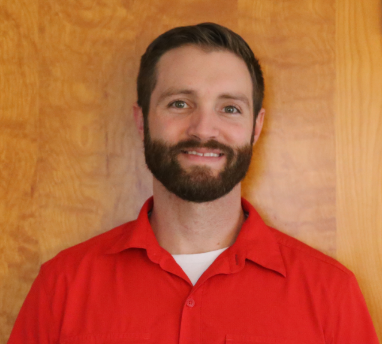
Jeffrey Dickson, PhD studied Theology and Apologetics at Liberty University where he now serves as an adjunct professor of Bible and theology. Dr. Dickson is also the senior pastor of Crystal Spring Baptist Church in Roanoke VA where he lives with his wife Brianna and their children.


[1] For a compelling discussion of this modern affront to classical theism see John Morrison, Has God Said? Scripture, The Word of God, and the Crisis of Theological Authority (Eugene, OR: Pickwick, 2006), 7-110. See also Nicholas Wolterstorff, Divine Discourse: Philosophical Reflections on the Claim that God Speaks (New York: Cambridge University Press, 1995) and Kevin J. Vanhoozer, Is There Meaning in This Text? The Bible, The Reader and the Morality of Literary Knowledge (Grand Rapids, MI: Zondervan, 1998).

[2] Consider other examples of God remaining hidden/mysterious: 1) his glory was hidden behind the veil in the Holy of Holies of the Old Testament, 2) He often proves reticent in seasons of discipline or judgement (especially in the intertestamental period), 3) Jesus’ ascension and the sending an invisible helper following his resurrection, 4) Jesus’ choice to speak in cryptic parables requiring his own interpretation.

[3] One example of this is in John 8:59 where Jesus disappears to escape a premature death by stoning. Given that it was not his appointed time this concealment allowed Jesus to continue following God’s will in the way set before him.

[4] See also Job 23:8-9.

[5] See Jn 4:24.

[6] See Isa 55:8-9.

[7] This article assumes the goodness of the Christian God and is not prepared to make a case for this. That said, for such a case, see Robert Adams, Finite and Infinite Goods (New York: Oxford University Press, 1999) and David Baggett and Jerry Walls, Good God: The Theistic Foundations of Morality (New York: Oxford University Press, 2011).

[8] “It is the glory of God to conceal a matter; to search out a matter is the glory of kings” (Prov 25:2).

An Argument for God’s Existence from Gardening

An Argument for God’s Existence from Gardening (1).png

Over the past few years, I’ve imagined and even longed for the day when I would have time to venture into organic gardening. This year as the school where I teach moved from in-person to online instruction in mid-March, I suddenly found myself at home with more time on my hands. As a result, I decided that this year was the year I’d finally grow a garden. Since I had no idea what I was doing at first—and still have a lot to learn—I began reading numerous articles, read and re-read a book I have on organic gardening (The Vegetable Gardener’s Bible by Edward C. Smith), and watched countless YouTube videos in an effort to adequately prepare myself for growing and managing a successful garden.

Quite honestly, my initial interest in growing a garden was mainly based on my desire to provide healthy, homegrown food for myself and my family. I also thought it would be a fun experience to share with my wife and kids. However, what I’ve learned and experienced over the past few months has brought many unexpected things: incredible excitement and joy, along with an overwhelming sense of peace, and most surprisingly—a deeper relationship with God and a renewed interest in who he is as Creator.

A deeper relationship with God and a renewed interest in who he is as Creator? How is that? I mean, we are talking about a garden, a mound of dirt with some plants that require watering from time-to-time, right?

What I’d like to do now is offer four things that I’ve learned from gardening over the past few months—four things that essentially serve as an argument (of sorts) for God’s existence, in addition to revealing some important aspects of his divine character.

Purpose. First, everything in a garden has a purpose. From the worms to the ladybugs, to the soil, the sun, and rain—everything has an important role to play. Even garbage (i.e., compost) has a purpose, as it fertilizes plants by enriching the surrounding soil with important nutrients that allow for the plants to grow and thrive.[1] With many things working together, each doing its own job, a bountiful harvest becomes possible. But how is this evidence for God? Everything that belongs in the garden is there for a purpose. Anytime there is purpose, there is intent, and intent reveals a personal will. Purpose also reveals wisdom, and wisdom comes from a personal intelligence. Therefore, purpose in creation points in the direction of a divine “Purposer” or, more specifically, an all-wise personal God.

Order. Second, there is an order to the way things work in a garden. Apart from order, gardening would be impossible. I’ve learned that careful soil preparation must precede planting, that seeds and young seedlings must be planted at specific times and then watered sufficiently, and so on. To further illustrate the point, consider how gardeners and farmers typically strive to improve their yield in succeeding years based upon what they have learned in previous years—which is only possible in an environment of order. Order is a problem for naturalism, which maintains that prior to the Big Bang, the universe was in a state of chaos. Additionally, naturalism involves believing that after the Big Bang, an ensuing set of random processes somehow produced order. This is problematic because chaos does not produce order; chaos only produces further chaos. Likewise, randomness only produces more randomness. A tornado cannot rip through a landscape and lay down a perfectly organized garden, even if all of the seeds are already there. A storm is unable to produce systematic rows of evenly divided crops of various kinds. This begs the question: Why does order exist, even within something like a garden, if the universe is just the result of chaotic origin and random material processes? Anytime there is order, a conscious mind is behind it. If a God of order exists, we would expect to find exactly what we find: an orderly creation. Because an orderly creation exists, we have evidence for an orderly God who stands behind it all (1 Corinthians 14:33).

Taste. Third, the food that I’ve grown in the garden is incredibly tasty. In my opinion, there aren’t many things that taste better than fresh-picked, homegrown strawberries or blackberries. I’ve also really enjoyed the delectable flavors of squash and green beans, and I will soon delight in the pleasant palatability of tomatoes and peppers. Here’s a thought I’ve often had, especially as a lover of food: Why does food taste good? I mean, couldn’t food be just as nutritious and enable us to survive and even flourish if it had no taste at all? The wonderfully delightful tastes of various foods seem to be “add-ons,” like something extra. Perhaps all of different flavors of food are actually evidences of a wonderfully good God, who desires to not only satisfy our hunger and innate need for food, but to also allow us to enjoy the pleasurable experience of tasting and savoring the different flavors he has created (Proverbs 24:13).

Beauty. Fourth, before growing a garden of my own, I had no idea how beautiful so many fruit and vegetable plants actually are, especially the flowers they produce. Every morning when I walk out to my garden, I notice bright yellow blooms on the squash and zucchini plants, small white flowers on the pepper plants, white and red flowers on the strawberry plants, and colorful flowers on all of the tomato plants as well. I’ve learned that these flowers exist in order to attract pollinators (which goes back to our “purpose” discussion above), but it seems they also exist for something more—to point us to the beauty of their Creator. Like taste, beauty is an “add-on” to the world; it is not something that is needed for survival. Beauty exists as a mark of design and order; it is something that is to be enjoyed, of course, but it is not an end in itself—it provides us with opportunity to reflect on the ultimate source of beauty. And as we allow the beautiful things we see in creation to push our hearts and challenge our minds to search for the ultimate source of beauty, we encounter our beautiful and good Creator, the divine Artist of creation himself (Psalm 19:1; Ecclesiastes 11:7).

There’s just something about a garden. This is a thought that I didn’t expect to have, but it is one I’ve had repeatedly over the past few months. Perhaps it’s because when we are in a garden, we are at home in the place where our existence began (Genesis 1-3)—and the place where those of us who trust in Christ will one day enjoy God’s presence forevermore (Revelation 21-22). There is much more that I could say about my gardening experience (including some frustrations), and I realize that I have much more to learn—but, for now, I rejoice in the fact that through gardening I experience the same glorious Creator who made the first garden and the One who will also fashion the last garden. Now, if you’ll excuse me, it’s time for me to go outside and check on my garden again…


sj.png

Stephen S. Jordan currently serves as a high school Bible teacher at Liberty Christian Academy in Lynchburg, Virginia. He is also a Bible teacher, curriculum developer, and curriculum editor at Liberty University Online Academy, as well as a PhD candidate at the Liberty University Rawlings School of Divinity. Prior to his current positions, Stephen served as youth pastor at Pleasant Ridge Baptist Church in State Road, North Carolina. He and his wife, along with their three children and German shepherd, reside in Goode, Virginia.


[1] Placing compost into the garden is basically taking dead, rotten material and using it to bring about life among the plants. Surely, there is a spiritual application here somewhere.

On to Finish the Ph.D at Pitt (Part 15)

White Border with Photo Greeting Birthday Facebook Post (1).png

As we got started in our new life at Pitt, Laquita decided to find a job other than teaching, so she applied to the University and was given the job of Chemistry Department Librarian.  She quickly learned the principles on which the library worked and settled in to keeping the books and journals organized and aiding users when they were not finding what they were looking for.  She had a basic knowledge of chemistry and had no trouble in familiarizing herself with the nomenclature of chemistry research.  Laquita also decided to do some graduate work herself and enrolled in the master’s degree program in English, which she was able to finish by the time I had completed my work three years later.

The center of our social life was the church we attended, the Fifth and Beechwood Church of Christ.  There we engaged not only in three worship and study meetings per week (Sunday morning and evening and Wednesday evening), we also were frequently invited to dinner by the middle-aged and elderly couples.  Several of these had Southern backgrounds and their hospitality and good cooking reflected that culture.  There was also frequent fellowship between the graduate students, some of whom we are still in touch with.  Our closest friends were Wendell and Joyce Bean.  Wendell was employed by Westinghouse Corporation as a research engineer, and Joyce was enrolled in the child development program at Pitt, where she had some contact with the famous Fred Rogers of the Mr. Rogers television show.  Another couple that both the Beans and we were close to was Bennie and Neda Riley.  Bennie was a graduate student in physics at Carnegie-Mellon University, and Neda worked with an accounting firm.  The fourth couple of this group was Gene and Susie Couch.  Gene was in the graduate program in physics at Pitt, and Susie was the consummate homemaker, staying at home and taking care of their little girl.  It was through the Couches that we met Keith and Wendy Ratliffe; Keith was also in the physics program at Pitt.  Keith was not a believer, but we were with them regularly because they were a part of our opera group.

Our best university friends were Bob and Nancy Mossman.  I have already mentioned Bob’s new-found atheism, which was a constant matter of discussion and banter between us. They both came from California and had ebullient personalities.  Bob was ambitious for success, and it was indicative of his independent personality that when he went job hunting after finishing his Ph.D., he didn’t go for a conventional academic position, but instead interviewed with business firms, persuading them that his broader liberal arts perspective and his writing skills, along with a strong personality, equipped him well to be hired into an executive training program.  He was therefore successful in landing a job with Ford Motor Company in Dearborn, MI.  Consequently, when I got my first job with the University of Michigan-Dearborn, the Mossmans introduced us to the town.

While we were in Pittsburgh, Bob and Nancy became involved in the civil rights activities of the Black church where Nancy had started attending.  That aspect of their lives didn’t spill over much into our interaction as couples until we continued our friendship when we moved to Dearborn.  There we met and socialized with several of their Black friends, but in Pittsburgh we had only their reports of these social interactions.

Apart from church gatherings, our richest social activity was our opera group.  Each year the Metropolitan Opera came to Pittsburgh on tour, and a group of four couples, some from church (the Beans and us) and some from the University (the Ratliffes and the Mossmans), bought season tickets and attended the operas together, enhanced by having dinner beforehand.  It was Laquita’s and my first exposure to opera, and we learned to love it.

As I got into my second year at Pitt and my third year of graduate work, I began to focus on what the subject of my dissertation would be.  I wrote a term paper that year on the poems of Geoffrey Chaucer which were cast in the form of a dream, and that spurred me to consider other dream poems of the same period, the last third of the 14th century.  Accordingly, the topic of my dissertation was, “The Dream as a Literary Framework in Works of Chaucer, Langland, and the Pearl Poet.”  The thesis idea was that the dreamer/narrator in each of the poems analyzed is a much more individualized personality than in most previous dream works and comes to enlightenment about some matter of importance in the process of experiencing his dream.  My dissertation topic was approved by the graduate study committee and my dissertation committee was appointed.  My dissertation director, Dr. Alan Markman, would chair the committee and comment on my drafts at various stages. 

During my second year at Pitt I was awarded a teaching fellowship, and that provided my first experience of college teaching.  Along with most graduate teaching assistants in English, I was given classes of freshman composition.  Apart from a basic syllabus for the course, I was given no guidance or instruction; it was merely assumed that I would learn by experience.  I don’t remember much about the details of my composition classes, but I was certainly much better able to grade essays at the end of my year than I had been before, and I was given at least that much practical preparation for teaching English classes when I was employed full time after I graduated with my Ph.D.  During my fourth year of graduate work—my third at Pitt—I was given only a tuition scholarship.  My faithful wife kept us eating during my Ph.D. work with her job at the Chemistry Library.  She also continued her own graduate work toward a master’s degree in English.

Some of the graduate courses I took left more of an impression on me than others.  I have already mentioned Old English, which was very difficult, but which ushered me into learning to read Middle English, the language of Chaucer and the other poets whose works were the subject of my dissertation.  I also took a course in the history of the English language and taught the course myself during my first few years as a full-time college teacher.  The subject of linguistics was burgeoning during my graduate years, so an introduction to the subject had recently become a required course in the graduate English program.  The new textbooks in the subject took a radically non-traditional view of the norms of grammar, contending that grammatical “rules” were not fixed standards, but were defined by popular usage, which changes with time.  I was not enamored by the course, but it introduced me to principles of language that I needed to understand in the pursuit of my professional career.  Another memorable course was an undergraduate course in classical literature, which I was allowed to audit.  It introduced me to Sophocles and Plato and other non-English authors of which I needed to have read at least some.

Another course that I found difficult but needed to be introduced to was in Literary Criticism and Theory.  I found (and still find) the language of this field of study often abstract and full of jargon.  But it did acquaint me with schools of criticism and the reigning ideas about literature in different historical periods.  More to my taste were the courses I took in Shakespeare and major authors of the 18th and 19th centuries.

Finally, in outlining our Pittsburgh experiences, I need to tell about the three places where we lived.  Our first was a third-floor, one-bedroom apartment with an open area for kitchen, dining table, and sitting room.  There were several other apartments with tenants on the first and second floors.  The chief advantage of this place was that it was in walking distance of the Pitt campus.  There were tensions, however, between us and the young women who had an apartment right below us on the second floor.  They were fond of parties with loud music, which kept us awake.  We inadvertently became acquainted with the singing of Johnny Mathes because these ladies played his music so loud that the whole apartment complex was able to hear it.  Our first request for them to turn down the volume was met somewhat politely, but thereafter they were not receptive to our pleas.  Another noise source was the trash truck that came around at about 5 a.m. every morning to service a restaurant across the alley from us.  I don’t remember whether we got ear plugs or just got used to it, but I do remember being irritated and frustrated by these disturbances.  It was another welcome to urban living.

Our second home arose from a proposal by our landlord, Dr. Beroes, an engineering professor at Pitt, to live in his family’s house, a couple of blocks away from our apartment, while they were away on sabbatical leave for several months.  I think we still had to pay some rent, but the purpose of the arrangement was to occupy the house so that it would not be vulnerable to theft or vandalism.  We were given an upstairs bedroom and had access to the kitchen for meal preparation.  It seemed to offer a welcome respite from sharing a house with irritating fellow-tenants, but there was a major glitch when Mrs. Beroes decided to come home after only a month or two away.  She was not easy to live with and turned out to be an inveterate liar.  We finally looked for and found an attractive flat in a working-class suburb named Wilkinsburg, where we spent the final year of our time in Pittsburgh. 

This was an interesting place to live.  Our landlady was a lively elderly Irish woman with whom we had a fair amount of conversation.  She was a bit mischievous, flirting with me and commenting on my “nice legs” and bantering with another of her tenants, an Englishman to whom she referred as “John Bull.”   We had to commute to Pitt, but there was a trolley that went close to our house, and I used that to get to the campus, whereas Laquita took our car, since she had a daily job to get to.  There was a service station across the street from us, so it was convenient to get the car serviced.

After spending a year researching and writing my doctoral dissertation, I completed it and applied for jobs, which at the time were fairly plentiful.  After interviewing with several institutions at the national meeting of the Modern Language Association, and being asked for a second interview, the best offer I received was from the University of Michigan-Dearborn (U. of M., Dearborn Campus at the time).  It had been established only six years before as an upper-division campus, oriented mainly to the professional programs in engineering and business administration.  The second interview on campus went well, and I began my 36-year career at UM-Dearborn in the summer term, 1965.


Elton_Higgs (1).jpg

Dr. Elton Higgs was a faculty member in the English department of the University of Michigan-Dearborn from 1965-2001. Having retired from UM-D as Prof. of English in 2001, he now lives with his wife in Jackson, MI. He has published scholarly articles on Chaucer, Langland, the Pearl Poet, Shakespeare, and Milton.  Recently, Dr. Higgs has self-published a collection of his poetry called Probing Eyes: Poems of a Lifetime, 1959-2019, as well as a book inspired by The Screwtape Letters, called The Ichabod Letters, available as an e-book from Moral Apologetics. (Ed.: Dr. Higgs was the most important mentor during undergrad for the creator of this website, and his influence was inestimable.)


Elton Higgs

Dr. Elton Higgs was a faculty member in the English department of the University of Michigan-Dearborn from 1965-2001. Having retired from UM-D as Prof. of English in 2001, he now lives with his wife and adult daughter in Jackson, MI.. He has published scholarly articles on Chaucer, Langland, the Pearl Poet, Shakespeare, and Milton. His self-published Collected Poems is online at Lulu.com. He also published a couple dozen short articles in religious journals. (Ed.: Dr. Higgs was the most important mentor during undergrad for the creator of this website, and his influence was inestimable; it's thrilling to welcome this dear friend onboard.)

New Developments in Moral Apologetics: Kevin Richard

1,286 (2).jpg

Editor’s note: Below is a summary of Dr. Kevin Richard’s doctoral dissertation work entitled: Tawḥīdic Allah, the Trinity, and the Eschaton: A Comparative Analysis of the Qualitative Nature of the Afterlife in Islam and Christianity.

The doctrine of eternal life raises certain qualitative and existential questions. Considering the unfathomable duration, one may rightly ask, what will that experience be like and will it be eternally satisfying? British moral philosopher Bernard Williams once stated that “nothing less will do for eternity than something that makes boredom unthinkable.”[1]

The prospect of eternal life creates a potential existential problem for humanity. The problem is potential because eternal existence creates a certain need, a need which can concisely be stated in this way: quality must overcome quantity. One can imagine becoming satiated with the pleasures and joys promised in religious Paradise. Consider this, at the first intimations of boredom, even if that moment took a billion trillion years to reach (if time is still measured that way), you would arrive at this moment relatively quickly given eternity as there would still be as much time in front of you as when you first stepped into this reality. One can further imagine that this boorish reality could quickly become hellish as pleasures and joy would continue to lose their appeal and boredom would increase and abound with no end.

Christianity and Islam have robust eschatologies and both teach that human beings are intended to live forever. Furthermore, this eternal life is presented as intrinsically good. I would submit that if they are in fact intrinsically good then each respective eschatological reality must overcome this problem of eternal duration if eternal life is something to be desired. My concern here is not with comparison between Paradise and Hell. Faced with the option to choose between the two, most rational people would embrace the former. But what if Paradise would eventually become hellish? What then? The notion of this paradisal life would not be a blessed reality, a divine gift, but the worst of all curses to befall mankind. Therefore, I am concerned with the goodness of Paradise as it is in itself. Does either faith tradition’s purported eternal bliss have the ability to eternally satisfy human creatures?

To answer that question, two fundamental assumptions will be made. If the answer is to be yes, that eternal life is intrinsically good, it would seem that two things must obtain in the afterlife. First, eternal pleasure would have to be found in and/or derive from the ultimate Good (i.e. God or Allah). Second, given that human creatures experience goodness in this life – love, happiness, relationality – and that for these creatures their telos is eternal bliss, then these goods in this life will be part of the life to come.

From these two assumptions emerge two “gap” problems, problems against which either religion can be critiqued: the Qualitative Gap Problem (QGP) and the Teleological Gap Problem (TGP). The QGP is perhaps the more obvious problem and is based on the previous statement “quality must overcome quantity.” This is an objective problem, either the quality of the experienced afterlife overcomes eternal duration, or it does not. Some may speculate that one simply could not know if this gap could or could not be overcome, and perhaps there is some merit to this point. In response to this, however, as was mentioned about, if God is the Ultimate Good, as both Christianity and Islam teach, then it would seem that he alone could be the source of a goodness that can overcome eternity’s demand. Here, one emerging thought becomes of ultimate concern: What is one’s relationship to God or Allah in the afterlife? One’s proximity to the divine, relational or otherwise, would weigh heavily on the gap being overcome.

The TGP is a subjective problem and considers how the ultimate good of the afterlife aligns with the human telos in this life and, consequently, human flourishing. The TGP considers three facts that highlight and emphasize the multi-dimensionality of human creatures:

1.     Human beings have a physical dimension.

2.     Human beings have a mental/spiritual dimension.

3.     Human beings have a social/relational dimension.

These are the teleological realities in need of fulfillment in the life to come. If Islamic Paradise or the Christian Heaven is to be desired over the other, it will be because these subjective dimensions, which form our fundamental longings and aspirations, are met. Furthermore, this teleological consideration has theological implications. As Jerry Walls notes, “The question of whether we believe in God is another form of the question of whether the fleeting glimpses of joy we experience in this life are intimations of a deeper wellspring of happiness, or whether they are tantalizing illusions, shadowy hints of a satisfaction that does not really exist.”[2] Although Walls writes within the Christian tradition, his words apply equally within an Islamic context. Applying Walls’s question to both visions of the afterlife, are the experiences of this life intimations of a deeper “wellspring of happiness” or a “tantalizing illusion”? Do they have their place in the life to come? Also, what is the source of this wellspring, God or Allah, or another source?

Within the Islamic tradition, broadly speaking, there are two theological traditions concerning the rewards of Paradise in the afterlife. The first is the one that people are most familiar with, namely, the sensuous and exorbitant afterlife. The second is not so familiar but it comes from the Qur’an itself. In Surah 56, when humanity is judged before Allah, there are three possible outcomes. The wicked are cast into Hell, the righteous are granted Paradise, and then there are a select few, those in the middle, those whom Allah brings near. Their end will be proximity to Allah, their reward is nearness. This station is the ultimate one and is reserved for the select few who attain to that level of nearness on Earth.

But, as I see it, there is a problem with this notion of nearness to Allah. The doctrine of Allah (or Tawhid) teaches that he is One, without distinction, beyond all language and description, utterly transcendent. What then is nearness or proximity to the One? In short, Islamic philosophy teaches that as the other (man) approaches the One (Allah), the more the other diminishes and only the One remains. In the afterlife, then, proximity to Allah amounts to a quasi-absorption into the divine. It is in this state that the self is slowly annihilated as all creaturely distinctions fade out of view and only the divine reality remains. Proximity to Allah, the highest level of Paradise, reaches its culmination in the Beatific Vision, but at what cost? In this moment, the QGP is met, but what comes of the self? Overcoming this gap problem seems to entail willing self-annihilation.

Now concerning the Teleological Gap Problem, how does it fare? As was mentioned above, the traditional readings of Paradise in Islam connect the telos of man in this life with the life to come. In the life to come, all manner of sensuous pleasures and desires are fulfilled. Those intrinsic goods experienced on Earth are now surpassed 1,000-fold. But according to Islamic doctrine, proximity is lost. Those who attain to this level of Paradise are not near to Allah in any real sense. And so, while they may be fulfilled sensually and relationally, it is apart from the Ultimate Good. This seems problematic, for, on the one hand, if they maintain that love is an intimation of love to come in the afterlife, a good worth retaining, then what is the source of the experience of the good in Paradise? The source is not Allah, for his love is self-contained.

At this point, I would submit that there is a greater inherent dilemma for Islam than for Christianity. On the one hand, if the QGP (the objective problem) is to be met it will entail proximity to Allah. But as we see, proximity to Allah entails the annihilation of the human subject, which does not solve the TGP (the subjective problem). On the other hand, if the TGP is to be met, it will entail a severed proximity to Allah. In the physical depictions of Paradise, the TGP, the multi-dimensionality of human creatures, is met. But, at the same time, the QGP is not met because any meaningful experience with the divine is removed. The two gap problems cannot be met simultaneously.

This study argues that the Islamic view of the afterlife does not have the theological and philosophical resources to meet both of these gap problems simultaneously and must compromise on one in order to meet the other. Islam’s doctrine of Allah – Tawhid –raises the following question in need of resolution: “How does the divine overcome the unlikeness that exists between God/Allah and man and yet not annihilate the individual (the other) in the process?”

It is at this point where the Christian doctrine of the Trinity helps to bridge this impasse. Trinitarian love is the fundamental fabric of God’s nature. Instead of this love remaining an abstraction, unknowable through human perception, the triune God acted in human history manifesting the quality of divine love in full display. While humanity remained enemies to God and hostile to his lordship, the Word-made-flesh descended into creation to save and redeem all things. Through Jesus’ sacrifice on the cross, the quality of God’s immense love was demonstrated. In that moment, humanity was given a glimpse of the quality of love that has existed within the Godhead from eternity past. It is this kind of love that Christians identify as part of the ultimate Good. And not only is that love freely given, it made a way for humanity to experience true relationship with God. To know and be known, to love and be loved. The triune God’s love for man is a non-mystical reality, grounded in the very nature of the Godhead. Christians love God because, in a very real and direct expression, God loved mankind first (1 John 4:19). Humanity can embrace those good aspirations of love and relationality both because it is how God created human beings to be and because the God of Christianity has demonstrated it to the world in human history.

This study submits that the Christian view of afterlife overcomes both gaps because of the God/man relationship in Heaven focused supremely on, in, and through the God-man Jesus Christ. It is our holistic relationship to the Triune God that grants eternal joy for all of redeemed humanity. The Christian view of Heaven presented here coupled with the nature of the Triune God is a more desired reality. The teleology of heaven better accounts for and meets the needs of the multi-dimensionality of human beings. Each of the components of the subjective experience in this life are fundamental aspects of the life to come. It is through the relation with the Triune God of Christianity that the problem of eternity is met, where quality does overcome the quantity.


[1] Bernard Williams, “The Makropulos Case: Reflections on the Tedium of Immortality,” in Problems of the Self, (New York, Cambridge University Press, 1973), 95.

[2] Jerry Walls, Heaven: The Logic of Eternal Joy, (New York: Oxford University Press, 2007), 197.

The Cathedral of Learning and Lasting Friends: Pittsburgh, PA (Part 14)

White Border with Photo Greeting Birthday Facebook Post(2).png

In the summer of 1962, we set out once again to advance my graduate program, headed for the University of Pittsburgh (known informally as “Pitt”) and a second year of fellowship-supported graduate work.  We arrived on a sunny day and drove directly to the house of some friends we knew from A.C.C., Gene and Susie Couch.  Gene was in physics and went directly to Pitt after he graduated with me from A.C.C. in 1961.  They lived in a section of town known as Squirrel Hill, which some of you may recognize as the Jewish neighborhood where the terrible synagogue shooting took place in 2018.  We stayed a few nights with them while we looked for a place to live, and we found one in a big house that had been split up into apartments.  Parking for our car, though, had to be on the street.  This was the first time we had encountered the big city problem of cramped streets and dealing with houses built before there were many cars to be parked.  Rental spaces were at a premium, and we had an early run-in with another resident in our house who let us know indignantly when I left our car behind the house after washing it that she had paid for that spot and would thank us not to usurp it again. Happily for us, we could walk to the University and could leave our car parked on the street, although not always close to our house.

Early in our stay in Pittsburgh, we met people who were to become long-term— in some instances lifelong—friends.  Some were fellow members of the church we attended, the 5th and Beechwood Church of Christ, and others were fellow graduate students.  Among the lifelong friends were Wendell and Joyce Bean and Ben and Neda Riley at church and Bob and Nancy Mossman from the graduate school.  Others we were close to when we were in Pittsburgh and were in touch with for many years afterward were the Couches from church and Keith and Wendy Ratliffe from Pitt, whom we came to know through the Couches; Keith was in the physics program along with Gene.  Ben Riley was also in physics, but he attended another major university in Pittsburgh, Carnegie-Mellon.  Apart from church social functions, the most significant group activity we engaged in during our stay in Pittsburgh was going to the Metropolitan Opera when it came on tour to Pittsburgh.  This group consisted of the Higgses, the Beans, the Ratliffes, and the Mossmans.  It was Laquita’s and my first exposure to classical opera, and it was one of the most lasting cultural experiences of our lives.  We heard live such stars as Birgit Nillson and Richard Tucker, and we have never forgotten it.

After getting settled in, I went to the University’s main building, a 37-story skyscraper built in a Gothic style which led to its being called the Cathedral of Learning.  It was several miles from downtown Pittsburgh and a whole neighborhood had built up around it.  I went to the English Department area on one of the upper floors to meet with my advisor, Dr. Alan Markman, a medievalist.  He was a pipe-smoking U.S. Marine veteran who often referred to his military experience.  We were not temperamentally matched, and he turned out to be rather gruff in his assessment of my work.  He trashed the first major paper I turned in to him and complained that it took him over two hours to get through it and make his comments.  His note on the front of the paper said something about its being one of the worst graduate papers he had ever read, flawed as it was by infelicitous phrasing, errors in usage, poor scholarship, and pretentious frippery.  I was absolutely crushed, of course, but I went carefully over his remarks and in my next paper tried to avoid the kinds of mistakes he had pointed out.  It was a real shock treatment, but it made me a better writer.  Actually, I think it was already on his agenda before he received the paper to take me down a peg or two, because he commented at some point that my being a hot-shot undergraduate at Abilene Christian College didn’t mean that I was anything special as a graduate student.

One of the first basic classes in Pitt’s graduate English program was a two-semester course in Old English, that is, the language in which Beowulf, the earliest English classic, was written.  It was equivalent to learning a foreign language, since Old English is a linguistic cousin of modern German.  We had to learn the basic grammar and vocabulary of the language, and upon completing that we were assigned a certain section of Beowulf to translate for each class period.  Three classmates and I decided to split up the assignments between us to make the task easier.  We would meet together in a study area between classes and share with each other the translation of the section we had done.  It was not a total avoidance of responsibility for the assignments, for we had to be ready to translate in class, but it did give us something of an advantage over the rest of the class, and one of them squealed on us to Dr. Markman.  One day, he called the four of us in and gave us a busy-work assignment in bibliography in the library, so we got our come-uppance.  This joint endeavor nevertheless established a friendship between us that lasted through our graduate years.  One of the group was Bob Mossman, who remains a special friend to this day.  The other two were Joyce Measures and Tom Calhoun, both of whom were interesting personalities.  We called ourselves a comitatus, which is the Old English word for warrior group.

Bob Mossman and I struck up our friendship because our initial conversation revealed that until recently he had been intending to go into Christian ministry.  He did his undergraduate work at Whitworth College in eastern Washington, a small Christian liberal arts college.  He was from California and was very much a part of that culture, so it was a bit anomalous that he should have become a zealous convert in his youth to evangelical Christianity.  He was very active in student leadership at Whitworth, but toward the end of his work there, there was some kind of breakdown in personal relationships that embittered him and turned him away from Christian life.  When I met him at Pitt, he said that he just couldn’t see himself limited by Christian ministry, which he described pithily as, “patting little old ladies on the head.”  So he turned from divinity to English literature.  He was interested in my Christian background and commitment, and we soon were engaging in debates about matters of faith.  He had become a thoroughgoing atheist and considered my faith to be naïve and uninformed.  Nevertheless, we became fast friends, and Laquita and I soon began getting together socially with him and his wife, Nancy, who, though chagrined at Bob’s forsaking the faith, nevertheless supported him in his new career plans.  Our association continued for many years, until the two of them were divorced.  We are still in touch with Bob a few times a year and have kept up with each other’s lives.

The other two members of our comitatus were also unconcerned with religion, but they were curious enough about my Christian practice that they and Bob were persuaded to accept my invitation to attend church with Laquita and me.  I don’t remember precisely the conversation that ensued from that visit, but they were struck by our a capella singing and felt welcomed by the group.  Their curiosity satisfied, none of them were interested in returning.  Joyce and I had a little falling out because I teased her one time about smoking more because it looked fashionable than because she really liked it.  She sat me down in private and told me something of her dysfunctional background as a way of correcting what she thought was my superficial understanding of her.  I was suitably chastened, but I was never close to her.  Tom had done his undergraduate work at Princeton and was very much a man of the world and a part of urbane New York culture.  He was an enthusiastic recontour and regaled us with tales of his boozing days at Princeton.

There is much more to tell of our days in Pittsburgh, including Laquita’s job and academic work, our life with the church, our other residences, and memorable classes and professors.


Elton_Higgs (1).jpg

Dr. Elton Higgs was a faculty member in the English department of the University of Michigan-Dearborn from 1965-2001. Having retired from UM-D as Prof. of English in 2001, he now lives with his wife and adult daughter in Jackson, MI.. He has published scholarly articles on Chaucer, Langland, the Pearl Poet, Shakespeare, and Milton. His self-published Collected Poems is online at Lulu.com. He also published a couple dozen short articles in religious journals. Recently, Dr. Higgs has published some of his poetry and a book inspired by The Screwtape Letters, The Icahbod Letters. (Ed.: Dr. Higgs was the most important mentor during undergrad for the creator of this website, and his influence was inestimable; it's thrilling to welcome this dear friend onboard.)


Elton Higgs

Dr. Elton Higgs was a faculty member in the English department of the University of Michigan-Dearborn from 1965-2001. Having retired from UM-D as Prof. of English in 2001, he now lives with his wife and adult daughter in Jackson, MI.. He has published scholarly articles on Chaucer, Langland, the Pearl Poet, Shakespeare, and Milton. His self-published Collected Poems is online at Lulu.com. He also published a couple dozen short articles in religious journals. (Ed.: Dr. Higgs was the most important mentor during undergrad for the creator of this website, and his influence was inestimable; it's thrilling to welcome this dear friend onboard.)

Right Life, Happy Life: Insights from Belgravia

Right Life, Happy Life.jpg

Does the right life lead to the happy life?  The question arises for me in ‘Belgravia’, Julian Fellowes follow-up cable TV series to ‘Downton Abbey’.  In ‘Belgravia’, Lord Edmund Bellasis, handsome heir to the Earl and Countess of Brockenhurst, and Sophia Trenchard, daughter of a moneyed London business-man, love each other; their eyes lock as they waltz together at Lady Brockenhurst’s ball in 1815 on the eve of the Battle of Waterloo.  Sophia’s mother, Anne Trenchard, is dead set against the match; she knows that while she and her husband James travel in aristocratic circles, they are ‘trade’ not nobility

Interrupting the ball, Britain’s Duke of Wellington calls his dancing soldiers to report immediately for the march to Napoleon at WaterlooSophia’s love, soldier Lord Bellasis, rides off to his death in battle, never to return; come to find out, he and Sophia had married secretly.  As Sophia carries their child, she has reason to believe Lord Bellasis tricked her into a fraudulent marriage leaving no husband and no certificate - only a child.  As Sophia dies giving birth to their son, her parents, the Trenchards, accept the baby boy is a bastard.

The immorality of a believed-to-be fraudulent marriage producing a bastard sets in motion a twisting narrative; characters counter the fallout from the evil with their own bad, moral choices one after another in an effort to secure for themselves good.  Does responding with evil after being victimized by evil only further evil?  Does one lose control of one’s life and the good one seeks by attempting to secure good by a pattern of choosing badly?  Can one control one’s destiny for good by responding to evil with a pattern of good, moral choices?

The preponderance of characters in ‘Belgravia’ makes bad, moral choices with John Bellasis leading the way.  Since Earl and Lady Brockenhurst’s only child, Lord Edmund Bellasis, was killed at Waterloo, John Bellasis, their nephew, stands to inherit the title and estate.  John Bellasis becomes alarmed when his aunt, Lady Brockenhurst, showers favor on a mysterious young cotton merchant, Charles Pope.  What John does not know but Lady Brockenhurst does is that Charles Pope is her believed-to-be illegitimate grandson, the son of her deceased son Lord Bellasis and Sophia.  Not content with ignorance, John Bellasis is determined to solve the mystery of Charles Pope and deal appropriately with this menace to his inheritance; at stake is nothing less than one of the noblest and wealthiest estates in England.

So, John Bellasis begins making a chain of bad, moral choices which tend to escalate as he goes about securing for himself the desired good of a noble fortune: he pays servants of both the Trenchards, and the Brockenhursts to betray their masters by surveilling them and prying into their affairs; he wants to unearth information about Charles Pope.  Next, he seduces the Trenchard’s daughter in law with an eye to obtaining desired information.  He insinuates himself into Charles Pope’s workers and finds a disgruntled employee who points him to a false report that maligns Pope’s character.

By the time his plot seems to crescendo to success, John Bellasis and his bad moral choices are suddenly unmasked and revealed when he attempts to murder Charles Pope. He implodes as his bad, moral choices are exposed and bring evil on the lives of those he enlisted to do his bidding: the servants’ betrayal of their masters is revealed, causing their disloyalty to jeopardize their standings and positions; the woman he seduces realizes John hates her and disowns their baby she carries; the malignant report against Charles Pope turns out to be quite the opposite; and the Earl of Brockenhurst’s inheritance will definitely not go to John - but to Charles Pope.  John Bellasis flees to Europe a wanted criminal.

Choosing moral evil, John Bellasis loses control of himself and the ultimate good he desires.  He believes each evil choice will put him in control of securing his inheritance.  Contrarily, each evil choice moves him a step further away from obtaining his desire.  By making bad moral choices he loses control of the good desired for himself and lets evil manipulate and shape him into its image.  Rather than being esteemed by others as a morally, good person who brings grace and benefit to others, his immoral actions make him into a persona non gratis who brings harm to all.  

The narrative of John Bellasis is illustrative of the moral structure of the universe: bad, moral choices inevitably lead one not to good and happiness, but to dystopia and harm.  Responding to an evil with an evil ultimately produces evil.  As Augustine said, ‘We must lead a right life to reach a happy life’.

The biblical character Joseph is the antithesis to John Bellasis.  When Joseph’s brothers victimize and sell him as a slave, he makes good, moral choices: he chooses to trust and be dutiful, conscientious, courageous, honest and trustworthy to his master Potiphar.  When Potiphar’s wife tries to seduce him, rather than entering into the evil he makes the good, moral choice to be faithful to her husband, his master Potiphar.  Though his good action seems to counter my thesis and is rewarded by another evil victimization - he is sent to prison - he responds to this evil by making the good, moral choice not to be vengeful or bitter; rather, he chooses to be a dutiful, conscientious, compassionate, trustworthy and responsible prisoner.

The successive evil injustices that come against him do not control him; he does not become evil seeking to counter evil with evil; he does not become a vengeful, bitter, selfish person but embraces virtuous, moral actions.  Like drips of mineral laden water filtering through a rock cavern form successive, mineral deposits into a conical stalactite, Joseph’s successive good, moral choices mold him into a person of good, moral character.  He is one who acts consistently with beneficent traits of compassion, moral courage, honesty, faith, responsibility and perseverance of which all persons want to be recipients. Rather than capitulating to and being controlled by the evil so that he becomes one with it, he exercises control over his ‘becoming’ through good, moral choices and faith in God.  The result is a good life discontinuous with and independent of the evil which assails him.

If you will exercise control over your life, no matter what evil is perpetrated against you, every time respond with good, moral choices which all persons recognize are a benefit to others.  Joseph controls his life parrying the evil through good, moral choices and transcends evil producing a good, virtuous character which puts him at just the right position at just the right time to act to save not only Egypt, but God’s own people.  ‘We must lead a right life to reach a happy life’.


TomThomasStaffPhoto.jpg

Tom is currently a retired Elder in the Virginia Annual Conference.  He has pastored churches in Virginia, California and England.  Studying John Wesley’s theology, he received his Ph.D. and M.A. degrees from the University of Bristol, Bristol, England and his Master of Divinity degree from Asbury Theological Seminary. While a student, he and his wife Pam lived in John Wesley’s Chapel “The New Room”, Bristol, England, the first established Methodist preaching house.  Tom was a faculty member of Asbury Theological Seminary. He has contributed articles to Methodist History and the Wesleyan Theological Journal. He and his wife have two children, daughter Karissa, who is an attorney in Richmond, Virginia, and, John, who is a recent graduate of Regent University.  Being a part of the development of their grandson Beau is a rich reward.  Tom enjoys a good book by a crackling fire with an English cup of tea.  His life text is, ‘Jesus, confirm my heart’s desire, to work and speak and think for thee’.

Tom Thomas

Tom was most recently pastor of the Bellevue Charge in Forest, Virginia until retiring in July.  Studying John Wesley’s theology, he received his M.A. and Ph.D. degrees from the University of Bristol, Bristol, England. While a student, he and his wife Pam lived in John Wesley’s Chapel “The New Room”, Bristol, England, the first established Methodist preaching house.  Tom was a faculty member of Asbury Theological Seminary from 1998-2003. He has contributed articles to Methodist History and the Wesleyan Theological Journal. He and his wife Pam have two children, Karissa, who is an Associate Attorney at McCandlish Holton Morris in Richmond, and, John, who is a junior communications major/business minor at Regent University.  Tom enjoys being outdoors in his parkland woods and sitting by a cheery fire with a good book on a cool evening.

Assessing Evolutionary Debunking Arguments (Crash Course Apologetics Interview with Dr. Tomas Bogardus)

Assessing Evolutionary Debunking Arguments.jpg

From Crash Course Apologetics:

In this interview, Dr. Tomas Bogardus joins me to discuss his paper "Only All Naturalists Should Worry About Only One Evolutionary Debunking Argument." The pdf of the paper is linked below. In the paper, he presents three versions of evolutionary debunking arguments (EDA's) against moral knowledge and shows why each fails. He then presents a fourth version of an EDA that is successful, but explains why it should only concern naturalists.

https://philpapers.org/archive/BOGOAN...

PSYCHONIX: Mind Over Matter (Book Review)

Editor’s note: This review originally appeared at the site of Free Thinking Ministries

Review by Suzanne Stratton

PSYCHONIX: Mind Over Matter, by Mike Burnette, is a blend of interesting, well-developed characters, and exciting, intriguing action. It is a many layered novel, with unexpected twists and turns. If you like science fiction, espionage, psychology, war stories, philosophy, and many other topics, you will find plenty to attract and keep your attention. Readers with philosophical leanings will be drawn into the musings of the characters who wonder about the nature of reality. Anyone growing up with Star Trek, The Six Million Dollar Man, or the Twilight Zone will recognize familiar territory, along with hints of C.S. Lewis, and many other icons of our cultural heritage.

PSYCHONIX: Mind Over Matter
By Burnette, Mike

The hero is a complex man, who is ready to try a new way to explore reality. Having been wounded in battle, he is a veteran with PTSD, willing to trust scientists who have devised an unusual experimental technique. Along with the preparation for his dangerous role in the exploration of reality, other remarkable people play a part in the action that develops as the story comes to a surprising climax. 

The descriptive details make a vivid picture of the settings and people whose lives become involved with each other throughout the narrative. I found it difficult to put it down and get some rest whenever I became immersed in the tale, because I needed to find out what would happen next!

I kept returning to the book to read parts of it again, since within the context of the action, Burnette adds some thought-provoking philosophical musings of different characters interspersed throughout the telling of everything that happened. If you have ever questioned the nature of reality, but enjoy action and intrigue, this is the book for you. J.P. Moreland agrees:

“Believe me when I say the novel is very interesting reading.  I was engaged. Mike Burnette has done an outstanding job of capturing the mind-body problem arguments accurately and in an interesting, readable way.” 

You can buy the book at Amazon, Barnes & Noble, Apple and many other sites by typing in PSYCHONIX. You can get the paperback only at Amazon (Click here: Amazon Kindle/Paperback).

For the eBook, click here: Barnes & Noble.

New Developments in Moral Apologetics, Part 5

1,286 (1).jpg

T. J. shares a passion for the moral argument(s) and brings much to his new post. He is, in his own words, a “mere Christian with genuine fascination and awe for the breadth and depth of God’s gracious kingdom.” He became a Christian in 1978, and began pastoral ministry in 1984. He has worked as a youth pastor, senior pastor, church planter, church-based seminary professor, and as a chaplain assistant in the Army Chaplain Corps. A southern Illinois native, T. J. is a graduate of Southern Illinois University-Carbondale with a BA in Political Science; Liberty University with an MAR in Church Ministries, an MDiv in Chaplaincy, and a ThM in Theology; and Piedmont International University with a DMin in Pastoral Counseling. T. J. is currently pursuing a PhD in Theology and Apologetics at Liberty, hoping to write his dissertation on some aspect of the intersection of moral apologetics and the pastorate. He is the author of God Help Us: Encouragement for Evangelism, and Thinking of Worship: A Liturgical Miscellany, as well as the forthcoming Evangel-ogetics: Apologetics for the Sake of the Lost. T. J. has published articles on liturgics, pastoral counseling, and church-based counseling ministries. He lives in Carterville, Illinois with his wife and five children, where he pastors an independent evangelical church, directs a Christian counseling ministry, and serves as a Brigade Chaplain for the Army National Guard.

Four areas of recent work on the moral argument are of note in T. J.’s work.

First, as part of his dissertation for the PhD in Theology at North-West University in Potchefstroom, South Africa, he developed the DEUS Challenge as a model for engaging Mormons in dialogue around the following concerns. The D is for the Deity Question, and asks: Are the Christian and Mormon Gods the same?  The response: The Mormon God is not the Christian God.  Evidence is presented for the response based on discussion of the doctrine of God.  The E is for the Ethics Question, and asks: What is the Mormon account of morality?  The response: Mormon morality derives from moral standards outside God.  The evidence for this response focuses on moral realism.  The U is for the Uprightness Question, and asks: Does Mormon morality conduce to a moral argument for the Mormon God’s existence?  The response: Mormon morality does not conduce to a moral argument foe the Mormon God’s existence.  The evidence at this point investigates moral apologetics.  The S is for the Subjectivity Question, and asks: Is the “burning in the bosom” reliable evidence for Mormon claims?  The response: Mormon affective claims contradict rational claims for Mormon doctrine.  The evidence considers passional reason.  Additionally, each of the four questions includes a practical application of the gist of the relative arguments, presented in the form of an imagined dialogue between a Mormon missionary and a Christian.

Second, his forthcoming thesis for the MA in Philosophy at Holy Apostles College and Seminary in Cromwell, CT, is entitled “The Moral Way: An Enquiry into the Relationship between Aquinas’s Fourth way and the Moral Argument for God’s Existence.” As the introductory paragraph explains, “In discussion of the philosophical and apologetical nuance within the moral argument for God’s existence, there is an opportunity for a substantive consideration of Aquinas’s fourth way, the argument for God’s existence from gradation of being/perfection, as a cohort and possible expression of the moral argument. In so doing, Aquinas’s insights can be carefully examined and further developed as a means to understanding the relationship between how reason and conscience offer an innately and discursively developed segue to evidence for God’s existence and his goodness, vis-à-vis his perfections and as a maximal being. By giving Aquinas a more robust exploration of this type, the moral apologetic enterprise receives the help of the Angelic Doctor whose bellow continues to echo wherever matters of philosophy, theology, apologetics, and evangelism are discussed.”

Third, his forthcoming article for the philosophical journal Studia Gilsoniana, “Human Dignity, Self-determination, and the Gospel: An Enquiry into St. John Paul II’s Personalism and its Implications for Evangelization” develops themes of a moral apologetic nature, especially touching on philosophical anthropology and its application to evangelism. In the article, personalism is explored along the following lines of enquiry: What is personalism vis-à-vis JP II? What is the significance of human dignity and self-determination in JP II’s personalism? How might JP II’s personalism serve evangelization? Findings suggest that JP II’s philosophical personalism, especially at the nexus of its understanding of human dignity and self-determination, provides a robust and faithfully Christian anthropology that can effectively inform efforts in evangelizing all person, as all persons are image bearers of God that are necessarily self-determining and possessed of profound dignity and worth.

Fourth, T. J’s recent book published by Wipf and Stock, Pulpit Apologist: The Vital Link between Preaching and Apologetics, explores ways to integrate apologetics into preaching for both discipleship and evangelism. Focused consideration is given to the relationship between moral apologetics and preaching, specifically considering how moral apologetics aids the preacher by emphasizing the moral nature of God and humanity; helping center evangelistic preaching on sin, righteousness, and redemption; and by engaging passional reason.


Beginning the Graduate School Adventure (Part 13)

White Border with Photo Greeting Birthday Facebook Post(1).png

In the summer of 1961, A.C.C bachelor’s degrees in hand, Laquita and I packed our few worldly goods and launched on the trek to Seattle, Washington and the University of Washington.  We saved money by camping out in a tiny tent that we had bought back in Abilene.  Things went fairly well with our outdoor life, except that our first night was up in the Rockies at about 11,000 ft., and we had no sleeping bags and slept on cots, which insured a good circulation of frigid air above and below us.  Our blankets didn’t offer much protection, and we got up early after a miserable night and built a fire to get warm.  Another time it was raining, and we didn’t know how to prevent water from coming into the tent, so that wasn’t a very comfortable night either.  Then there was the remote campground where there were bears roaming around.  One of them came prowling at our campsite, sniffing around our tent while we were having evening prayer; that quickly added another dimension to our prayer!  He finally went over to our picnic table and knocked off our sturdy metal ice chest.  It broke open and the bear found some cheese to eat and went off.  We had a permanent dent in the ice chest, but it was still quite functional.  Oh well, it made for good stories afterward—and camping out did save us motel bills.  Good thing we were young, so we could rebound from these mishaps in roughing it.  We did some further camping afterward, but we were never fond of it.

We made immediate contact with Laquita’s brother, Lester Alexander, and his wife, Doris upon arriving in the Seattle area.  They lived in Renton, a suburb of Seattle, where they owned and operated an auction house.  They sold everything from household items to antiques, and every Saturday night drew a crowd to the auction, where my brother-in-law, assisted by Doris as manager and cashier and one or two others to transfer the items for sale to and from the stage, engaged in the traditional sing-song patter of the auctioneer, unintelligible except for the beginning “Whattamabidnow?” and “Sold! to number 44.”  He was good at it, and the auction was earning them a living at the time.  We enjoyed browsing around the auction warehouse when we visited them.  We had to be careful during the auction, however, since Lester was always quick to end the bids if he saw we were interested in an item.  One time, he thought I wanted a lawn mower and hollered “Sold!” when I scratched my ear.  He didn’t make us pay for it and it went back on auction the next week.

We found a place to live in the upstairs apartment of a widowed missionary, Mrs. Edmunds, who had spent many years in China, of which she shared many of her experiences.  She was a somewhat quirky lady, though, and we occasionally got crossways with her.  She let us keep our car in her vacant garage, which was a convenience, but next to the driveway was a bush that brushed against the car when I was driving into the garage.  I asked her if I could trim the annoying bush, to which she agreed.  But it turned out that she and I were thinking of different bushes, and I proceeded to trim a bush that she had been carefully cultivating.  She saw me out the window and opened it to yell at me to stop, accompanied by a glare that would have melted steel.  She confessed that her Christian charity was sorely tested by my blunder.  Another time, she informed me that my dropping my shoes on the floor above her when I took them off at night was very irritating, so I learned to set them down gently.  She was kind at heart, though, and it was a well-kept accommodation.

Living in a large northern city and attending a big state university were a culture shock, both in Seattle and, later, Pittsburgh.  I was not used to being regarded as something of a Southern hick, who really wasn’t much acquainted with the sophisticated setting of an urban (and urbane) academic institution.  In addition, some people smirked at my wearing my Christianity on my sleeve by sporting a big “Abilene Christian College” decal on my briefcase.  I had rather ineffective debates with one of my professors, Dr. Jacob Korg, who taught Victorian literature and the novel.  He tried to enlighten me about the deficiencies of Christian Scripture, pointing out that Jesus endorsed perpetual poverty for some people when He said, “The poor you have always with you.”  That greatly offended his socialist philosophy.

The great bright spot in that year was my friendship with Dr. David Fowler, who was my graduate advisor.  He was a respected textual scholar in medieval literature, particularly of the works of the Pearl Poet and the writer of Piers Plowman, both of which were subjects of my doctoral dissertation a few years later.  Dr. Fowler was a true Christian gentleman.  My first meeting with him was in an elevator on the way to a gathering of Woodrow Wilson scholars held before we had been introduced to any of the faculty.  I asked him if he was one of the graduate students, and he politely said, no, he was a member of the faculty.  I hope he was flattered that I misjudged his age.

I was very sorry to leave the University of Washington at the end of the year, but, although the University was given a certain amount of money for each Wilson Fellow who attended, they were not required to spend it to support those Fellows.  I was offered only minimal student aid for my second year, perhaps because I compiled only a 3.5 GPA for my first year, rather than a perfect 4.0.  However, I didn’t put all my eggs in one basket and applied for other sources of student aid.  I hit the jackpot when the University of Pittsburgh offered me one of its Mellon fellowships with about the same benefits as the Wilson Fellowship, a full ride with tuition and living stipend.  When I went in to see the director of student aid about what had happened, he told me I could have had a teaching fellowship if I had stayed, and  that my degree at Pitt would not be as prestigious as one from U. of Washington.  He might have been right, but it seemed a bit arrogant of him to tell me so, in a tone of voice that said, “If you don’t have the good sense to know how good we are, we’re better off without you.”

For our second semester at U. of Washington, we were offered a six-month tenancy house-sitting for one of Laquita’s fellow teachers at the elementary school where she was employed.  Since we weren’t on a lease arrangement with Mrs. Edmunds, we took the offer.  The house was in a very good neighborhood and had a view out its front picture window of Mt. Rainier and the Cascades range when the weather was clear; that was a magnificent sight!  That was the best housing deal we had during our whole academic experience.

Another significant experience during this year was Seattle’s being the site of the 1963 Word’s Fair, for which the still-famous Space Needle was built.  It was in the spring, and several relatives and friends availed themselves of our spacious house as a place to stay when they came up to the Fair.  We ourselves attended a few times, the only time in our lives when we were on the grounds of a World’s Fair.  As is usually the case for such events, it was huge, spectacular, and memorable.

We had two pleasant excursions that I remember from that year.  One was a boat trip up the Skagit Valley, conducted by a local utility company to view its hydroelectric generating facilities.  The setting was breathtaking, and the information on the production and transmission of electric power very educational.  The other trip was up into the mountains of Mt. Rainier National Park to camp out and do some trekking on the trails.  That, too, offered tremendous views and experiences of nature.  I think it was on this trip that a bear broke into our metal ice chest, left out on the picnic table, to find something to eat.  He put a dent into the chest, but didn’t do further damage, since the lid latch came loose and he got whatever he wanted to eat.  We used that dented old ice chest for many years after that, and it several times occasioned a good story about the source of the dent.

We had a very satisfying church experience while we were in Seattle.  We attended a Church of Christ downtown, and we made some rich friendships, although we didn’t maintain them long after we moved to Pittsburgh.  We participated in a choral group conducted by Dick Still, and we spent some social time with him and his wife, Betty.  Her middle name began with a “B,” and they liked to joke about her being “Betty B. Still.”  I taught some adult Sunday School classes.  The preacher J. C. Hartsell, was young and dynamic and delivered meaty sermons, and I had some good conversations with him when we met occasionally for lunch. Interestingly, we made acquaintance with a student from Seattle Pacific College, which was associated with the Free Methodist Church; later, in Michigan, we twice were members of a Free Methodist Church, and our daughter Liann married into a Free Methodist family.

We finished our year in Seattle, packed up our 1950 Plymouth, and headed to Pittsburgh in the summer of 1963, via a visit to relatives in Texas.  Ahead of us was an entirely different kind of city from Seattle, gritty, industrial, and still soot-stained from its days as the steel capital of the nation.  But our three years there was also rich in friendships and cultural experience, as well as being the site of my major doctoral work.


Elton_Higgs (1).jpg

Dr. Elton Higgs was a faculty member in the English department of the University of Michigan-Dearborn from 1965-2001. Having retired from UM-D as Prof. of English in 2001, he now lives with his wife and adult daughter in Jackson, MI.. He has published scholarly articles on Chaucer, Langland, the Pearl Poet, Shakespeare, and Milton. His self-published Collected Poems is online at Lulu.com. He also published a couple dozen short articles in religious journals. (Ed.: Dr. Higgs was the most important mentor during undergrad for the creator of this website, and his influence was inestimable; it's thrilling to welcome this dear friend onboard.)

Elton Higgs

Dr. Elton Higgs was a faculty member in the English department of the University of Michigan-Dearborn from 1965-2001. Having retired from UM-D as Prof. of English in 2001, he now lives with his wife and adult daughter in Jackson, MI.. He has published scholarly articles on Chaucer, Langland, the Pearl Poet, Shakespeare, and Milton. His self-published Collected Poems is online at Lulu.com. He also published a couple dozen short articles in religious journals. (Ed.: Dr. Higgs was the most important mentor during undergrad for the creator of this website, and his influence was inestimable; it's thrilling to welcome this dear friend onboard.)

Introducing a Thomist Moral Argument

Introducing a Thomist Moral Argument.jpg

Editor’s note:

Here at MoralApologetics.com, we are really excited at younger scholars turning their attention and directing their considerable talents to variations on the moral argument. Moral apologetics can come in lots of stripes and shades, depending on the particular moral phenomena in need of explanation, the methodology involved in argumentation, the alleged tightness of the relationship between evidence and conclusion, and the operative variant of theistic ethic employed. Here Suan Sonna shares some highlights of his ongoing research project in which he proposes a moral argument predicated on natural law. We suspect that Suan’s voice will a prominent one indeed in this discussion for many years to come, and we are delighted to showcase his perspicacious work today.


My moral argument took form while studying Judith Jarvis Thomson’s defense of abortion. As a Thomist, I wanted to tackle her thought experiments and whatever metaethical foundations prevented her from accepting my view. I read her paper “The Right and the Good” and was positively shocked. Thomson appealed to teleology, except she used the words “design functions”, to ground her approach to ethics. Rather than embracing teleological realism, however, she settled for teleological nominalism. I was curious thereafter and wondered if other philosophers were borrowing ideas from the Aristotelian-Thomist (AT) synthesis for their theories. As I began combing through the literature, I noticed a subtle pattern emerge – when moral philosophers contemplated the metaethical commitments of their theories, they all depended upon some idea of teleology, some notion of “fulfillment” as goodness, and deployed concepts that sounded awfully familiar to me as a Thomist – consider Moore’s understanding of the simplicity and indefinability of the good which rubs right into the classical theist conception of God! Over time, I decided to develop a moral argument for God’s existence from these observations.

Here is the argument:

(1)   Moral realism is true.

(2)   Moral realism requires a foundation that yields (A) objective moral truths, (B) is comprehensive, and (C) is compelling.

(3)   Either theistic or nontheistic moral realism is true.

(4)   Nontheistic moral realism fails to meet at least one of the three requirements.

(5)   Therefore, nontheistic moral realism is necessarily false.

(6)   Therefore, theistic moral realism is true.

(7)   If theistic moral realism is true, then God exists.

(8)   Therefore, God exists.

I divide versions of moral realism into those that imply the existence of God (theistic moral realism) and those that do not (nontheistic moral realism). Nontheistic versions of moral realism simply might have nothing to say about God’s existence or perhaps depend upon foundations incompatible with His existence. And, by “foundation” here I mean the ultimate explanation or grounding of moral facts whether it be our intuitions, some evolutionary norm, reason, or God. Theistic moral realism must say that the foundation of moral facts is God, while nontheistic moral realism need not.  

I then present in (2) three overarching standards for testing which of the two moral realisms is true. I maintain that moral realism requires a source that yields objective moral truths, is itself comprehensive and compelling.

By “objectivity” I mean the nature of the foundation or explanans must itself be consistent with the explanandum. It would be strange to get an objective theory of ethics from a purely subjective, mind-dependent foundation.

“Comprehensiveness” means that the foundation in question must tackle the most relevant metaphysical and epistemological questions for a proper account of moral realism. For instance, the foundation should help us understand the nature of normativity, it should yield an account of moral knowledge, and ensure we have reliable faculties for moral comprehension. Here, I narrow the debate down to five fundamental explananda – normativity, semantics, causation, cognition, and ontology.

In other words, the foundation should explain both the nature and origin of normativity. Regarding semantics, it should avoid making the world unintelligible but render its information content accessible to our intellects. Even the causal order itself requires an explanation such that we demystify the connection between facts about the world and our actions, the behavior of objects and persons in our unfolding moral drama. The foundation should not simply take for granted that we have reliable cognitive faculties for moral reasoning but explain the origin and reliability of those faculties. Finally, this foundation should illumine us on who or what counts as a moral subject, what is the good, the bad, the right and the wrong? This is the most demanding requirement of the three. And, I propose it in order to avoid moral realisms that are simply constructed to suit our ends or attempt to avoid the ultimate question. We are seeking the version of moral realism that actually covers the relevant and required explananda.

Of course, we also need a way of discerning which foundation most compellingly explains the explananda. I propose here several standards:

1)     Intuitive Fit

2)     Empirical Adequacy - “consistency with what we know about the world, including our best scientific knowledge.”1

3)     Epistemic Access - “the theory should include some account of how we could come to know its truth.”2

4)     Metaphysical Fecundity - “the theory should shed light on a variety of metaphysical issues.”3

5)     Unification - “We should not accept a bifurcated, disjunctive account of thought and of knowledge as long as a unified account is possible.”4

6)     Simplicity - “A good metaphysical theory should not be in need of ad hoc rescues or endless epicyclic tinkering.”5

The standard of unification staves off the objection that the comprehensiveness standard is too demanding. If there is a unified explanation that can explain all of the explananda and do it well, then that unified theory is to be strongly preferred. In other words, comprehensiveness is not too demanding since it is a burden that can be carried by other approaches and perhaps not the objector’s.         


Over the course of my research, I found that the AT synthesis simply bests its competitors. It provides an objective, comprehensive, and compelling foundation of moral realism in the very existence of God.

AT moral realism is founded upon six highly plausible metaphysical theses that simultaneously yield a comprehensive moral theory and proofs of the existence of God. The theses are the principle of sufficient reason (PSR), the causal principle (CP), the principle of proportionate causality (PPC), real essentialism (RE), the convertibility principle (TCP), and the principle of finality (PF).

The PSR means that, “Everything that is the case must have a reason why it is the case. Necessarily, every true or at least every contingent true proposition has an explanation. Every event has a cause.”6 Aside from the PSR being highly intuitive, I think Alexander Pruss and Robert C. Koons have provided powerful reasons for suggesting that its denial simply costs too much, including the intelligibility of the universe itself.7

The CP is inspired by Aristotle’s response to Zeno’s denial of change. Zeno argued that true change requires non-being to produce being, since what was not there before must suddenly emerge. Aristotle unraveled the paradox by proposing the CP: change is the actualization of an object’s potential by an already actual actualizer, meaning that being can be divided into being-in-act and being-in-potency. It also appears that denying the CP eviscerates the intelligibility of the universe and the reality of change.

The PPC simply follows from the PSR and CP, since there is an explanation for why events occur and this explanation must preserve the transaction of being. St. Thomas Aquinas defines the PPC as “effects must be proportionate to their causes and principles”8 so that “whatever perfections exist in the effect must be found in the effective cause.”9 To put it more straightforwardly, “a cause cannot give what it does not first have.”10 Consider for instance how materialists argue that consciousness cannot be immaterial, since our origins are purely material and so too is the fundamental nature of the universe. Like things beget like things.

RE is “... the metaphysical position that everything in the world has an essence or nature that fixes its identity.”11 and “The essence of a thing is its nature, that whereby it is what it is. It is what we grasp intellectually when we identify a thing’s genus and specific difference.”12 Things have a real definition of what they are, which makes possible our distinguishing one kind of thing from another kind. It is not that we are inventing the difference between a mushroom and a human but there really is something different about the two, and this difference is ultimately due to the nature of human beings and other plants. To deny this point seems to place a huge hole in evolutionary theory and the project of speciation, or even the trustworthiness of our perception since it seems to really be the case that humans, horses, and fish are not absolutely the same kind of thing and one can identify their differences.

TCP states, “... goodness is the same as being itself, but considered from a particular point of view - that of fulfillment of appetite.”13 In other words, goodness is the actualization of potential, a kind of fullness. For example, we say that one thing is better than another when said thing is more as it should be. A triangle drawn with a radiograph pen is better than one etched into the seat of a shaky bus. The instantiated triangles are obviously aiming towards triangularity and are hence held to that standard. Likewise, human beings are ordered towards “humanity,” and humans are better when they are more in harmony with and fulfillment of their human nature. The fullness of triangularity is the measure of goodness for a triangle. The fullness of humanity is the measure of goodness for a human.

Finally, the PF sates that “... every nature is ordered to an end; that nature does not act in vain; that the end is the first principle of activity; and that the end is the reason for all movement.”14 and “In short, if A is by nature an efficient cause of B, then generating B must be the final cause of A.”15 Another way of framing this is that nature behaves with intentionality or directedness. For instance, the laws of nature do not describe mere accidental regularities but they reveal the natures of the objects in question and how they act under certain conditions. This activity is intrinsic to the objects themselves, meaning they are acting as they should. For instance, an electron is a negatively charged particle that orbits the nucleus. Such a description gives us the nature and activity of the entity in question – even the “negative” charge label is connected to activity. Or, consider even how horses are tetrapods but some are obviously born with more or less legs than they should have. The nature of the horse provides us the norm and allows us to identify deviations and when things are not as they should be.

Two significant consequences follow from these theses. The first is that a comprehensive moral theory known as classical natural law theory follows. Classical natural law theory states that ethics is the science of how to fulfill one’s nature. Just as scientists discover laws of nature through observing the tendencies of objects and what should happen under normal circumstances, the same sort of study is done on human activity in order to unveil the natural law.  

The second consequence is that any properly constructed argument for the existence of God dependent upon any of the theses is given a significant plausibility boost. St. Thomas Aquinas, for example, famously developed six ways to demonstrate the existence of God. The first is known as the argument from motion; the second is the argument from efficient causality; the third is a contingency argument of sorts; the fourth is an argument from the gradation of being; the fifth is a teleological argument; and the sixth is his lesser known De Ente argument.

The PSR makes the first, second, third, and sixth ways eminently plausible. For example, the first way begins with the CP and argues that there must be a purely actual actualizer in order to prevent an infinite causal regress. There must be a causal agent who is the source of all change but is not itself subject to change.

De Ente rightly observes that since beings are composites of essence and existence, meaning a real distinction exists between the two and not merely a logical or conceptual one, there must be an explanation for why they exist despite their essences not securing or entailing their existence. This can be viewed as a more precise contingency argument. St. Thomas located this ultimate explanation in a being whose very essence is existence itself lest there be another endless causal regress. In tandem with TCP, RE, and PPC, we arrive at a being who is essentially perfect and the source of all beings - of their essence and existence included! Since human beings are by nature rational animals, meaning our specific difference from the rest of the animal kingdom is our rationality, our cause must also possess something like an intellect in order for it “contain” and “impart” our intellects to us.

Furthermore, we know that this being has an intellect due to the fifth way, the teleological argument, where St. Thomas noted that even beings without minds are drawn or attracted towards their final ends just like an arrow is directed towards its target by an intellect. The PF and PPC get us a creator who must have something like an intellect or mind in order for its creation to have this feature of intentionality or directedness.

If St. Thomas’ arguments hold, then we arrive at one and in principle only one supreme being who is the essentially omnibenevolent or perfect, omnipotent, omniscient, and omnipresent reality.

This is my longwinded way of saying that nontheistic moral realisms have an incredible challenge to face, since theistic moral realism has a foundation that yields objective moral truths (since moral truths are fixed truths about being which emanate from God), a comprehensive explanation, and one that is indeed compelling. Robert C. Koons has demonstrated in his work Realism Regained how the AT synthesis can yield not only a moral theory but also an exact theory of causation, mind, and metaphysics. Significant work has been done in Neo-Aristotelian Perspectives on Contemporary Science to demonstrate the plausibility of the AT synthesis and its relevance to quantum mechanics, biology, physics, and psychology. Theists have the theory of everything!

My moral argument attempts to leave no stone unturned and forces everyone to examine the foundations of morality. I conclude that God is the best and most comprehensive explanation, while nontheistic moral realism fails to provide what is required for a complete and compelling account of moral realism. Of course, further research needs to be done in order to secure this conclusion, but I think the argument has plausible foundations and deserves more attention.


  1. Koons, Robert C. Realism Regained an Exact Theory of Causation, Teleology, and the Mind. Oxford University Press, 2000, p. 3.

  2. Ibid.

  3. Ibid.

  4. Ibid.

  5. Ibid.

  6. Pruss, Alexander R. The Principle of Sufficient Reason: a Reassessment. Cambridge University Press, 2011, p. 3.

  7. See Pruss’ The Principle of Sufficient Reason and my dialogue with Robert C. Koons here.

  8. Aquinas, Thomas. “Of the Causes of Virtue.” Summa Theologica, translated by Fathers of the English Dominican Province, Coyote Canyon Press, 2018, pg. 391. I-II. Q. 63. Art. 3.

  9. Aquinas, Thomas. “The Perfection of God.” Summa Theologica, translated by Fathers of the English Dominican Province, Coyote Canyon Press, 2018, pg. 34. I. Q. 4. Art. 2.

  10. Feser, Edward. Five Proofs of the Existence of God. Ignatius Press., pg. 170.

  11. See the opening page of Oderberg, S. David Real Essentialism (2007).

  12. Feser, Edward. Scholastic Metaphysics: a Contemporary Introduction. Editiones Scholasticae, 2014, p. 211.

  13. Oderberg, David S. The Metaphysics of Good and Evil. Routledge, 2020, p. 14.

  14. Ibid, p. 28.

  15. Feser, Edward. Scholastic Metaphysics: a Contemporary Introduction. Editiones Scholasticae, 2014, p. 92.


Holy Fear

HOLY FEAR.jpg

A Twilight Musing

In Christian Bible classes we sometimes hear people discuss the meaning of the biblical admonition, predominantly found in the Old Testament, to “fear God.”  Does not the New Testament present God as our loving Father, whom we are privileged to address familiarly as “Papa”?  But the Old Testament clearly sees fearing God in a different light.  The “Preacher” of Ecclesiastes, for example, sums up his treatise by asserting that we are to “fear God and keep his commandments, for this is the whole duty of man.  For God will bring every deed into judgment, with every secret thing, whether good or evil” (Eccl. 12:13-14 [ESV]).  But in the New Testament, disciples are frequently told not to fear, and in I John 4:18 we have a radical negation of fear: “There is no fear in love, but perfect love casts out fear. For fear has to do with punishment, and whoever fears has not been perfected in love.”  How do we get from the O.T. fear based on God’s judgment to the N.T. saying that Christians (the new Israel) should have no fear of judgment?  The fear of God still has its place in the N.T., but it is a fear embedded in the fact that Jesus Christ has bridged the gap for us between the austere fear of God and the joyful trembling that comes from being in the Presence of an awesome, loving, and gentle Father who accepts us as brothers and sisters of Christ Jesus.

Those under the Old Covenant were acutely aware that to be in God’s Presence was dangerous because of His perfect holiness and His fearsome judgment on human sin.  Three passages from chapters 6 and 8 of Isaiah and chapter 33 of Exodus illustrate this reaction, even in men who were being called by God.  In Isaiah’s vision of God “high and lifted up” in all His glory and holiness; the prophet’s immediate reaction is fear that he is going to die because he has “seen the King, the Lord of Hosts” (Is. 6:5).  Even though he is a prophet of God, he is terrifyingly aware of his sinfulness, and in order for his life to be preserved and for the conversation with God to continue, Isaiah has to be purified (depicted figuratively by the application of a burning coal from the Temple altar to his lips), so that his “guilt is taken away, and [his] sin atoned for” (v.7).  Moses has a similar experience (Ex. 33:18-23) when he asks God, “Show me your glory” (v. 18); whereupon God allows him only a glimpse of His back, and even that could be granted only with God’s protective hand covering Moses, for “man shall not see me and live.”  Human beings do well to fear the Presence of God, for the fiery holiness of that Presence will consume them unless God Himself offers protection.

The transition between the O.T. fear of God’s judgment and the N.T. casting out of fear by Love is provided by the visitation upon the sinless Lamb of God of all the wrath of the Father deserved by rebellious mankind.  With God’s judgment satisfied, we can be empowered to serve and obey Him without the fear engendered by our sinfulness.   As Paul expresses it, when we accepted the liberating blood of Christ, we “did not receive the spirit of slavery to fall back into fear, but . . . received the Spirit of adoption as sons, by whom we cry, "Abba! Father!"  Thereby we have the liberty to “work out [our] own salvation with fear and trembling, for it is God who works in [us], both to will and to work for his good pleasure” (Phil. 2:12-13).  As Paul points out in Gal. 3, the final deliverance of mankind from sin was not to be accomplished through obedience to the Law, as necessary as that obedience was.  As he concludes in that chapter, “the law was our guardian until Christ came, in order that we might be justified by faith.  But now that faith has come, we are no longer under a guardian, for in Christ Jesus you are all sons of God, through faith” (Gal. 3:24-26).  God’s love, fully manifested toward humankind by the sacrifice of His Son, is the instrument for transmuting human fear into effective fear of God. 

And so we come back to the statement in I John that “perfect love casts out fear. For fear has to do with punishment, and whoever fears has not been perfected in love” (I Jn. 4:18).  What a glorious privilege is granted to us who live under the New Covenant, that we may glory in standing before God without fear of punishment for our sins.  Although we no longer tremble in physical terror as Moses and the people did when they encountered the fiery Presence of God at Mt. Sinai, we are nevertheless admonished to approach Him in Mt. Zion, the Heavenly Jerusalem, “with holy fear and awe, for our God is a consuming fire” (Heb.12:28-29, NLT).  We still need the protective covering of the blood of Jesus to keep from being consumed by the Fire of God’s judgment.  Thus we are able under the New Covenant to fear God perfectly and joyfully.


Elton_Higgs (1).jpg

 Dr. Elton Higgs was a faculty member in the English department of the University of Michigan-Dearborn from 1965-2001. Having retired from UM-D as Prof. of English in 2001, he now lives with his wife and adult daughter in Jackson, MI.. He has published scholarly articles on Chaucer, Langland, the Pearl Poet, Shakespeare, and Milton. His self-published Collected Poems is online at Lulu.com. He also published a couple dozen short articles in religious journals. (Ed.: Dr. Higgs was the most important mentor during undergrad for the creator of this website, and his influence was inestimable; it's thrilling to welcome this dear friend onboard.)

Elton Higgs

Dr. Elton Higgs was a faculty member in the English department of the University of Michigan-Dearborn from 1965-2001. Having retired from UM-D as Prof. of English in 2001, he now lives with his wife and adult daughter in Jackson, MI.. He has published scholarly articles on Chaucer, Langland, the Pearl Poet, Shakespeare, and Milton. His self-published Collected Poems is online at Lulu.com. He also published a couple dozen short articles in religious journals. (Ed.: Dr. Higgs was the most important mentor during undergrad for the creator of this website, and his influence was inestimable; it's thrilling to welcome this dear friend onboard.)

New Developments in Moral Apologetics, Part 4

1,286.jpg

This installment of new developments on the moral argument features two students of mine wrapping up their doctoral work on the subject. They are also dear friends and both have been very active here at MoralApologetics, and will play a big part in the site’s future and the Center for Moral Apologetics at Houston Baptist University. They are Jonathan Pruitt, long-time Managing Editor extraordinaire of MoralApologetics.com, and Stephen Jordan, who will be spearheading the development of moral apologetics curriculum as part of a new initiative of the Center in the years to come.

Jonathan Pruitt’s work seeks to extend the abductive moral argument made in Jerry Walls’s and my Good God and God and Cosmos to the Christian religion. Like the argument found in Good God, Pruitt’s argument begins by assuming moral realism. Specifically, it assumes there are a range of moral facts in need of explanation, including facts about moral goodness, moral obligations, moral knowledge, moral transformation, and moral rationality.

With respect to moral goodness, the dissertation brings to bear the rich ontology of the Christian doctrine of the Trinity. It suggests that the existence of the Trinity best explains deeply held moral intuitions about “the shape of the good,” as it builds upon Robert Adams’s Platonic theistic view of God as the good. If the good is ultimately triune, this could naturally explain why morality is centered on “the other” and the foundational character of love in ethical thinking.

With respect to moral obligations, the dissertation utilizes the fundamentally social nature of the Trinity to suggest that moral obligations, best understood as a certain kind of social standing, is well explained by a Trinitarian God. The Christian worldview has tremendous resources in the domain of moral knowledge as it claims both a divinely inspired book and the ideal moral exemplar in Jesus Christ. In these, one finds both the moral law and the ever elusive concept of “the good life” reified. Additionally, these resources can help turn back some well-known objections to divine command theory.

The Christian view of sanctification and the role of the Holy Spirit explain how one can be morally transformed, while remaining within the logical boundaries required by such transformation. Though Kant had to postulate God as judge and eternal life to solve what Henry Sidgwick later called “the dualism of practical reason,” the Christian worldview comes with these features included. The public and evidential nature of the Resurrection supplies concrete evidence for moral faith and, in conjunction with Christian eschatology, solves moral problems not explicitly articulated until nearly two millennia later. Thus, Christianity handily accounts for moral rationality. Pruitt’s work, in the end, highlights how some of the most distinctively Christian ideas map closely onto well-known problems in ethical theory. He suggests that precisely where Christianity is most different, it most ably marshals explanatory resources to account for the moral facts.

Stephen Jordan’s developing work is called “Morality and the Personhood of God: A Moral Argument for the Existence of a Personal God.” The concept that God is personal is a necessary and fundamental part of religious belief.[1] If God were not personal, it would be odd to think of him as moral or loving; it would also seem inconsistent to speak of him as One with whom humans can have a personal relationship, One who can be trusted, cares for the people he created, listens to their prayers, acts on their behalf, has their best interests at heart, and so on. In short, to talk of such matters in a sensible manner and to experience them in everyday life seemingly requires that God is personal.

Is there evidence that a personal God actually exists? Enter the moral argument. The moral argument, like other classical arguments for God’s existence, is able to provide evidence for believing in God’s existence, but—unlike other arguments, or perhaps better than the other arguments—is able to shed an incredible amount of light on God’s character (i.e., what God is like). For example, in order to account for morality, God must be good, loving, and holy. Additionally, through surveying moral categories such as moral knowledge, moral values, moral obligations, and moral transformation, it becomes apparent that the source of the moral law, in order to account for the deeply personal nature of morality, must also be personal, and personal to the highest degree possible.

If the moral argument suggests that God must be personal in order to account for the personal nature of morality, the next step in the process involves considering the various explanations for God’s personal nature. There are several belief systems that set forth the notion of a personal God, with some conceptions coming nearer to adequately accounting for what is required of a personal God than others. Christianity, however, uniquely demonstrates that not only is God personal, but that he has always been personal. If the only sense in which God is personal is in his personal interactions with human persons, then one could say that God’s personality was frustrated before he created human persons or that God became personal only after he created human persons. To say these sorts of things presents all sorts of theological and philosophical problems, such as that God would be dependent on something other than himself and therefore not self-sufficient.

A Trinitarian conception of God, which is a distinctly Christian concept, solves the sorts of problems alluded to above, suggesting that God has always been personal in and through the inner personal relations of the three Persons of the Trinity: Father, Son, and Holy Spirit. This is the fundamental reason why the Judeo-Christian God, the God of the Bible, is such a powerful explanation for the deeply personal nature of morality: he is intrinsically personal himself.

While there is certainly more involved, there are two key tasks to this version of the moral argument: (1) demonstrate that morality points in the direction of a personal source; and (2) explain how a Trinitarian conception of God provides the best explanation for the deeply personal nature of morality.[2]


[1] A definition of “personal God” looks something like this: A Being who thinks, feels, and wills, and who is capable of loving and being loved by other beings.


[2] There are essentially three tasks involved in the moral apologetics enterprise: (1) provide reasons for believing in objective moral facts; (2) address secular theories; and (3) explain why theism, particularly Christian theism, is the best explanation for morality as a whole. While this project largely focuses on the third and final task, there are discussions throughout that give attention to the first two tasks as well. For instance, there is a chapter that provides fifteen reasons for believing in objective moral facts, and there are several chapters that briefly respond to opposing theories.

What Can Christians Say about the Pandemic? A Response to Rosaria Butterfield

What Can Christians Say about the Pandemic .jpg

The coronavirus pandemic has brought fresh fodder to a question many struggle with: how can a good God allow such pain and suffering? Is he really not as good as we thought? Or maybe he’s too weak to prevent it? In the face of such complexities, some abandon belief in God altogether. Others find this problem of evil a stumbling block to belief in the first place. These are pressing questions, and not only on an intellectual level. For many who have lost loved ones or are battling the virus themselves, those out of work or left lonely from social distancing, the answers to these questions mean the difference between hope and despair.

For this reason, I was discouraged to read Rosaria Butterfield’s recent post over at Desiring God, “Can the Pandemic Be an Answered Prayer?” Butterfield most likely didn’t choose the title, but even still, her article answers the question with a resounding yes. In attempting to square the existence of this physical evil with the existence of a good God, Butterfield has unfortunately flattened the distinction between God’s redemptive use of a tragedy and the nature of the tragedy itself. In so doing, she implies that an unmitigated evil is actually an unqualified good.

Many are familiar with Butterfield’s dramatic conversion story, which testifies to the role of hospitality in evangelism. She herself has been intentional to carry on such hospitality in her own ministry. About eight years ago, Butterfield’s family moved into a progressive area so her husband could pastor a church there. The family prayed for service opportunities in the community but made little headway, as no one came to the barbecues or block parties they arranged. Instead, they were met with suspicion and even found a church sign vandalized.

COVID-19 turned all that around. With the food shortages and shelter in place orders, Rosaria and her daughter began delivering food to many of her neighbors on behalf of a local community supported agriculture program. Additionally, their church made its building available as a distribution center. Folks who once turned away from them on the street now welcomed them into their homes and even asked for help and prayer.

I do not doubt Butterfield’s account. The pandemic has certainly made people experience their limited human resources and vulnerabilities in new ways. And it’s a blessing that the family and church stepped up to love and serve them as Christ commands. What troubles me is Butterfield’s suggestion that, for these reasons (and some others she mentions[1]), COVID-19 is something for which we should be thankful, a good gift to us and a means of God glory:  

“Giving thanks to God for everything, including COVID-19, humbles us — deeply. It reminds us that God’s providence is perfect and our point of view flawed. Because God is good, just, and wise, all the time and in every circumstance, then COVID-19, for the Christian, must be for our good and for God’s glory.”

There is some truth mingled in with Butterfield’s words here, which makes teasing out her missteps tricky. We are called to be thankful in all circumstances (I Thess. 5:18[2]), and we are surely limited creatures, unaware of the fullness of God’s activity in this world. As Butterfield also notes, God is all good, all knowing, and all powerful. But it does not follow that everything that occurs in this fallen world is in itself good. Moreover, it’s a small, capricious god indeed who requires the suffering of millions in order to be gloried.

Empathy with our suffering neighbors demands that Christians reckon with the problem of evil, not to mention that our own theology will be the poorer for lack of an adequate account. This is always important, but perhaps now during this pandemic more than ever. But as we think this question through, our central convictions about who God is must remain intact. He is a God of infinite love, incarnate in Christ Jesus, and wildly imaginative in his redemptive purposes and plans. God desires our flourishing and invites us to a life of shalom, what Cornelius Plantinga describes as “[t]he webbing together of God, humans, and all creation in justice, fulfillment, and delight.”[3]  

Butterfield’s account, on the other hand, offers up a god I don’t recognize in the Christian scriptures, one who inflicts suffering on the global population in answer to a family’s prayer to feel more wanted and useful in their neighborhood by unleashing a pandemic. Again, I rejoice that Butterfield’s family could serve her community and that the pandemic opened the eyes of many to their own insufficiencies and need for grace. But that redemptive twist is the blessing; the love and service in answer to these human needs is God’s good gift, not the pandemic itself.

It’s crucial to make this distinction—otherwise, despite Butterfield’s early protestation, God does get cast as the author or cause of evil. My aim here is not to offer a theodicy, an explanation for why God allows evil. I’ll leave that to others better equipped to do so. Frankly, I have no idea why God permitted the novel coronavirus to unleash such havoc on the world, and any attempt of mine to explain would ring hollow and may even add pain to those already suffering its terrible effects.

What I do know, however, is that none of these sufferings go unnoticed by God. He is el Roi, the God who sees the needy (Gen. 16:13); Jehovah Jireh, our provider (Gen. 22:14). What else is the Bible but an account of God’s attentive and intervening presence in humanity’s sufferings? He neither causes nor desires our fallen condition and its attendant afflictions. To rescue us from it, God enters into that suffering with us, but not for the sake of suffering alone. As Butterfield herself notes, referencing 1 John 5:4, Christ is our promise that all manner of evil let loose in this world—coronavirus included—has been, is being, and will be overcome. The whole of salvation history tells of God’s restorative work, to recreate what he established in Eden.

There are no pat answers in the face of evil. But there is love—a love that won’t let evil have the last word. The cosmos, no less than mankind, is being set right. This redemptive love does involve suffering, but not in the way Butterfield envisions it. It doesn’t cultivate evil to get our attention or enable our ministry. Rather, God’s holy, sacrificial love takes evil with such dreadful seriousness that it requires nothing less than the cross to rectify. Indeed, to equivocate between the evil from which God rescues us and his loving means of rescue, to take one for the other, is ultimately to understand neither.


mbphoto.jpg

Marybeth Davis Baggett lives in Lynchburg, Virginia, and teaches English at Houston Baptist University. Having earned her Ph.D. in English from Indiana University of Pennsylvania, Marybeth’s professional interests include literary theory, contemporary American literature, science fiction, and dystopian literature. She also writes and edits for Christ and Pop Culture. Her most recent publication was a chapter called “What Means Utopia to Us? Reconsidering More’s Message,” in Hope and the Longing for Utopia: Futures and Illusions in Theology and the Arts. Marybeth's most recent book is The Morals of the Story: Good News about a Good God, coauthored with her husband, David.


Notes:

[1] Butterfield, whose conversion story involves transitioning from a lesbian lifestyle, also points to the disruption of the annual gay pride march as another reason to be grateful for the coronavirus. This myopic view selectively ignores the manifold repercussions of the pandemic, which of course has disrupted all manner of events—from the holy to the scandalous and everything in between.


[2] Butterfield also references Ephesians 5:20 here, which admonishes Christians to “Giv[e] thanks always for all things to God and the Father in the name of our Lord Jesus Christ.” However, in context, the phrase “for all things,” is best understood as those good gifts God provides, not “in its widest possible extent” to include evil (see the Expositor’s Greek Testament commentary here: https://biblehub.com/commentaries/ephesians/5-20.htm).  


[3] Cornelius Plantinga, Jr., Not the Way It’s Supposed to Be: A Breviary of Sin, Grand Rapids, MI: Eerdman’s, 1995, 10.